
ASTANA — Water resources in Central Asia are increasingly shaping economic stability and interstate relations as climate change intensifies pressure on shared rivers and aging infrastructure. Experts say water diplomacy is becoming an essential tool for managing transboundary resources and reducing risks of regional tensions.
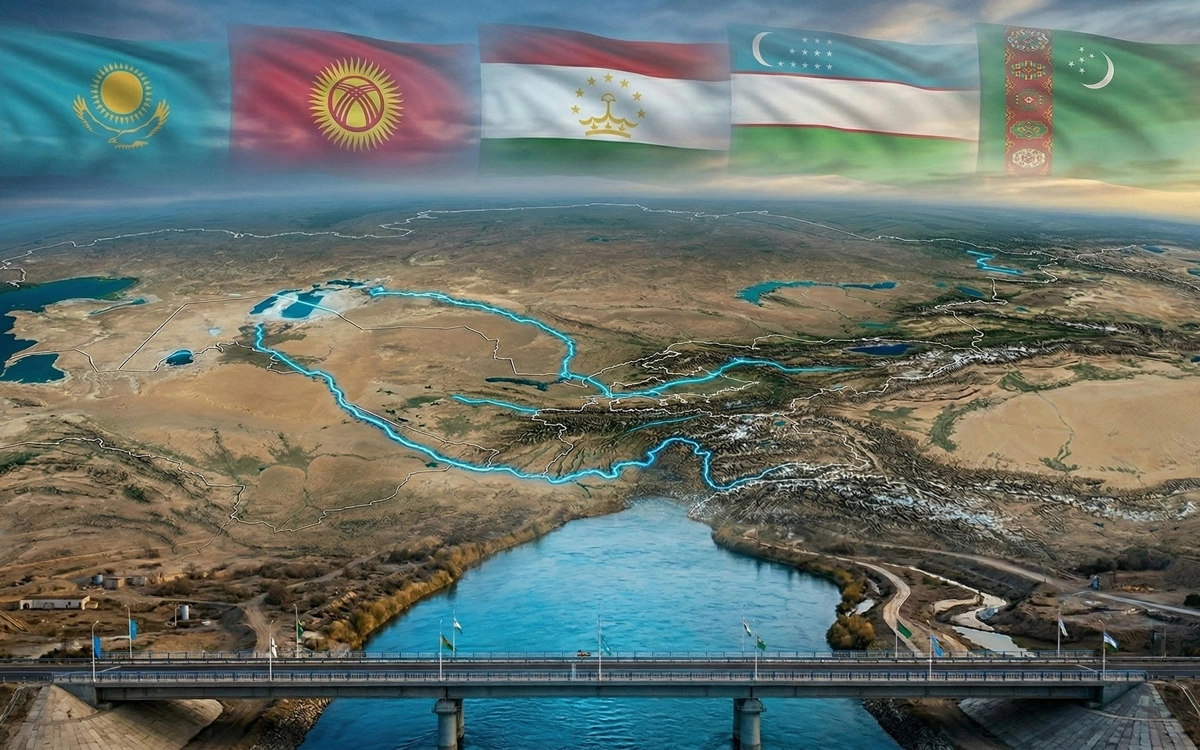
Water diplomacy in Central Asia. Photo credit: Kazinform
Climate pressure and regional risks
Rising temperatures, glacier melting and irregular weather patterns are placing unprecedented pressure on Central Asia’s water systems, increasing uncertainty for economies and communities that depend on shared rivers.
According to Shamshagul Mashtayeva, a candidate of geographical sciences and coordinator of international water diplomacy programs, climate change, biodiversity loss and shifting precipitation patterns are already affecting water availability across the region. She noted that these developments could either intensify economic, social and political tensions over water or push governments toward reforms and improved policies in the water sector.
Mashtayeva noted that negotiations over shared rivers in Central Asia reflect a unique balance. Unlike basins such as the Mekong or the Tigris-Euphrates, where upstream countries often have stronger economies, the situation in Central Asia is reversed. Downstream countries possess stronger economies, while upstream states such as the Kyrgyz Republic and Tajikistan hold significant freshwater reserves and hydropower potential.
She pointed to new regional infrastructure projects as potential sources of future tensions, particularly the Qosh-Tepa irrigation canal under construction in northern Afghanistan.
“For example, if new regional infrastructure, such as the Qosh-Tepa irrigation canal, being built by the Taliban government in Afghanistan, is not managed rationally on the basis of cooperation, it could disrupt existing agreements on the distribution of water resources,” said Mashtayeva.
She explained that once completed, the canal could reduce water inflow from the Amu Darya to downstream countries, including Uzbekistan and Turkmenistan, by up to 20%, posing additional risks for the already fragile Aral Sea basin.
Mashtayeva also cited tensions along the Tajik-Kyrgyz border as an example of how disputes over shared water resources can escalate. Weak institutional capacity, limited financing and outdated regulatory frameworks further complicate regional cooperation.
“Predicting the likelihood of water conflicts in the near future is difficult, since much depends not only on the political will of states, but also on the availability of effective instruments for managing water resources under conditions of scientific uncertainty,” she said, adding that managing shared water resources will require new approaches to cooperation and diplomacy, as the long-term well-being of future generations depends on the success of these efforts.
Kazakhstan’s cooperation on transboundary rivers
Kazakhstan’s water supply relies heavily on rivers originating outside its borders. According to the Kazakh Ministry of Water Resources and Irrigation, the country’s long-term average water volume is approximately 106 billion cubic meters, of which 44.3% originates from neighboring countries.
In 2025, Kazakhstan received 15.3 billion cubic meters from the Syr Darya, 1.9 billion from the Shu River, 688 million from the Talas, 7.01 billion from the Irtysh, 8.98 billion from the Ural (Zhaiyk), and 10.44 billion from the Ili River. Water entering Kazakhstan through the Syr Darya originates in the Kyrgyz Republic, Tajikistan and Uzbekistan. The Shu and Talas rivers flow from the Kyrgyz Republic, and the Ural River originates in Russia. The Irtysh and Ili rivers flow from China.
Water cooperation with neighboring countries is governed by intergovernmental agreements and joint commissions that coordinate water allocation, reservoir operations, and the management of shared infrastructure. Regional coordination on the Syr Darya is governed by the 1992 agreement on the joint management and protection of interstate water resources, implemented through the Interstate Commission for Water Coordination (ICWC).
Kazakhstan and Uzbekistan also signed a new agreement on the joint management of transboundary water bodies in November 2025. The agreement, currently undergoing ratification, establishes a joint commission for the Syr Darya basin.
Water relations between Kazakhstan and the Kyrgyz Republic on the Shu and Talas rivers are governed by a 2000 bilateral agreement that established the Shu-Talas Commission, responsible for coordinating water distribution schedules and maintaining shared hydraulic facilities.
Kazakhstan’s cooperation with China is based on a 2001 agreement on the use and protection of transboundary rivers, which established a joint commission and expert working groups to coordinate water use and environmental protection.
Water cooperation between Kazakhstan and Russia is regulated by an agreement signed in 2010 on the joint use and protection of transboundary water bodies. The framework covers several shared river basins, including the Irtysh, Ishim, Tobol, Ural, Kigash, Karaozen and Saryozek.
According to the ministry, more than 70 bilateral and multilateral meetings on transboundary water management are scheduled for 2026.
Efforts to restore the Aral Sea
Declining water levels remain one of Kazakhstan’s most serious environmental challenges, affecting ecosystems, economic activity and living conditions in surrounding regions.
Long-term efforts have helped stabilize the North Aral Sea, which has begun to recover in recent years. The next phase of restoration includes raising the Kokaral dam, which separates the northern part of the sea from the heavily depleted southern basin.
“We are currently implementing a project for the reconstruction and repair of emergency sections of the Kokaral dam, which we will complete this year. The volume of the North Aral Sea currently stands at around 23 cubic kilometers,” said Vice Minister of Water Resources and Irrigation Nurlan Aldamzharov.
The project aims to raise the dam height from 42 meters to 44 meters, which could expand the sea’s area and increase its water volume over the next four to five years.
Developing water diplomacy expertise
Water diplomacy is also emerging as a new academic and policy field across Central Asia.
Mashtayeva said the Kazakh Ministry of Science and Higher Education included water diplomacy in its 2026-2028 targeted research funding program, which aims to study institutions governing transboundary water resources in Central Asia and develop scientific approaches to strengthen regional stability.
According to the ministry, more than 1,500 water sector specialists completed professional training in 2025.
Water management programs operate at several universities, including the Kazakh National University of Water Management and Irrigation, Al-Farabi Kazakh National University, Satbayev University, Kazakhstan-German University and East Kazakhstan University. A consortium involving universities from Hungary, Sweden, Finland, Kazakhstan and Uzbekistan has also launched a joint Erasmus+ project focused on water resource management and diplomacy.
The article was originally published in Kazinform.
