
ASTANA — Kazakhstan held the first meeting of its Constitutional Reform Commission on Jan. 24 in Astana, launching work on proposed amendments that would reshape the country’s political system.
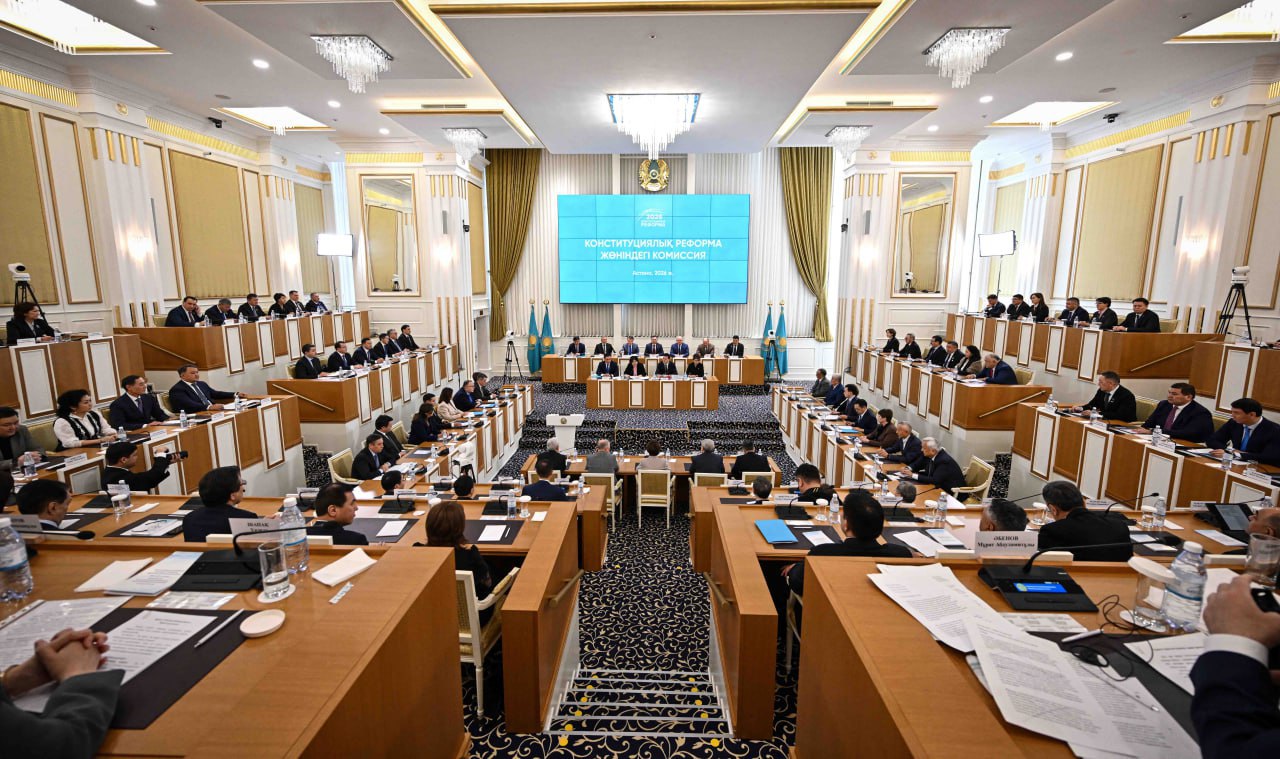
Constitutional reform commission starts work on proposed reforms. Photo credit: Constitutional Reform 2026 Telegram channel
The proposals include transitioning to a unicameral parliament to be known as the Kurultai, establishing a vice presidency, creating the Halyk Kenesi (People’s Council) with legislative initiative powers and introducing broader institutional and human rights reforms.
The commission, chaired by Constitutional Court Chair Elvira Azimova and composed of senior officials, lawmakers and civil society representatives, follows months of public discussion after President Kassym-Jomart Tokayev outlined a new political reform agenda in his Sept. 8 address to the nation.
“The final decision on constitutional reform will be made by the citizens of the country at a nationwide referendum,” said State Counselor Erlan Karin.
According to Karin, seven political parties and 16 public organizations submitted proposals during six months of consultations. The working group held six meetings to address the structure of parliament, term lengths, the number of deputies, electoral quotas, legislative authority, and interaction among the branches of government.
Constitutional Court Chair Elvira Azimova. Photo credit: Constitutional Reform 2026 Telegram channel
Azimova said more than 2,000 proposals were received from citizens, prompting the establishment of an expanded constitutional commission to conduct a comprehensive legal review.
“Kazakhstan is entering a new stage of political modernization. The head of state clearly stated that further development is impossible without strengthening institutional balance, increasing the effectiveness of legislative power, enhancing the system of checks and balances, and updating constitutional mechanisms for public participation in governance,” said Azimova.
She described the commission’s mandate as preserving constitutional foundations while adapting them to modern challenges.
Transitions to a unicameral Kurultai
One of the central proposals is the transition to a unicameral parliament, to be called the Kurultai – a historical term referring to assemblies traditionally convened in the Turkic steppe.
Under the proposal, the Kurultai would consist of 145 deputies elected through a fully proportional system, with seats allocated based on parties’ share of the national vote. Deputies would serve five-year terms.
“The new Kurultai, endowed with new powers and a special name, testifies to the deep roots of parliamentarism on Kazakh soil,” said Karin.
Vice presidency and People’s Council
The reforms also propose establishing the office of the vice president. The vice president would be appointed by the President with the consent of the Kurultai and could be dismissed by the President. The position would replace the current state counselor role.
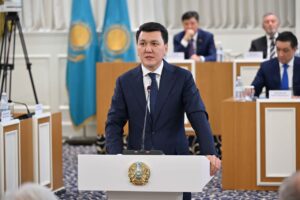
State Counselor Erlan Karin. Photo credit: Constitutional Reform 2026 Telegram channel
The vice president would represent Kazakhstan internationally on behalf of the President and serve as a liaison with the Parliament, the government and other state bodies. The officeholder would be prohibited from engaging in business activities, holding other paid positions or belonging to a political party.
In addition, the reforms propose creating the Halyk Kenesi (People’s Council) as a high-level consultative body, to be formed by the president and granted the right of legislative initiative – the authority to introduce draft laws for parliamentary consideration.
Its mandate will include developing recommendations on domestic policy, strengthening national unity and promoting national values. The council’s structure and procedures would be regulated by a separate constitutional law, and it would convene at least once a year rather than function as a permanent body.
Under the proposal, the People’s Council would be formed by the president and granted the right of legislative initiative – the authority to formally introduce draft laws for parliamentary consideration. Its mandate would include developing recommendations on domestic policy, strengthening national unity and promoting state principles and national values.
The council’s structure, composition and procedures would be regulated by a separate constitutional law. Its highest body would be a session convened at least once a year. Like the Assembly of the People of Kazakhstan and the National Kurultai, it would not function as a permanent body.
Additional reform proposals
Beyond institutional restructuring, discussions also touched on revising the constitutional preamble, governance mechanisms and the protection of fundamental rights. Other proposals remain under consideration as the commission continues its review.
