
ASTANA — From venture capital and green startups to critical minerals, education, and cultural diplomacy, the United Kingdom (UK) is recalibrating its engagement with Kazakhstan. In an interview with The Astana Times, UK Ambassador to Kazakhstan Sally Axworthy outlined how London sees Kazakhstan’s evolving economic structure and its role in the global green transition. She stressed partnership over pressure, pragmatism over politics, and people-to-people ties as the foundation of future cooperation.
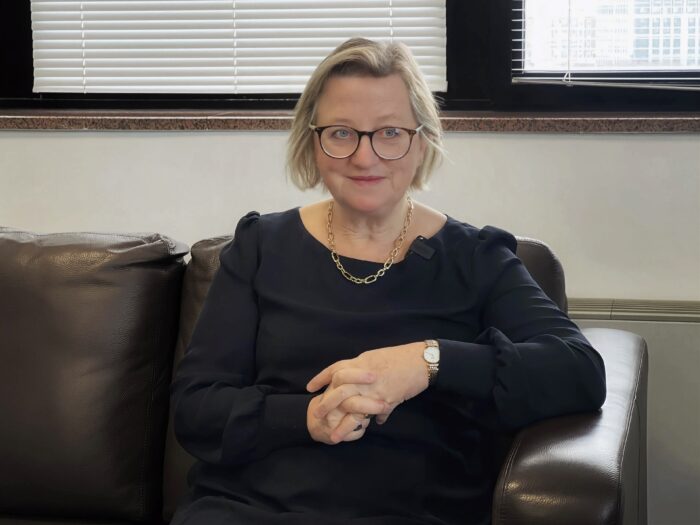
UK Ambassador to Kazakhstan Sally Axworthy. Photo credit: The Astana Times
Ambassador Axworthy said the UK Embassy sees its role as facilitating practical connections between Kazakh businesses and British expertise, a mission that extends far beyond formal diplomacy. Discussing concrete examples of cooperation, Axworthy highlighted the depth of ties between British and Kazakh companies in architecture and urban development, noting that this partnership is already visible in some of Kazakhstan’s most recognisable urban landmarks. She recalled that last year the UK Embassy organised the UK Future Places Conference in Kazakhstan, bringing together leading British and Kazakh firms to exchange expertise and explore long-term collaboration.
“We brought 25 leading British architectural firms to Kazakhstan, and we have some really good cooperation in the architectural sector,” she said.
Pointing to visible results of this collaboration, Axworthy noted that some of Kazakhstan’s most recognizable modern landmarks were designed by British firms.
Sally Axworthy with AT correspondent Aida Haidar. Photo credit: The Astana Times
“Khan Shatyr, one of those fantastic monuments in Astana, was designed by Foster and Partners, and the Almaty Museum of Arts, which has just opened, was designed by Chapman Taylor. The Tselinny Center of Contemporary Culture in Almaty was also designed by British architect Asif Khan. So we have really good cooperation, but it’s a good example of how our businesses connect,” she said.
Beyond flagship projects, Axworthy emphasized that the UK is placing growing emphasis on supporting small and medium-sized enterprises, which she sees as essential to Kazakhstan’s long-term economic resilience. She highlighted the Green and Inclusive Growth Programme as a key instrument in this effort.
She explained that the program focuses on providing both financing and advisory support, particularly to startups operating in green and digital sectors.
“This year, we are setting up a venture capital fund which will invest in small enterprises. We’ve got a focus on green companies, AI, digital, anything to do with the green economy, and women to encourage women entrepreneurs. It will be a fund that invests in startups,” she said.
Axworthy added that digital innovation has become a major priority for the embassy, especially given Kazakhstan’s ambitions in AI and technology-driven growth.
“During Digital Bridge this October, the embassy supported an event where 12 digital startups from across Central Asia pitched to investors. We supported that event because we know that AI and digital are a big priority here, and it’s obviously a great opportunity for small businesses,” she said.
Critical minerals, green technology, and the future energy mix
Turning to energy and climate policy, Ambassador Axworthy stressed that the UK’s own experience with decarbonization shapes its approach to cooperation with Kazakhstan. According to her, last year, the UK generated 50% of its electricity from green sources, moving away from coal. Reflecting on the broader impact of this transition, Axworthy noted that it has strengthened rather than weakened the British economy.
“Since 1990 we have reduced our emissions by 48%, and at the same time we have increased the size of our economy by 80%. It hasn’t held us back, quite the opposite because we’ve invested in green technology and we’ve created jobs in the green sector,” she said, pointing out that this experience creates a natural basis for cooperation with Kazakhstan, which has set a net-zero target for 2060.
“We would really like to partner with Kazakhstan on those sorts of issues. Kazakhstan also has a green transition to make, and this is something where we see lots of scope for partnership,” she said.
Axworthy underlined that critical minerals are central to this transition, as they underpin technologies ranging from electric vehicles to renewable energy systems. Discussing the UK’s updated Critical Minerals Strategy, Axworthy outlined three main pillars: domestic production, financial infrastructure, and stable supply chains. She noted that the UK is developing its own resources, including lithium and tin in Cornwall, while also leveraging London’s role as a global financial hub.
“The second strength we feel we have in the UK is that we are a centre of finance for critical minerals,” she said, pointing to the London Metals Exchange as a key platform for global metals trading.
At the same time, she emphasized that partnerships with resource-rich countries such as Kazakhstan are essential to building resilient, transparent supply chains.
“We understand that Kazakhstan wants not just to be a producer of raw materials, but also to process,” she said, citing several joint projects already underway, including a venture involving rhenium recycling.
“There’s a small enterprise called Maritime House that has a joint venture with Zhezkazgan Redmet. It is expected that it will produce up to 25% of the world supply of rhenium in the future. They’re recycling rhenium, and that rhenium already goes into Rolls-Royce turbines. It’s a great thing because it’s recycling and producing an important critical mineral,” she said.
She also mentioned a vanadium project being developed by Ferro-Alloy Resources, which is expected to supply up to 10% of global demand.
Education and standards, Axworthy added, play a critical supporting role. She noted that Cardiff University has opened a branch campus in Astana, offering courses in geological exploration, and that the UK government is also working with Kazakhstan on the Extractive Industries Transparency Initiative.
“These are the things that give businesses confidence to come and invest,” she said, stressing the importance of transparency and environmental standards.
Addressing growing international competition for Kazakhstan’s critical minerals, Axworthy said the UK does not view this as a zero-sum game.
“I don’t particularly see a conflict there. Lots of countries are interested in doing business here, and the UK is one of those,” she said.
Navigating a shifting geopolitical landscape
Kazakhstan’s position at the crossroads of Europe and Asia inevitably shapes its foreign policy. Discussing this dynamic, Ambassador Axworthy described Kazakhstan’s multivector approach as both logical and necessary.
“Kazakhstan’s location brings certain responsibilities, and multivectoralism is a consequence of that. It makes absolute sense,” she said.
She noted that relations with European countries, including the U.K, form an important part of this strategy. Recalling a visit by a former U.K. foreign secretary David Cameron in April 2024, Axworthy emphasized that the U.K. does not expect Kazakhstan to align exclusively with any single partner.
“I’m not going to quote him exactly, but he said, ‘we’re not asking you to choose. We believe partnering with us is for the benefit of our mutual security and prosperity.’ So that was a nice way of expressing it,” she said.
While acknowledging that support for Ukraine remains a central pillar of UK foreign policy, Axworthy said London understands that Kazakhstan approaches international issues from a different perspective.
“We understand that Kazakhstan has a slightly different perspective on international issues,” she said.
At the same time, she highlighted areas of clear alignment, particularly Kazakhstan’s support for sovereignty, territorial integrity, and multilateral institutions.
“Kazakhstan has been a champion of the principles of sovereignty and territorial integrity,” she said, citing initiatives such as the Sustainable Development Goals Centre in Almaty and the Conference on Interaction and Confidence Building Measures in Asia as evidence of its commitment to multilateralism.
“We have a Strategic Partnership and Cooperation Agreement with Kazakhstan, which is being ratified at the moment, and that’s the framework for our relationship,” she said.
Education and soft power
Education remains one of the strongest pillars of bilateral relations. Axworthy noted that nearly half of Bolashak scholars studied at British universities, creating a deep reservoir of shared experience. She noted that the relationship is evolving, with British universities increasingly opening campuses in Kazakhstan.
“We have De Montfort in Almaty, which has already had its first graduation, and Cardiff and Coventry. (…) That offers a more economical option for Kazakh students, and they don’t have to go abroad,” she said.
On academic quality, Axworthy stressed that these campuses meet the same standards as in the UK. She also highlighted the British Council’s role in supporting English-language education and teaching standards nationwide.
“I’ve been really impressed by how committed Kazakhstan is to its languages,” she said, noting the country’s widespread multilingualism.
Culture, tourism, and telling Kazakhstan’s story
Axworthy believes Kazakhstan’s cultural and tourism potential remains under-appreciated in the UK. Speaking about her efforts to learn Kazakh, she said the language has opened a window into a rich, largely intangible cultural tradition. One thing she noticed about Kazakh culture is that much of it is intangible: traditions, gatherings, and social life. She said that Kazakhstan could do more to tell its own story internationally, particularly its nomadic heritage, and highlighted tourism as a significant opportunity.
“Kazakhstan has fantastic natural beauty, and the tourism opportunities here are enormous, British people like to travel, and they like to discover new places,” she said.
Axworthy singled out Almaty as a city with particular appeal, set against the mountains, where she stayed for a few weeks to learn Kazakh.
“This city is really quite special,” she said.
She also highlighted emerging cultural links, including Kazakh language classes at Oxford University and growing interest from British museums and creative industries. Reflecting on popular culture, Axworthy noted that she has been watching Kazakh films while learning the language, particularly comedies, and highlighted the UK’s experience in film production as another potential area for cooperation.
Concluding the interview on a personal note, she pointed to shared interests that connect societies beyond diplomacy.
“I was pleasantly surprised to see how many Kazakh people follow British football teams. When Wales played in Astana, the fans came, experienced Kazakhstan, and really loved their visit here. These things create real connections between our countries,” she concluded.
