
ASTANA – Telegram’s new AI lab in Astana, AI as a digital worker, and a call for a venture mindset set the tone as the Digital Bridge forum opened on Oct. 2 in Astana. World leaders, including President Kassym-Jomart Tokayev and Hungary’s President Tamás Sulyok, tech leaders and professors staked out bold ideas on how AI will reshape economies and societies.
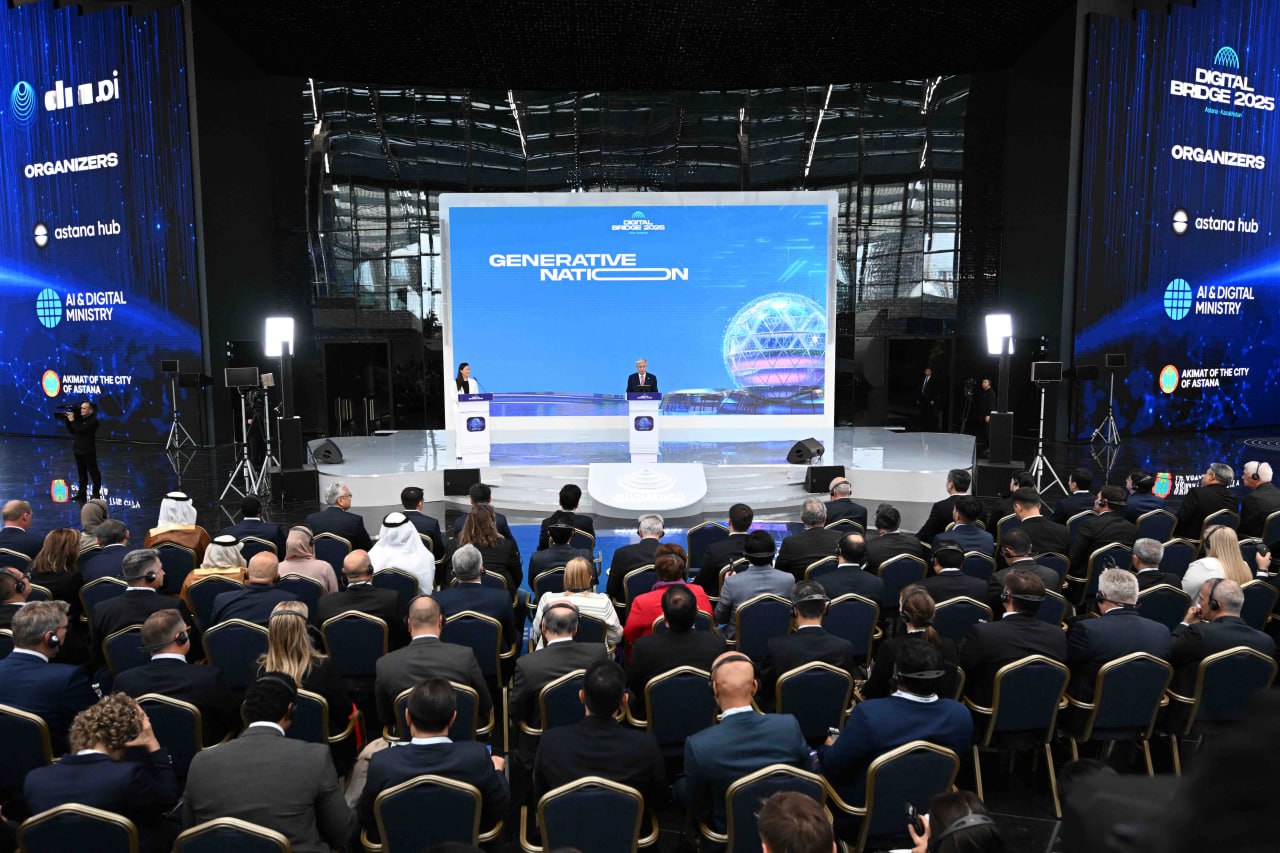
Photo credit: Akorda
“It is undeniable that Kazakhstan has become one of the hubs of technological development,” said Hungary’s President Sulyok, who is on an official visit to the country on Oct. 1-3.
He noted how warmly welcomed Hungarians are in Kazakhstan. “We feel the same way about Central Asia. We have never forgotten where we came from to reach the heart of Europe. Our Eastern origins are part of our identity, but this is not only evident in our historic traditions. It also influences our mentality. We do not look only in one direction. We are very well aware that development does not only flow in one direction. Innovation can come from many places,” said President Sulyok.
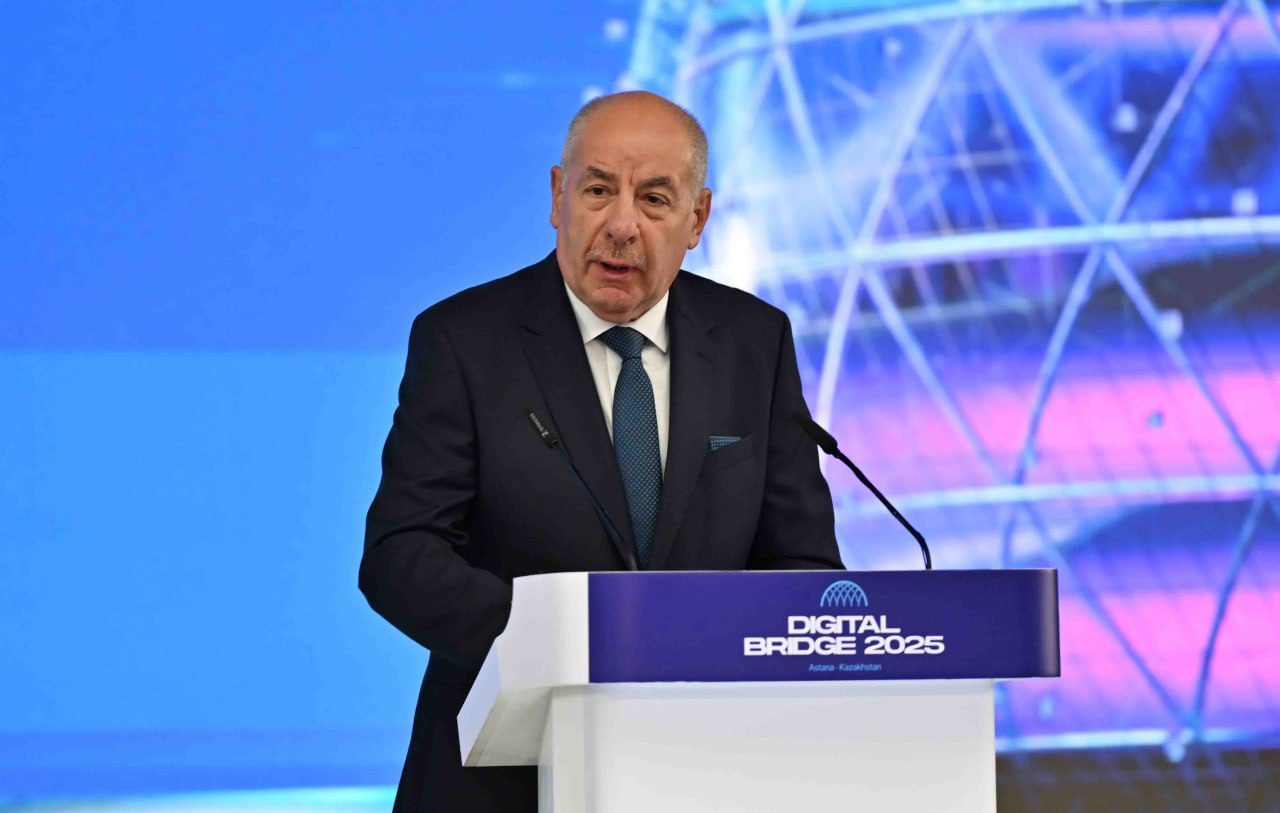
Hungary’s President Tamás Sulyok. Photo credit: Akorda
When it comes to technological innovation and the role of AI, he emphasized the importance of “taking stock” of the positive impact of AI and also considering its ethical implications.
“We can achieve spectacular progress in many areas of life. We can expand the intellectual horizons of humankind to an extent that we cannot even imagine,” he said.
Telegram to open AI lab in Astana
Pavel Durov, the founder and CEO of Telegram, a messaging platform launched in 2013, discussed in detail how Telegram plans to work with Kazakhstan. He announced that the company’s lab will open at the Alem AI International Center.
“A dedicated AI lab here in this building, Alem AI. The first project will be a collaboration between Telegram and Kazakhstan’s supercomputer cluster, launched by the Ministry of AI here in this country,” Durov said.
Going into details, he revealed Telegram has been “quietly” working on a new technology in the last few months, one at the intersection of AI and blockchain.
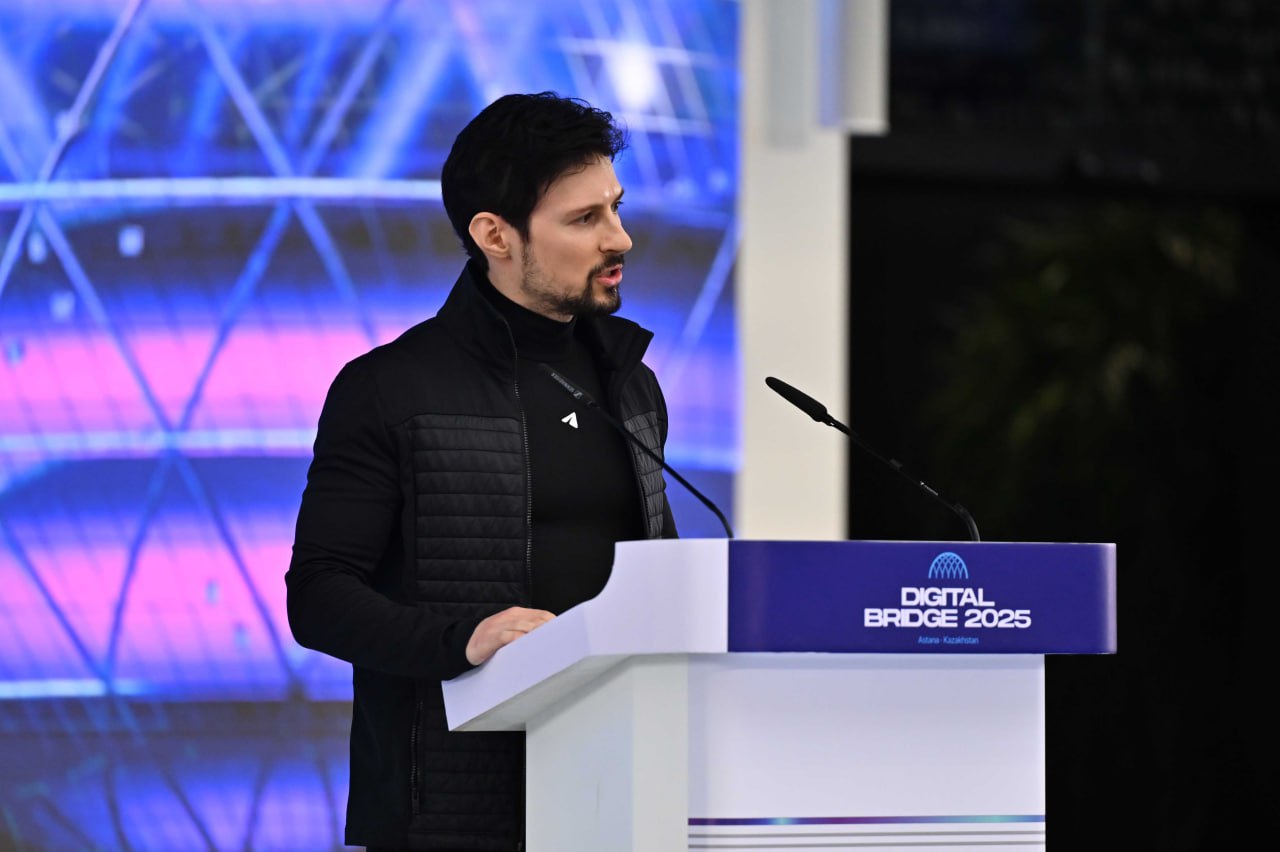
Pavel Durov, the founder and CEO of Telegram. Photo credit: Akorda
“This technology will allow more than a billion people to use AI features powered by a decentralized computing network in a private, transparent, and efficient manner. Telegram, with its billions of users and thousands of mini-apps, will become the first consumers of this technology. We will become the first major supplier of computing power for this network,” he said.
This network will be built on three key principles: transparency, efficiency, and privacy.
“This will be a new stage for Telegram and its billion-user community. We have already laid the groundwork for it. Last year, we increased connectivity between Telegram data centers and telecoms here in Kazakhstan, which resulted in the acceleration of the speed of access for all our 12 million users in Kazakhstan,” he said.
Calling AI a “disruptive technology that will change every field of human life,” Durov suggested there are two ways to approach it – with hope or with fear.
“After spending countless hours talking with business leaders, government officials, and students here in Kazakhstan, I can say with confidence that this country chose hope, optimism, and excitement. And this is the right way to approach AI because every challenge you create by AI can also be solved by AI. And much more than that. AI can bring about a new era of abundance for everyone. But for this vision to materialize, we must work hard and invest a lot of energy and thoughtfulness in this process,” he said.
‘Love of my life’
Kai-Fu Lee, a Taiwanese computer scientist and investor and CEO of Sinovation Ventures, commended Kazakhstan’s push for AI development. “I was here in January, when this was all a dream,” he said.
“This is something people here should be rightfully proud of that you are paving the way for AI, which is the love of my life, something I’ve been working on for the last 45 years in machine learning. It is phenomenal to see the fruition everywhere in the world and blossoming, especially here in Astana,” he said.
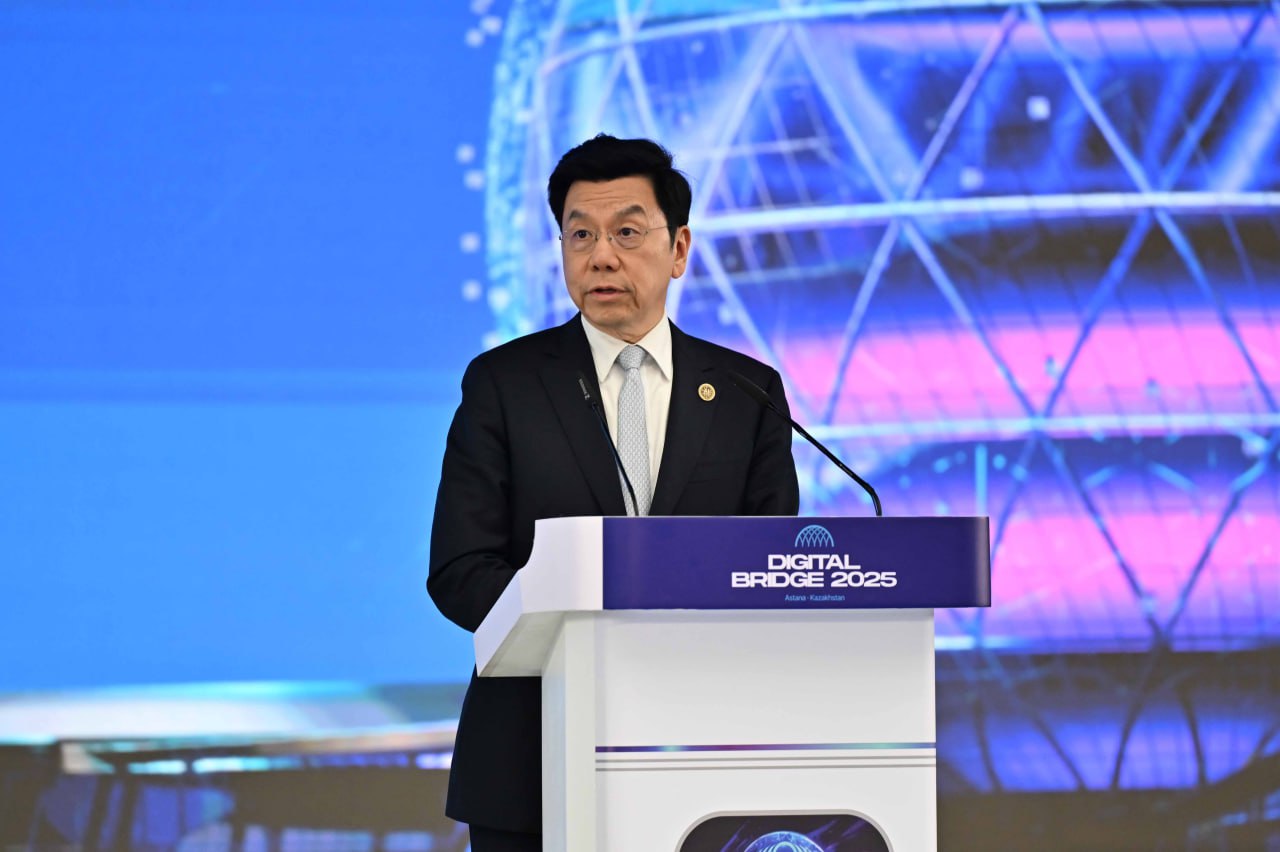
Kai-Fu Lee, a Taiwanese computer scientist and investor and CEO of Sinovation Ventures. Photo credit: Akorda
Dr. Lee said AI is the most significant technology humanity has ever developed. He put it this way: it is like a system that increases its IQ by 30 points every year, while reducing its cost tenfold each year.
“We have never seen anything at that magnitude and scale, and it is not just a chatbot. It is a phenomenal tool. It is a set of tools that will make all of us more productive. It will make creative people who don’t know how to program make a game. It will make creative people who don’t write perfectly write a phenomenal paper. It will make the creative who doesn’t draw produce the most amazing marketing brochure. It will be liberating for all of us to be able to use the AI tools to become many, many times more productive,” he explained.
He believes in AI’s ability to enhance productivity and notes its shift from being a mere tool to becoming people’s assistants, so-called digital workers. The question, however, is what the role of government is in bringing it all together. He noted that the United States has been fortunate as Silicon Valley emerged organically, and the government did not need to intervene heavily.
“But the rest of the world is not so lucky,” he added. While the West has been a frontrunner, he stressed an instrumental role that the East can play, rooted in the example of China. Kazakhstan has a role, too, he added.
“I think Kazakhstan is in a wonderful position as the digital bridge that will connect not just academia to businesses, investors to entrepreneurs, business people to academics, but also from East to West. It will be my honor and pleasure to take all that I have learned from the United States and from China to help Kazakhstan realize this dream,” he said.
A vision translated into action
Mansoor Al Mansoori, CEO of G42 International, an Abu Dhabi-based AI development holding company, discussed how his country is collaborating with Kazakhstan to harness the potential of new technologies. Kazakhstan’s efforts, reflected in the development of a national AI strategy and the creation of the Alem AI center, are “powerful proof points of a vision translated into action.”
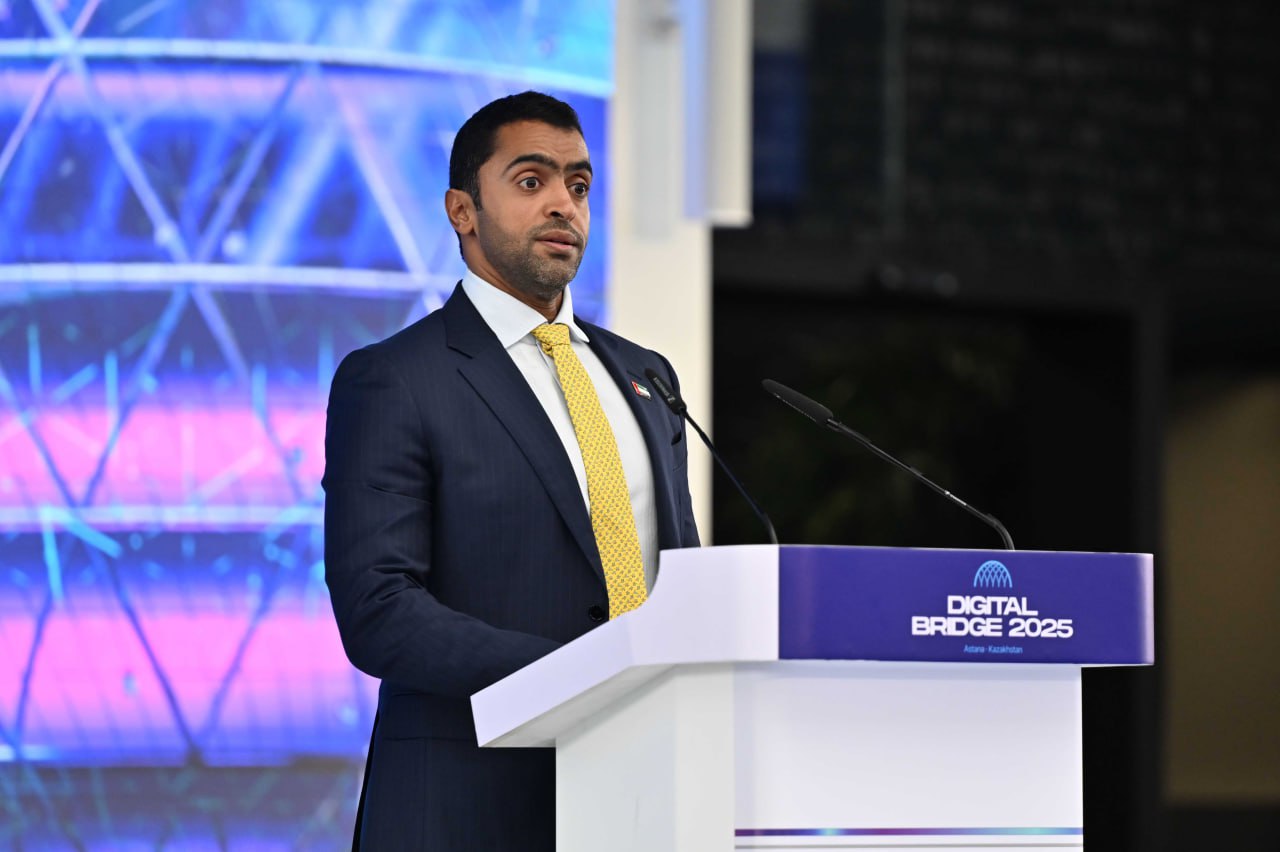
Mansoor Al Mansoori, CEO of G42 International, an Abu Dhabi-based AI development holding company. Photo credit: Akorda
“Alem AI, in particular, is more than an institution. It is a symbol of Kazakhstan’s ambition to firmly anchor Central Eurasia in the global digital economy. And our partnership is already tangible. Together, we launched Central Asia’s first supercomputer. We are building a smart city in Astana, from traffic management to urban safety. Through our joint venture with Samruk Kazyna, we are scaling AI across Kazakhstan’s most strategic industries. These are not isolated projects. They are architects of a shared future together,” he said.
AI’s role in education
Peter Norvig, director of research at Google and a fellow at Stanford’s Human-Centered Artificial Intelligence Institute, turned attention to how AI can transform education in a way that can “level the playing field and allow students from disadvantaged backgrounds to compete with anyone, and allow smaller countries to match the biggest ones.”
“When a tutor interacts one-on-one with a student, they achieve mastery faster and better. We know this, but it has never been practical to have a great tutor for every single student. But in just the last few years, generative AI has emerged as a technology that could finally deliver on this promise,” he said.
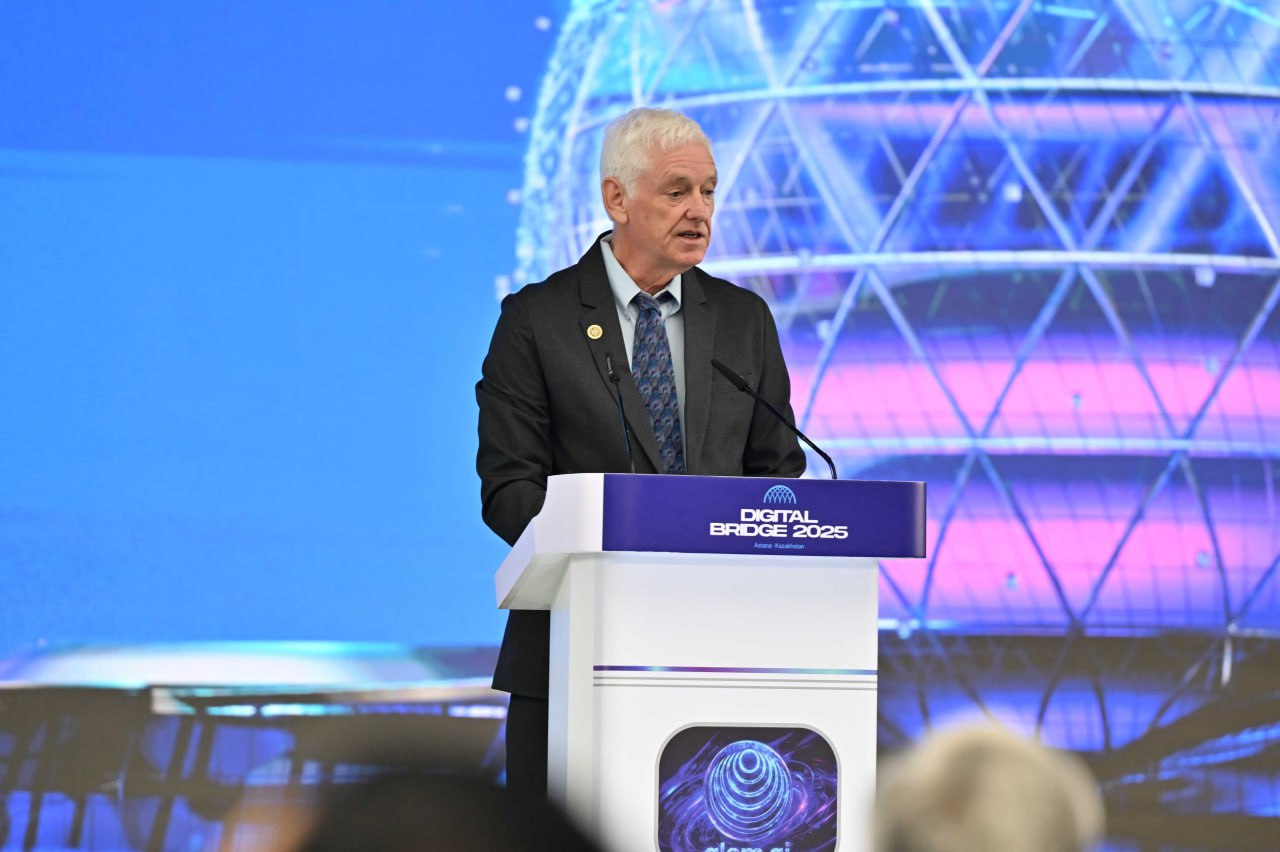
Peter Norvig, director of research at Google and a fellow at Stanford’s Human-Centered Artificial Intelligence Institute. Photo credit: Akorda
With his nearly 30 years of experience in AI in education, Norvig said he has witnessed many promising ideas rise and fall. Most of the time, this is due to over-reliance on technology. “Technology should support human interactions and bonds, but not replace them. Now this applies to the workforce as well as schooling,” he added.
“I advise a lot of startup companies in the tech field, and many of them tell me, ‘I want to hire a Ph.D. in AI, but I can’t find one because Google and Facebook already hired them all.’ But that’s the wrong way of thinking. It’s like saying, I want to open a restaurant and I want to hire a Ph.D. in stove design. Well, no, that’s not what the restaurant needs. It’s a chef who knows what the customers want to eat. Similarly, we should build a generation of students who understand how to use AI and other tools and make things that people want,” Norvig said.
Governments’ role lies in offering centers of innovation like Alem AI, he added.
“Government regulation should ensure privacy and security, and also support free-flowing, cross-border open data so that Kazakhs are using the same state-of-the-art tools and services as the rest of the world is building, and Kazakhstan can become a world leader,” he said.
Venture mindset
Ilya Strebulaev, professor at Stanford Graduate School of Business and a renowned expert in venture capital, startups, and corporate innovation, posed a question of whether people in the hall had heard of a “French Google, a German Tesla, or a Japanese Amazon?”
The answer is no. Over the past half-century, the world’s most transformative companies have overwhelmingly come from the U.S.
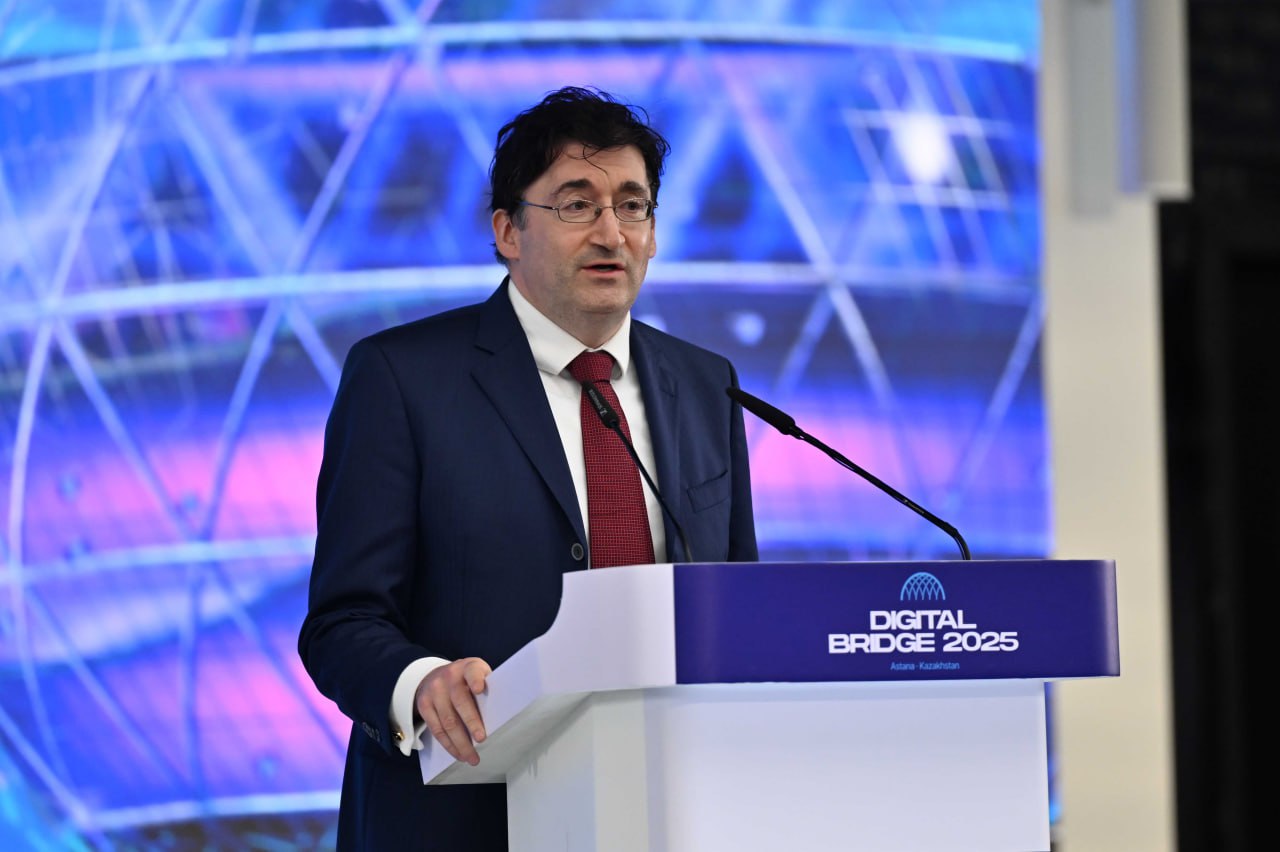
Ilya Strebulaev, professor at Stanford Graduate School of Business. Photo credit: Akorda
The reason is this, he said. The U.S. created a regulatory environment that enabled venture capital to thrive, setting the stage for an industry that would go on to reshape the global economy.
“Today, seven out of the top ten companies in the U.S. by market capitalization used to be venture-backed companies. They constitute 86% of the market capitalization of those 10 companies. If you look at all the public companies in the United States, half of them that went public in the last 50 years were venture-backed. These venture-backed companies are responsible for more than 40% of market capitalization, 75% of all the R&D expense, and 90% of patents coming from the United States,” Strebulaev said.
These substantial numbers translate into economic growth, and Strebulaev projects that the pace at which technologies are applied will only grow. At the same time, while it opens doors for new players, it won’t be painless for many countries and industries.
“I’ve studied every single unicorn, venture-backed unicorn, and I am glad that finally Kazakh companies are going to enter my dataset. Fifteen years ago, it took on average seven years to become a unicorn. These days, it takes less than four years. And these changes will not be only positive. Many countries, industries and labor markets may be disrupted,” he explained.
Turning those changes into positive ones, Strebulaev says, requires embracing what he calls the venture mindset, which involves principles that great venture capitalists and visionary leaders use to transform disruptive innovation into opportunity.
“Let me be very provocative. Seven out of the top ten companies today in the world did not exist 50 years ago. Based on my research, my provocative prediction is that five of ten companies that will be the largest 20 years down the road either don’t exist today or are very small VC-backed startups. And they will come from many countries in the world. That is your opportunity to create your Googles, your Teslas, and your Amazons,” he concluded.
The Digital Bridge forum will continue through Oct. 4, with multiple panel sessions, the Astana Hub Battle and the Generative Nation Pitch. Since its inception, the forum has brought together over 67,000 participants from more than 100 countries, 1,000 speakers, and 550 representatives from governments and international organizations. Over 500 startups and nearly 500 investors have taken part in its business program.
