
ASTANA – In 2023, Kazakhstan launched a large-scale asset recovery campaign to recover millions of dollars stolen and transferred abroad by corrupt officials. Two years later, the volume of returned assets exceeded 1.2 trillion tenge (US$2.3 billion). The Astana Times delves into key facts, figures, and results of this ambitious effort.
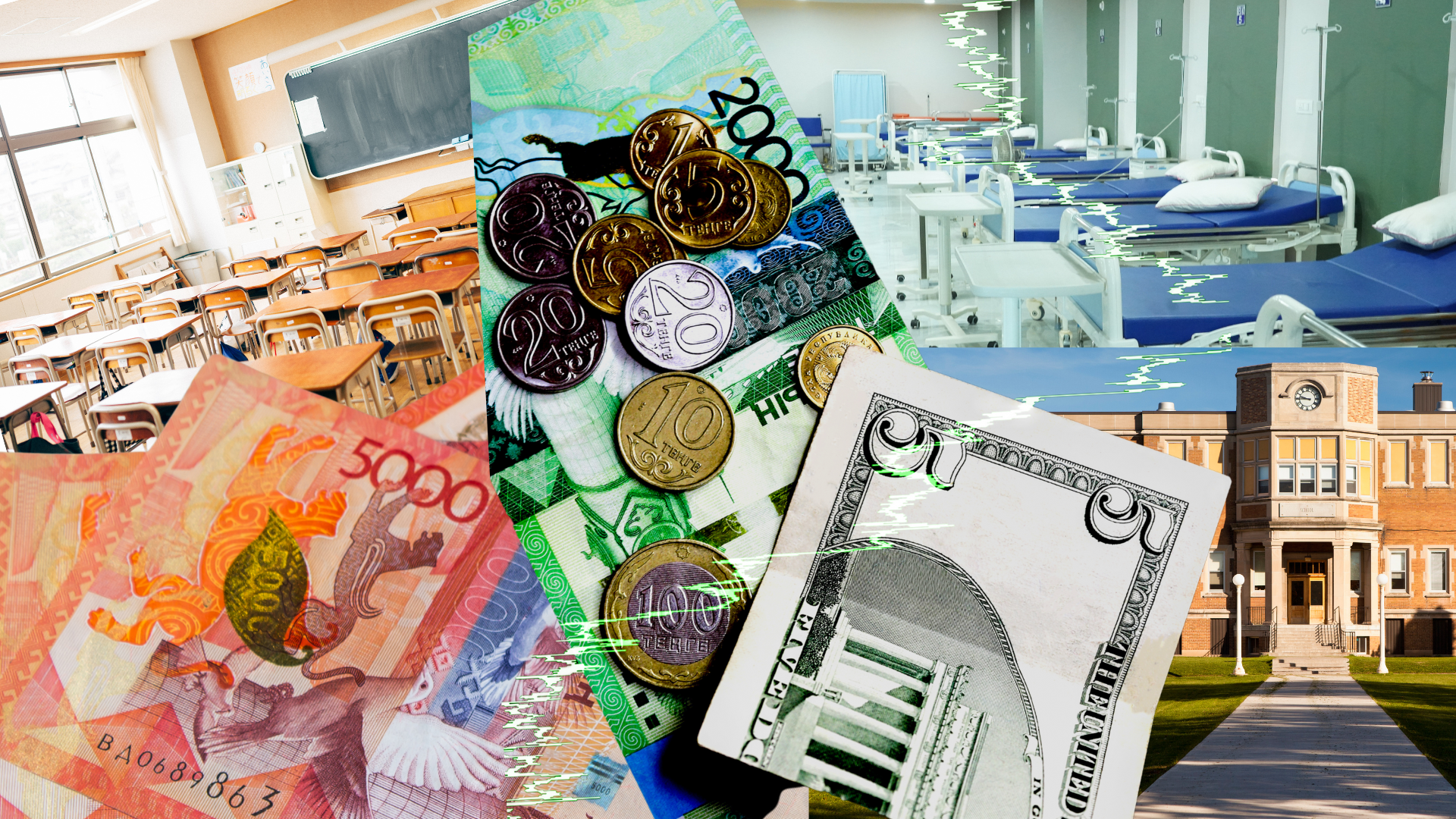
Collage is created by The Astana Times.
A law born from reform
President Kassym-Jomart Tokayev signed the law on the return of illegally acquired assets to the state in July 2023, spearheading one of the region’s most ambitious efforts to repatriate illegally acquired wealth. The law was born out of a large-scale reform sparked more than a year after the country’s biggest protests in January 2022, which exposed deep economic and social grievances.
The text of the law states that the objectives are the “return of assets and/or their involvement in the legal economic turnover in Kazakhstan, the elimination of causes and conditions that contributed to their illegal acquisition and withdrawal, as well as the restoration of social justice in society.”
In September 2023, a separate company, officially dubbed the Returned Asset Management Company, was established to accept, preserve, and sell the assets returned to the state. A month later, the Asset Recovery Committee was created under the Prosecutor General’s Office.
“The law targets individuals and legal entities for whom there are reasonable doubts about the legality of their asset acquisition sources, provided the total value of their assets equals or exceeds 13 million times the monthly calculation index [roughly $97.8 million at the moment of writing],” said the committee in a written comment for this story.
Relevant authorities conduct monitoring and analysis to identify individuals involved in illegal asset withdrawal schemes, as well as their associates. If officials doubt the legal origin of these assets, they will propose adding those individuals and their affiliates to a special asset recovery register. This decision is made by a government commission led by the Prime Minister and made up of members of Parliament, public figures, ministers, and heads of state bodies.
The law outlines clear criteria for raising suspicion. For example, it includes an inconsistency between a person’s income and the value of their assets. If an individual is included in the register, upon notification, they have one month or up to three months if more time is needed to file a declaration proving that their assets were acquired legally.
If the person cannot prove the legitimacy of their wealth, the assets are officially labeled as being of unexplained origin.
Voluntary and compulsory return
Overall, the return of assets may be voluntary or compulsory.
The voluntary return of assets involves transferring all or part of the illegally acquired assets to the state. Speaking at a press briefing following a July 15 government meeting, Prime Minister Olzhas Bektenov stated that the commission has reached agreements with individuals on the voluntary return of assets totaling 900 billion tenge (US$1.7 billion).
“Specific names are not made public, as required by the legislation,” he told journalists. “I think it is right, because mentioning prominent business figures in this context can negatively impact the companies they lead or own. Many of these companies are public and have international partners. Disclosure, in my opinion, would not have a positive impact, but rather a negative one on our domestic businesses.”
Assets returned voluntarily range from houses to luxury watches and historical artefacts. For example, in May, representatives from the Asset Recovery Committee and the Returned Asset Management Company officially transferred a collection of rare historical and cultural artifacts to the National Museum of Kazakhstan.
The Returned Asset Management Company also regularly posts a list of assets available for auction on its official website. All proceeds from the auction are directed to the Special State Fund.
Compulsory return, in turn, is enforced based on court rulings of Kazakhstan, foreign jurisdictions, or decisions of competent foreign authorities, in accordance with the law and other legislation.
How much has been recovered
According to the latest figures from the Asset Recovery Committee, as of June 2025, the state has returned over 1.2 trillion tenge (US$2.3 billion) in assets. Of that amount, more than 770 billion tenge (US$1.46 billion) has already been returned to the state, including 667 billion tenge (US$1.27 billion) in cash and 103 billion tenge (US$195.7 million) in physical assets.
The money is transferred to the Special State Fund, which is used to finance social and economic development projects, such as schools, hospitals, sports facilities, and basic infrastructure. In a written comment to The Astana Times, the Ministry of Finance noted that the fund held 103.4 billion tenge (US$196.5 million) as of June 2025. Total revenues had reached 433.3 billion tenge (US$823.3 million)
“Currently, the government has approved the financing of the construction of 406 social and communal facilities for 318 billion tenge [US$604.2 million] at the expense of the fund, of which 333 facilities are already under construction throughout the country. The allocation of the fund’s resources is carried out on the proposals of the central government bodies on the basis of decisions of the national budget commission,” the committee said.
Projects under construction include 10 educational facilities, four sports projects, 162 healthcare projects, and 230 water supply and sewage projects.
Among the completed projects, a medical outpatient clinic, the first social facility in Kazakhstan built with returned assets, was opened in the Arshaly district of the Akmola Region in June.
On July 12, the committee reported that the government had approved five billion tenge (US$9.5 million) in funding to build and upgrade water supply systems across the Karagandy Region in central Kazakhstan. Earlier, the government allocated 21.5 billion tenge (US$40.8 million) from the fund to support the construction of a new water supply system in the Akmola Region.
How the money in the Special State Fund is managed
According to the Ministry of Finance, projects seeking financing from the fund should meet specific social or economic criteria, as outlined in government regulations approved in September 2023.
To qualify, projects should align with national priorities, such as the President’s annual state-of-the-nation addresses, state planning documents, and key goals such as economic diversification, innovation, or social modernization. Projects should also match regional infrastructure standards, among other criteria.
“The process begins when central and local government agencies submit investment proposals and financial and economic feasibility studies to the authorized planning body for economic evaluation. If the review is positive, a full project package is prepared for financing projects with the fund’s resources,” said the ministry in a comment for this story.
Kazakhstan’s budget authorities monitor the flow of money into the special state fund every month, using the treasury’s digital system. According to the ministry, if central or local government agencies save money during construction tenders or after completing a project, or if they fail to use the funds within six months due to delays in signing contracts, they are required to return the unspent money to the fund within a month.
Agencies involved must also submit quarterly and annual reports detailing how much money was received and spent from the fund, according to rules set by the ministry in May 2025.
Transparency is key
Asset recovery is rooted in the United Nations Convention Against Corruption, the first international agreement to recognize asset recovery as a principle of international cooperation between states.
While the two-year effort holds high promise, experts caution that the process must be transparent to the public.
“Kazakhstan has made significant progress in this area. (…) When we talk about asset recovery in the context of the Convention against Corruption, the perpetrators are usually public officials or individuals connected to public services, who commit crimes, such as embezzling state property and subsequently laundering the proceeds,” said Vladimir Kozin, a regional anti-corruption advisor at the United Nations Office on Drugs and Crime (UNODC), a guardian of the convention.
“Recovered assets can simply be returned to the state budget, but a positive practice remains ensuring transparency in how these funds are used. It is important to clearly show they are invested in various national development programs and in achieving the sustainable development goals. This transparency allows the public to see how the funds contribute to areas like infrastructure development, education and other sectors that require investment for the country’s development,” said Kozin.
He noted it is a “complex and labor-intensive process” requiring support at different levels.
“These reforms are essential and timely. Not only for Kazakhstan but also for other developing countries. The issue of asset recovery is actively discussed on international platforms because developing nations are particularly vulnerable to the illicit outflow of assets,” he added.
According to Prime Minister Bektenov, the process doesn’t lack transparency.
“The funds we recover through the working commission are directed toward socially important goals. We regularly share this information. This includes numerous projects in education, healthcare, and public utilities. I believe there’s no shortage of information,” he said.
A case from the past
Kazakhstan has a historical reference in asset recovery, exemplified by the BOTA Foundation, established in 2008 by the governments of Kazakhstan, the United States, and Switzerland. It was established to help recover over $115 million in stolen public funds, with the goal of improving the lives of disadvantaged children, youth, and families in Kazakhstan.
Operational from February 2009 to December 2014, the foundation was managed by an international team from IREX and Save the Children, selected through a World Bank-led tender. The program supported young people through conditional cash transfers, higher education scholarships, and grants for innovative social services.
