
ASTANA – The 120th anniversary of the birth of composer, educator and public figure Latif Khamidi (1906-1976) is being marked on July 17. One of the leading figures in the formation of Kazakhstan’s professional musical culture, Khamidi devoted more than five decades to the development of the country’s musical life through composition, education, research and public service. His legacy encompasses opera, song, theatre and film music, choral arrangements and the preservation of Kazakhstan’s rich folk heritage.
Early years and artistic formation
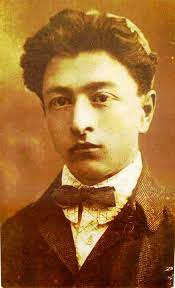
Latif Khamidi, a prominent figure of Kazakhstan’s musical culture. Photo credit: latifkhamidi.kz
Khamidi was born on July 17 in Buvari village, Kazan Province, into a poor Tatar family. Due to economic difficulties, the family moved several times before settling in Katta-Kurgan, where he began his education. His musical abilities emerged early. He studied mandolin, violin and piano, performed at school concerts and developed an interest in literature under the guidance of teacher Zahida Burnasheva. By the age of 13, he had published articles, poems and short stories, according to latifkhamidi.kz.
Education and discovery of Kazakh music
After moving to Tashkent in 1920, Khamidi became acquainted with Kazakh folk songs and kuis, which influenced his artistic development. During this period, he composed his first works, including “First Waltz” and “Cheerful Youth”. After graduating from the Tashkent Institute of Education in 1926, he joined the Blue Blouse ensemble as pianist and musical director and toured Kazakhstan, gaining close knowledge of its culture and traditions.
“It was during that remarkable journey that I developed such a deep love for the nature, people and music of the Kazakhs that, seven years later, when I was offered the opportunity to go there, I accepted without hesitation,” he wrote later.
Khamidi continued his professional training at the First Music School in Moscow under Boleslav Yavorsky. During this period, he composed numerous children’s songs, including works based on poems by outstanding Tatar poet Mussa Jalil, which were published in periodicals and later collected separately.
Career in Kazakhstan
In 1933, Khamidi moved to Alma-Ata (former name of Almaty) and joined the Kazakh State Drama Theatre as conductor, composer and head of the music department. The same year, he edited and prepared the introduction to Soviet ethnographer Aleksandr Zatayevich’s collection “50 Songs of the Kazakh Tatars,” beginning his long-term work in the field of folk music research.
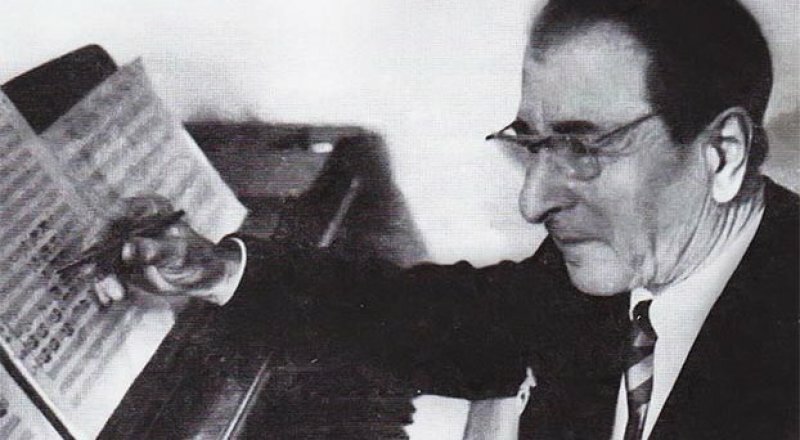
Photo credit: e-hostory
In 1934, he participated as a jury member in the First All-Kazakhstan Gathering of Folk Talents and recorded traditional songs and instrumental works performed by leading folk musicians. During his work in Semipalatinsk (former name of Semei), he collected songs of Abai from the poet’s nephew Akhram Iskakov. These materials were later used to create the opera “Abai”, co-written with composer Akhmet Zhubanov.
Creative achievements
Khamidi created works in various musical genres. His songs “Kazakh Waltz” and “Bulbul” (The Nightingale) became widely known, while his music for the film “Songs of Abai” contributed to the artistic presentation of Abai’s heritage.
In 1945, Khamidi co-authored the Anthem of the Kazakh SSR with Mukan Tulebayev and Yevgeny Brusilovsky. The same year, he received the Order of the Red Banner of Labor and the title of Honored Artist of the Kazakh SSR. His later compositions included the operas “Zhambyl and Aikumis” and “Tulegen Tokhtarov,” written with Zhubanov.
Educator and public figure
For more than 25 years, Khamidi taught at the Alma-Ata State Conservatory named after Kurmangazy, covering orchestration, score reading and theoretical disciplines. His educational works, including “School of Dombra” and “Studies for Dombra,” became important teaching materials.
He also developed Kazakh choral music by arranging folk songs for an a cappella choir, combining traditional melodies with professional harmonic and polyphonic techniques. Khamidi held various positions in the Union of Composers of Kazakhstan, chaired juries of festivals and competitions, and contributed to the training of future musicians.
Legacy
By his 70th anniversary in 1976, Khamidi had received the titles of People’s Artist and Honored Artist of the Kazakh SSR, as well as three Orders of the Red Banner of Labor and other state awards.
Through composition, research, education and public service, Khamidi contributed to the formation of Kazakhstan’s professional musical culture and the preservation of its national musical heritage.
