
ASTANA – Bananas are not a crop typically associated with Kazakhstan’s vast steppe, but in the country’s south, a greenhouse complex is proving otherwise. Central Asia’s only banana farm, located in the Turkistan Region near Shymkent, is cultivating tropical fruit on an industrial scale while drawing visitors eager to see how bananas grow far from their natural climate.
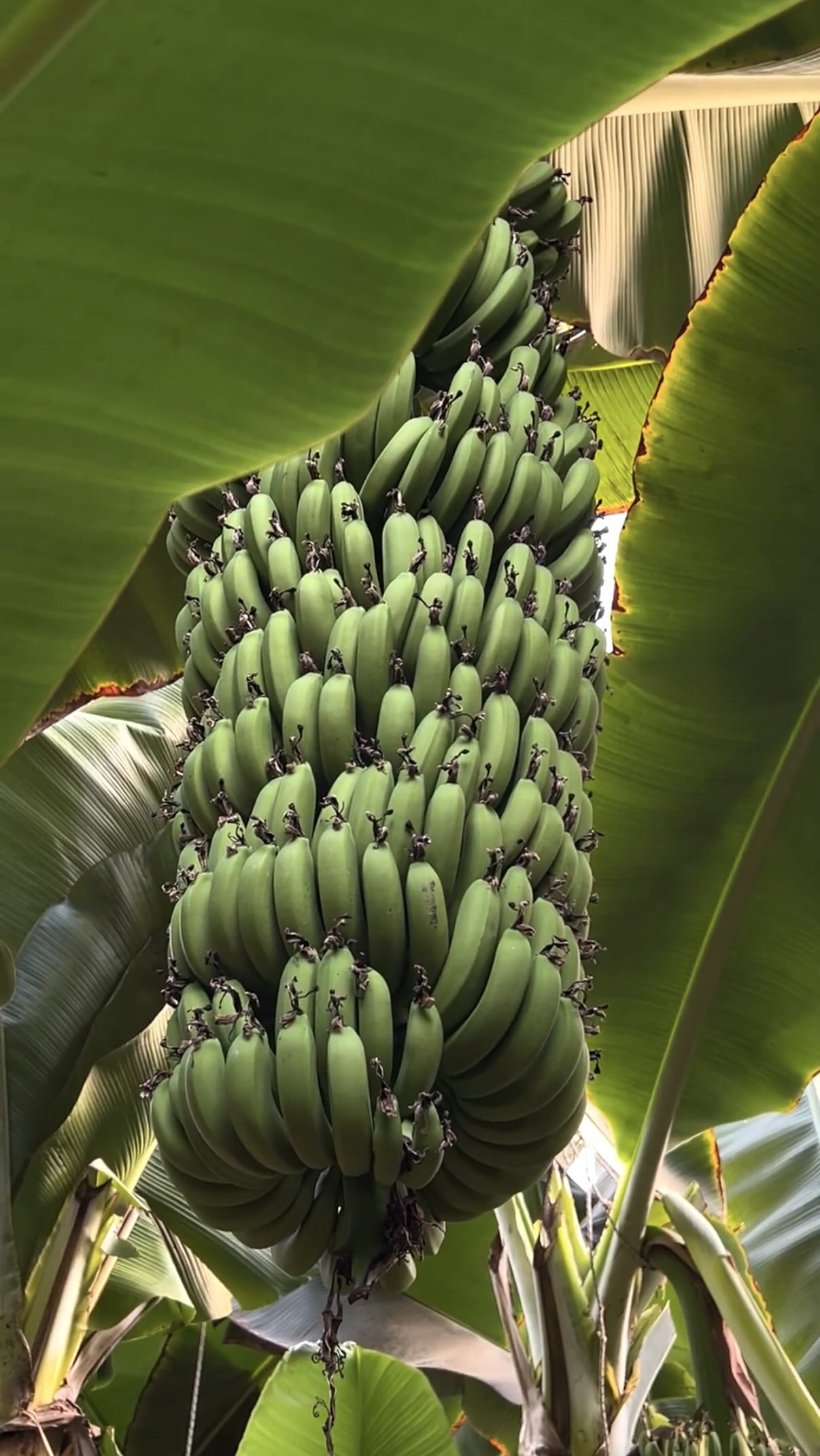
Photo credit: Nava_Banan’s Instagram page.
Opened in June 2023 by GenGroup Qazaqstan, the plantation is located in Taskeshu village in the Sairam district, around 25 kilometers from Shymkent. The five-hectare greenhouse complex employs 15 residents from nearby villages and has become both an agricultural venture and a tourist destination.
In an interview with The Astana Times, Islam Aliyev, managing director of the plantation, said the idea for the project emerged after the company’s founder, Timur Uteshev, visited a banana plantation in Türkiye in 2022 and decided to launch a similar business in Kazakhstan.
The site was prepared in advance, with soil quality analyzed and the land enriched with manure before the first 8,400 seedlings were planted.
“At the beginning, we planted 8,400 seedlings. Today there are more than 11,000 because the plants reproduce over time. In some places, we left two shoots from one plant, which increased the total number,” Aliyev said.
The farm cultivates the Turkish hybrid banana variety Anamur, developed for Türkiye’s climate. According to Aliyev, the greenhouse was designed to recreate similar growing conditions in southern Kazakhstan.
“This is a hybrid variety created for the Turkish climate, and we reproduced those conditions here,” Aliyev said, noting that Ecuadorian bananas differ because they are grown in another climate zone.
From seedlings to supermarket shelves
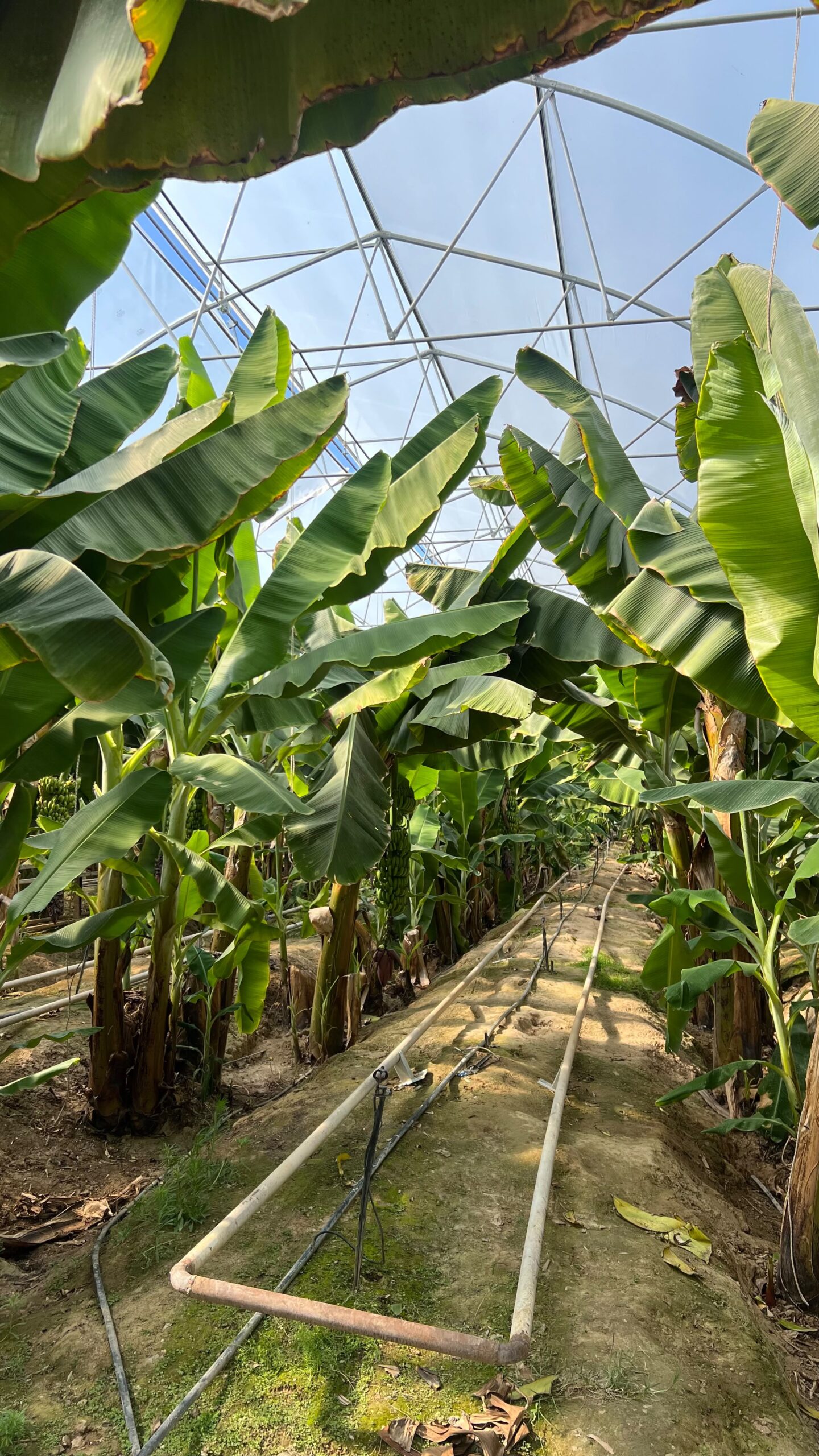
More than 11,000 seedlings are now growing in the banana farm. Photo credit: GenGroup Qazaqstan
The first seedlings were planted in June 2023, and the farm harvested its first crop nine months later. That initial harvest yielded 385 tons of bananas, followed by a second crop of 420 tons. The third harvest is now underway, with around 120 tons collected so far, or roughly 30% of the expected total.
Aliyev said demand has outpaced the farm’s current production capacity. For now, most of the bananas are sold in Shymkent, where wholesalers buy the produce directly from the farm.
“There are requests from Taraz, Almaty and Astana, but we do not yet have enough volume to send bananas there. Shymkent remains our main market, and even there we are covering only around 20% of demand,” he said.
The wholesale price stands at 500 tenge (US$1.06) per kilogram, which Aliyev said is 150 to 200 tenge (US$0.31 to US$0.42) cheaper than imported Ecuadorian bananas.
The plantation also relies on Turkish agricultural expertise. Chief agronomists in Türkiye provide remote support, while a Turkish agronomist works on-site. The banana plants undergo regular monitoring to identify nutrient deficiencies, allowing workers to adjust fertilizers and maintain healthy growth.
Winter remains the biggest challenge
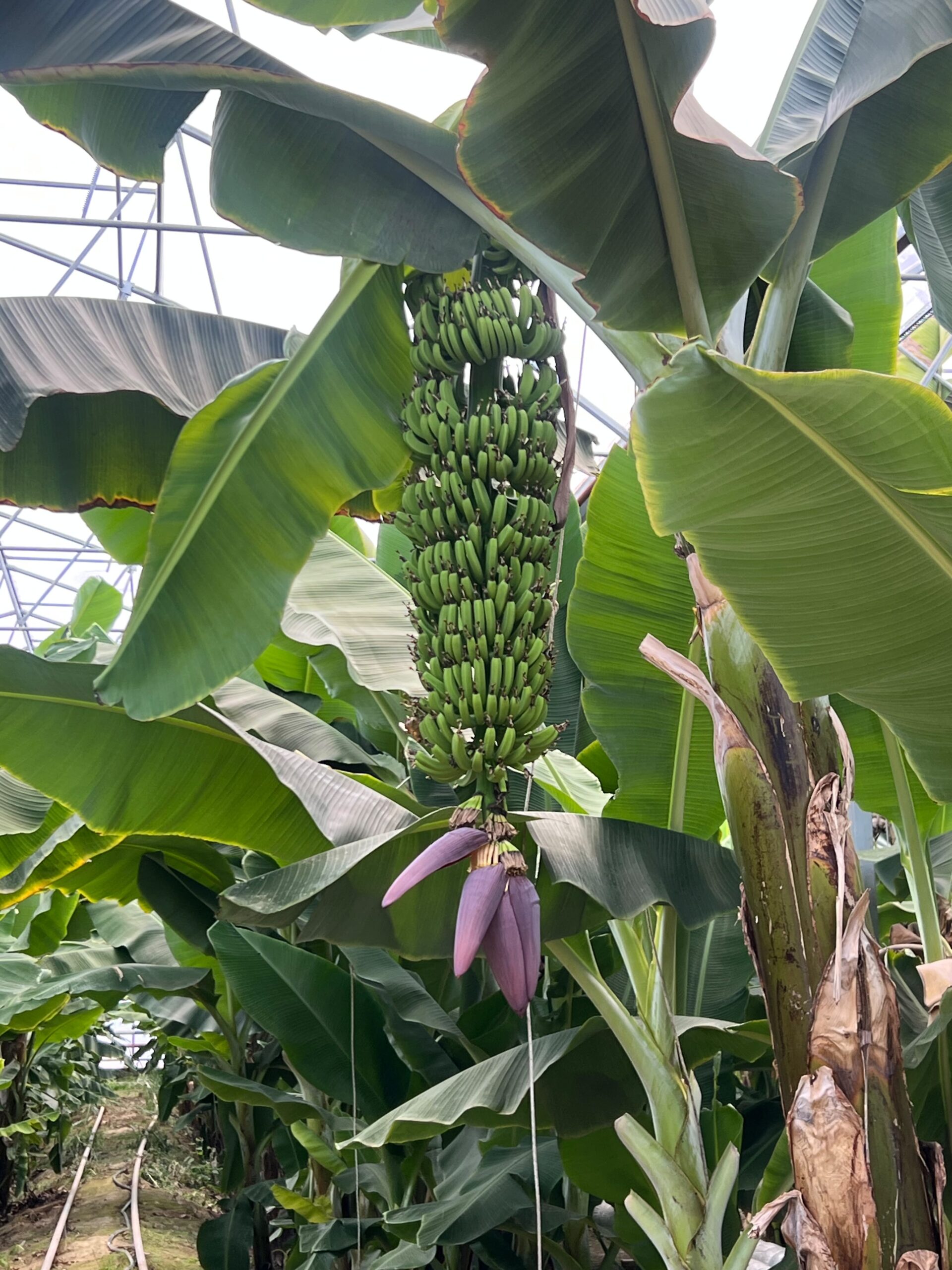
The farm cultivates the Turkish hybrid banana variety Anamur, developed for Türkiye’s climate. Photo credit: GenGroup Qazaqstan
Maintaining the right growing conditions remains one of the project’s biggest challenges, particularly in winter. Banana plants require high humidity and stable warmth, with greenhouse temperatures ideally kept between 22 and 32 degrees Celsius and humidity levels maintained at 60% to 80%.
Aliyev said temperatures should not drop below 18 degrees Celsius. If the greenhouse cools to 16 degrees or lower, the plants’ metabolism slows, delaying fruit ripening and affecting productivity.
“In summer there are no major issues, but winter is more difficult because of the temperature. Humidity is not a problem, but keeping the right temperature can be challenging,” he said.
The farm’s calculations were based on typical winter conditions in Shymkent, where temperatures usually do not fall below minus 15 degrees Celsius. However, colder-than-expected winters have tested the resilience of the system.
“We expected the coldest winter temperatures in Shymkent to be around minus 15, but two years ago it dropped to minus 28. Last year was manageable, and now we will see how the next winter goes,” Aliyev said.
A tropical attraction in the Kazakh steppe
What began as a production-focused agricultural project has also become an unexpected tourist attraction. Aliyev said the company initially planned to concentrate solely on farming, but strong public interest in how bananas grow prompted it to open the site to visitors.
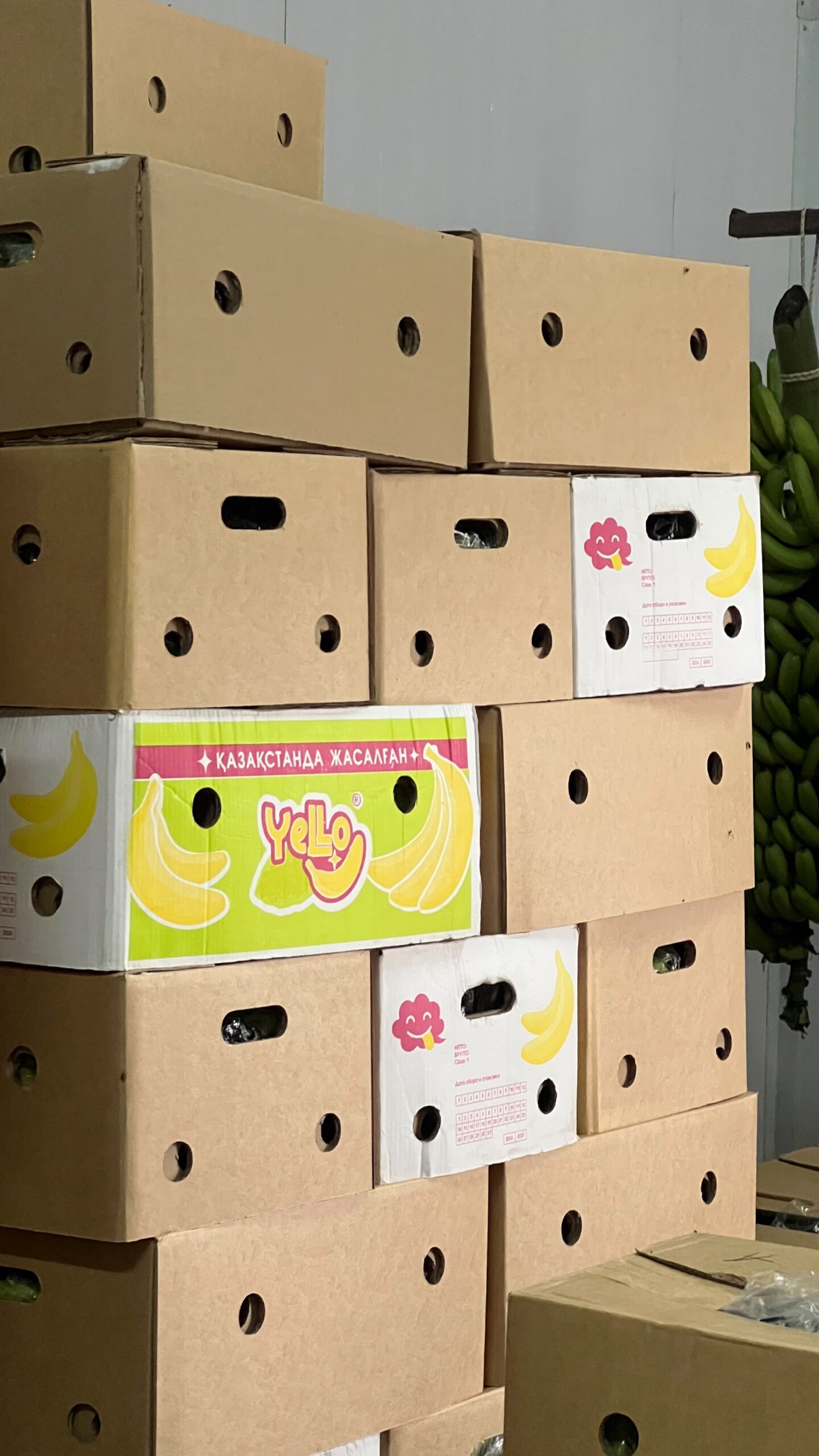
Freshly harvested bananas grown in Kazakhstan are packed and ready for shipment. Photo credit: GenGroup Qazaqstan
Tours are now available for anyone interested in seeing the greenhouse, tasting fresh bananas and spending time in a setting designed to evoke a tropical atmosphere. Admission costs 2,000 tenge (US$4.25) on weekdays and 3,000 tenge (US$6.37) on weekends.
“We tried to create a jungle atmosphere. The silence, birdsong, ripening bananas and the sound of water make people feel as though they are somewhere in the tropics,” Aliyev said.
Visitors can also buy bananas directly at the plantation for 650 tenge (US$1.38) per kilogram, while wholesale buyers pay 500 tenge (US$1.06).
The company is now preparing to scale up the project. In addition to increasing banana production, GenGroup Qazaqstan plans to begin cultivating other tropical fruits, including avocados, mangoes and pineapples.
“We want to introduce three more exotic products, and designers are working on that project. We have planted five hectares so far, but the technical infrastructure is designed for 10 hectares. We plan to build another five hectares so that we can cover at least 50% of demand in the Shymkent region,” Aliyev said.
