
ALMATY – The Almaty Museum of Arts has opened “Bill Viola: The Space of Time,” the first major exhibition in Central Asia dedicated to the late American artist Bill Viola, one of the world’s most influential pioneers of video art. Running from July 1 to Jan. 17, 2027, the exhibition presents the region’s first large-scale museum project devoted entirely to video art.
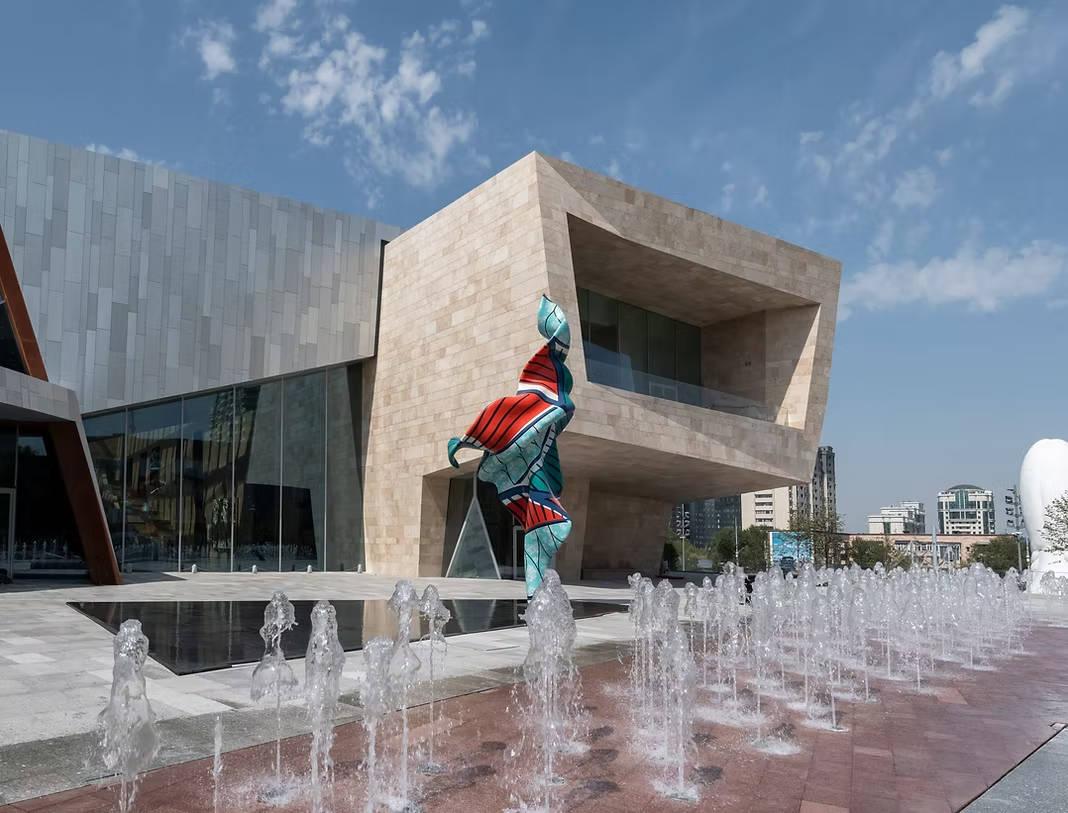
Photo credit: Almaty Museum of Arts.
Organized in collaboration with Bill Viola Studio in California and curated by Kira Perov – the studio’s director, Viola’s wife and longtime creative collaborator – the exhibition is presented with strategic support from Halyk Bank.
Bringing a world-renowned artist to Central Asia
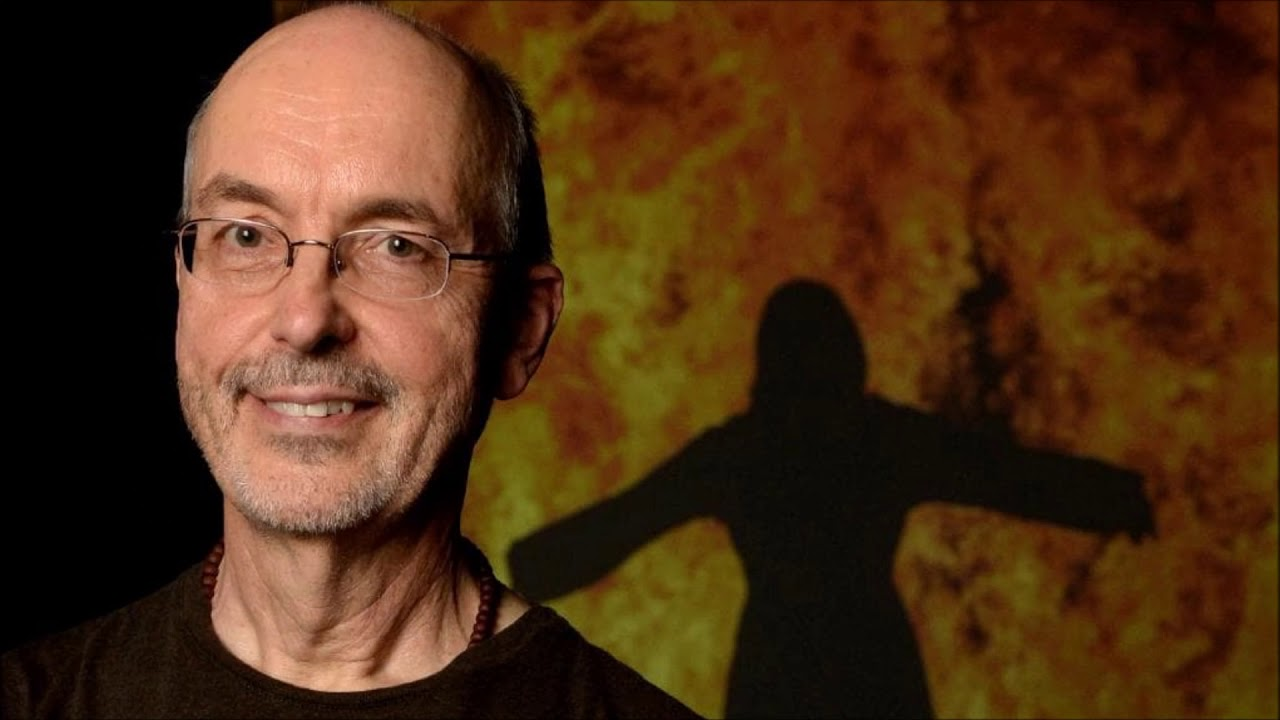
Bill Viola. Photo credit: billviola.com.
Featuring 18 works created between 1977 and 2013, the exhibition offers a comprehensive overview of Viola’s artistic evolution from his pioneering experiments with analog video and cathode-ray television installations to monumental multi-channel projections and immersive environments.
Occupying the museum’s Uly Dala Hall, Art Street, and one of the Artists’ Halls, the exhibition transforms the spaces into environments where moving images become vehicles for reflection, memory, and emotional experience.
“Opening Viola’s exhibition is a historic event not only for Almaty Museum of Arts but for all of Central Asia. We created this museum as a platform connecting Kazakhstan with the global art world and bringing internationally recognized masterpieces to our audiences,” said Nurlan Smagulov, founder of the museum, during the exposition opening ceremony on June 29.
Exploring life through video
For more than four decades, Viola expanded the boundaries of video as an artistic medium. Drawing inspiration from Zen Buddhism, Sufism and other contemplative traditions, he explored fundamental questions of life and death, consciousness, memory and spiritual transformation.
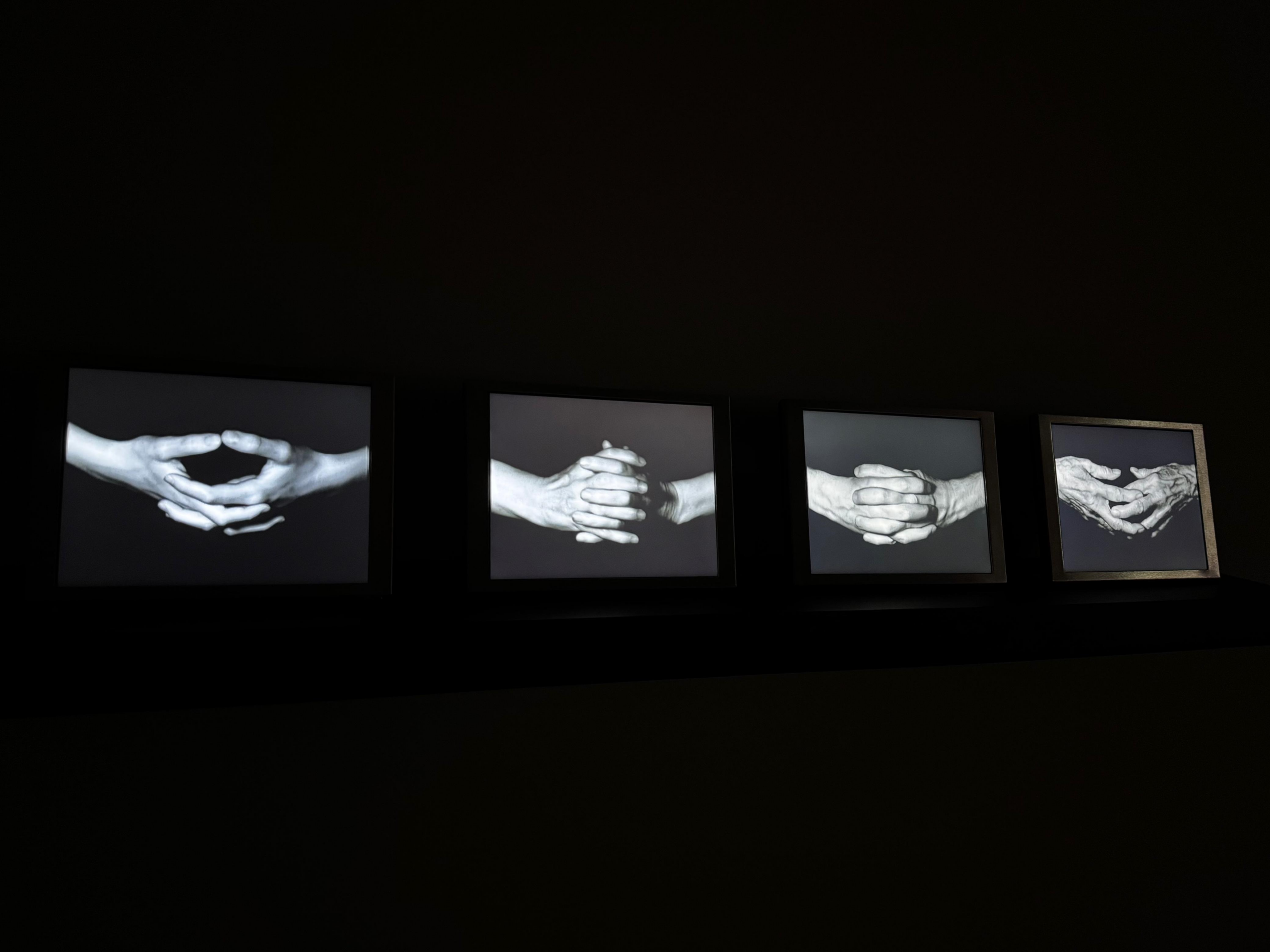
In Four Hands (2001) the artist presents the hands of three generations performing a choreographed sequence of symbolic gestures. Photo credit: The Astana Times.
Recurring elements such as water, fire, light and darkness serve both as physical forces and symbolic bridges between the visible and invisible worlds.
Time itself lies at the center of Viola’s work. Through extreme slow motion and choreographed imagery, he stretched fleeting moments into profound emotional experiences, encouraging viewers to contemplate states of being that often escape everyday perception.
Monumental installations
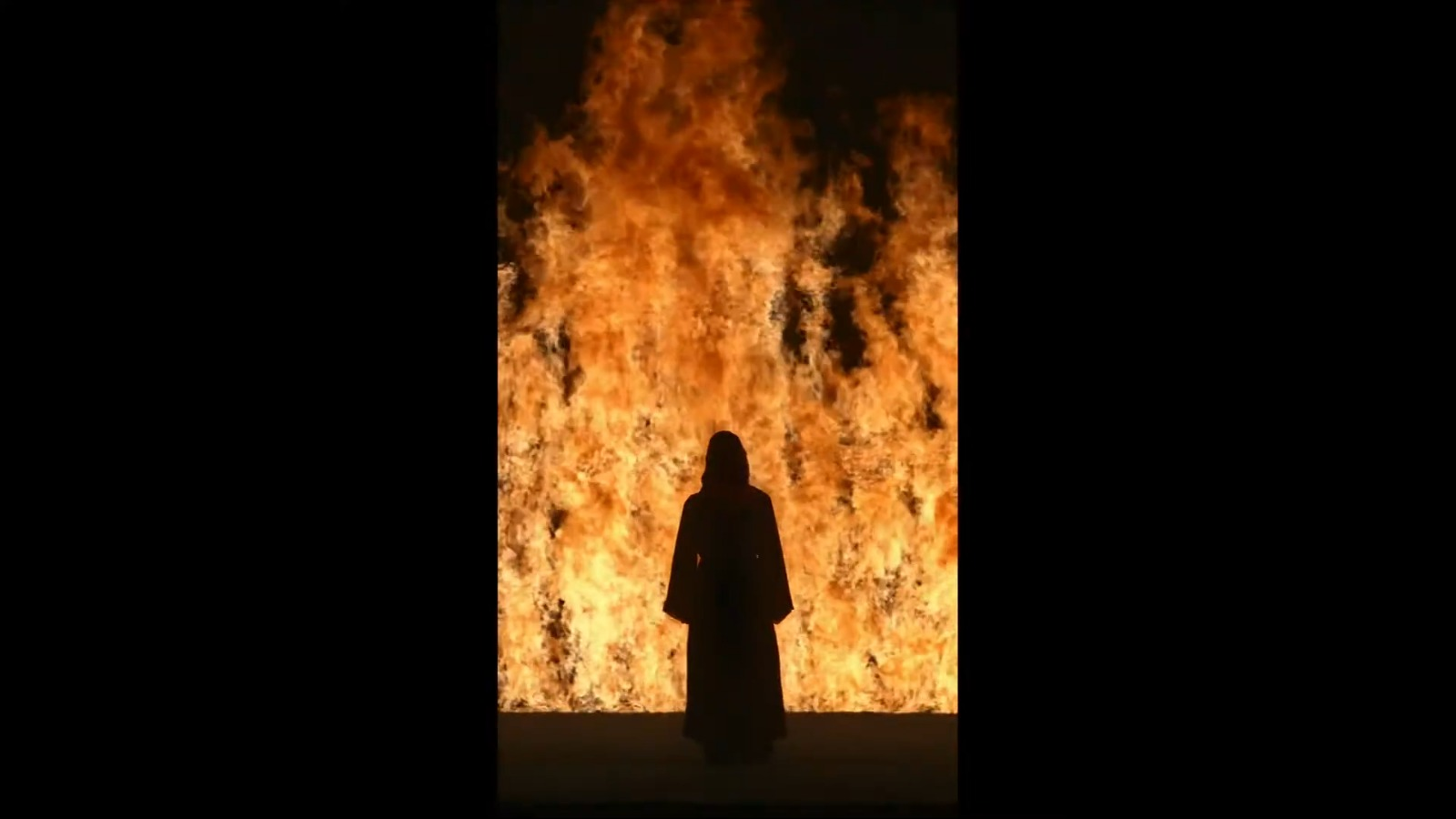
Fire Woman (2005) starts with the female figure emerging from darkness before falling into her own reflection. Photo credit: The Astana Times.
The exhibition opens with two of Viola’s best-known works: Fire Woman and Tristan’s Ascension (The Sound of a Mountain Under a Waterfall), which was created for director Peter Sellars’ acclaimed production of Richard Wagner’s Tristan und Isolde with the Los Angeles Philharmonic.
In Fire Woman, a solitary female figure emerges from darkness before falling into her own reflection, dissolving into shimmering light in a meditation on presence, disappearance and transcendence.
Tristan’s Ascension depicts the body of a man resting on a stone platform as a torrent of water flows upward against gravity, lifting him toward light. The installation reflects on death not as an ending but as a passage, becoming one of the most emotionally powerful works in Viola’s career.
Another installation brought to Almaty by visitors is The Veiling, nine pieces of sheer material hung parallel to one another, catching the light from the projectors on either side. Moving images of a man and a woman walking towards each other are shown. The diffusion of male and female images is interpreted as a fusion of opposites into one, suggesting our union with the elements of matter from which we emerged and to which we will return.
Landmark works on display
Among the earliest pieces in the exhibition is The Reflecting Pool, widely regarded as a landmark in the history of video art. The work depicts a man suspended in midair as he dives into a pool, while the surrounding landscape continues to change. Water, one of Viola’s defining motifs, becomes a metaphor for memory and the threshold between the visible and invisible. The piece also reflects the artist’s childhood experience of nearly drowning, which profoundly influenced his life and work.
Another highlight is Heaven and Earth, an intimate installation exploring birth, death and the continuity of life. Two monitors face each other: one shows Viola’s mother during the final days of her life, while the other features his newborn son. Positioned toward each other, the images connect the beginning and end of human existence as parts of a single cycle.
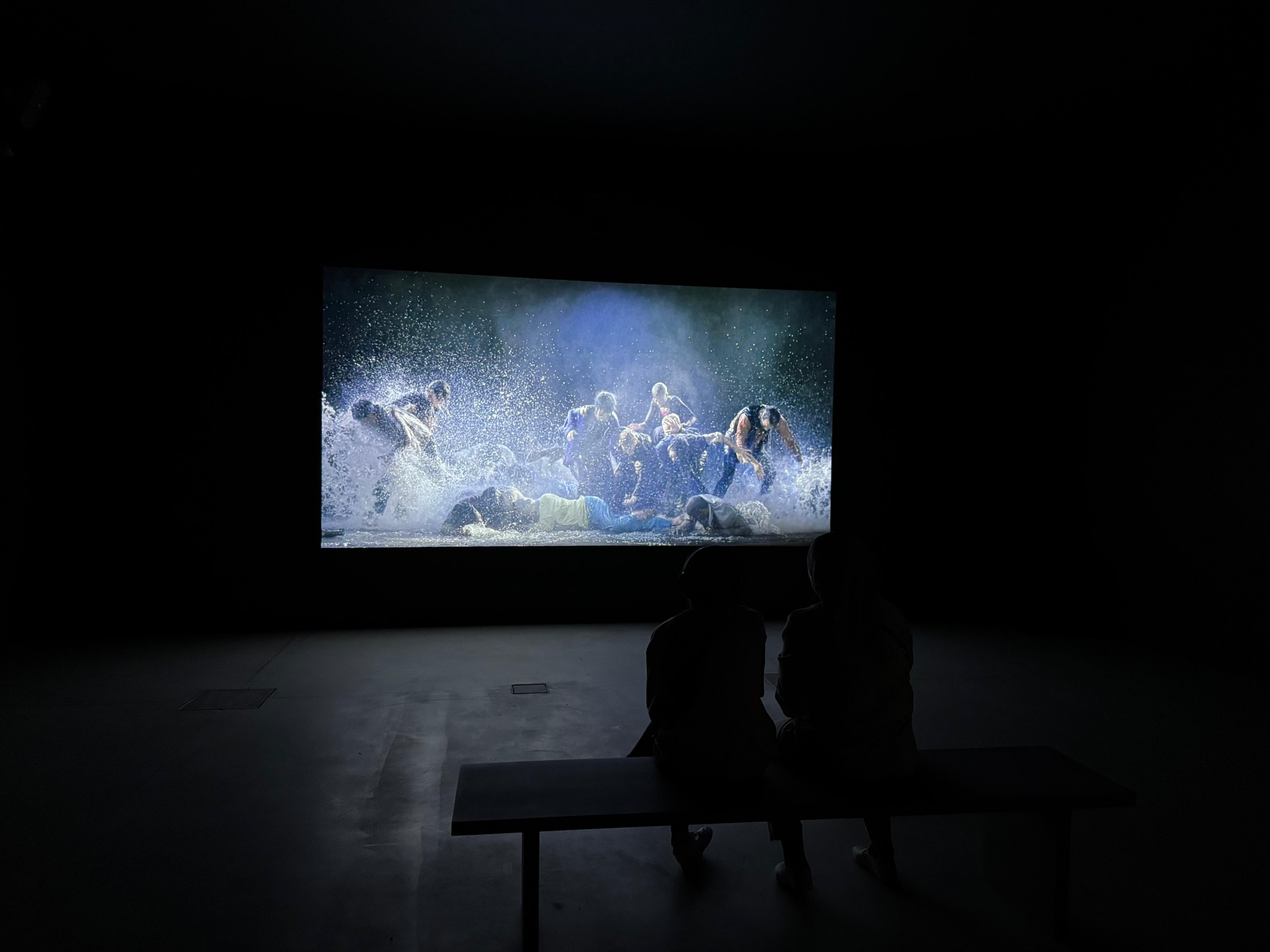
The Raft (2004). Photo credit: The Astana Times.
The exhibition also presents The Raft, one of Viola’s most iconic installations. An overwhelming torrent of water suddenly strikes a group of ordinary people. Captured in extreme slow motion, the work transforms a moment of chaos into a meditation on vulnerability, compassion and human resilience.
Also featured is The Hands, part of Viola’s celebrated The Passions series inspired by early European devotional painting and its exploration of human emotion. The work presents the hands of three generations – a young boy, his father, mother and grandmother – performing a choreographed sequence of symbolic gestures. In the exhibition catalog, Viola described the work as “a timeline that encompasses both the parallel actions of the individuals in the present moment and the larger movements of the stages of human life,” transforming simple hand gestures into a meditation on family, memory and the passage of time.
A rare opportunity
According to Perov, the exhibition illustrates the remarkable breadth of Viola’s artistic journey.
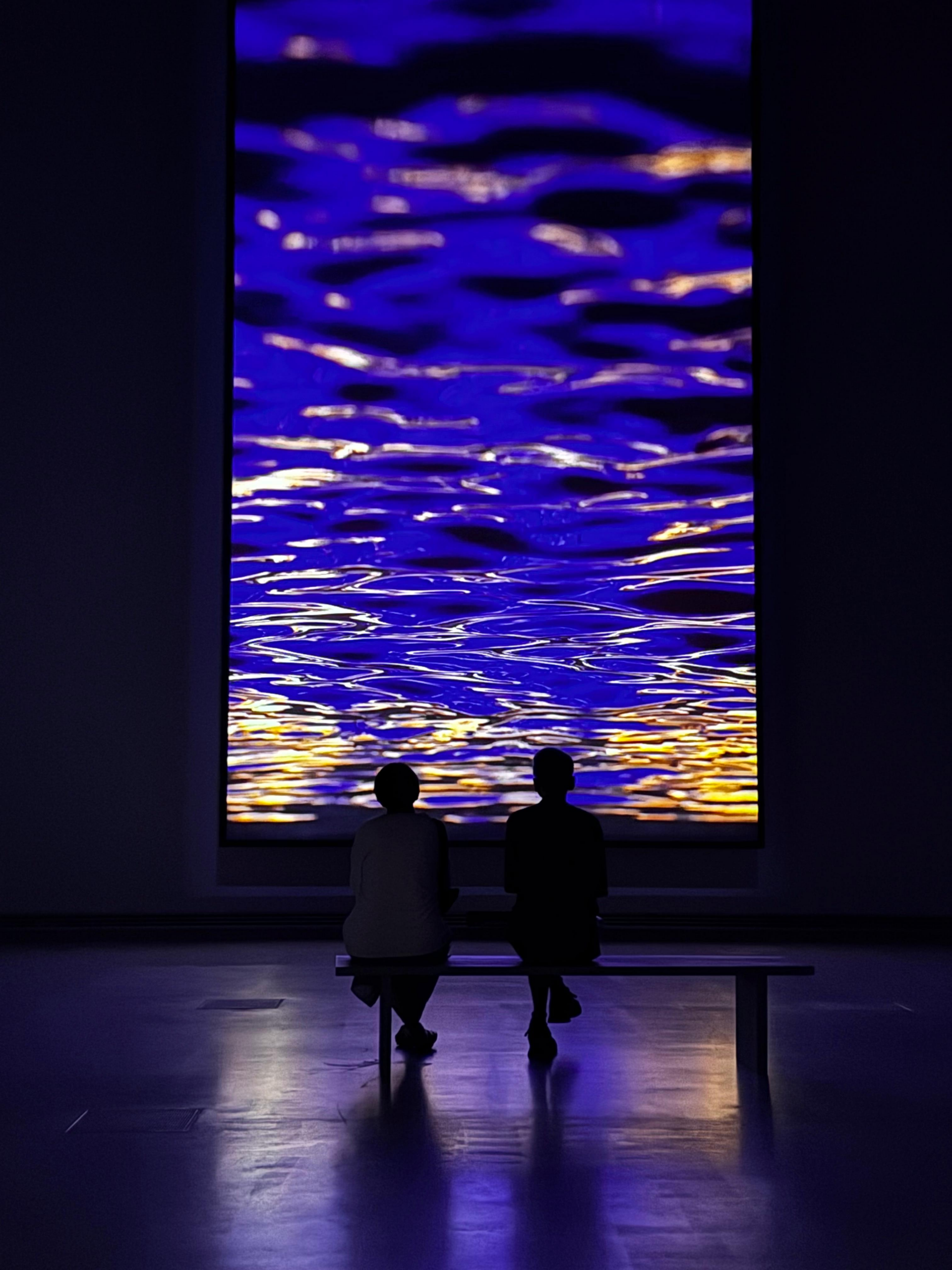
Falling in the water, she dissolves into shimmering light in a meditation on presence, disappearance and transcendence.
“In his earliest works he often turned the camera on himself, searching for a visual language capable of expressing humanity’s endless quest to understand existence. The camera became an extension of himself, an ever-open eye. The works in this exhibition demonstrate that moving images possess extraordinary emotional power, regardless of the technology used,” she said during an opening ceremony.
Preparing the exhibition required extensive technical adaptation of the museum’s galleries, particularly the Uly Dala Hall, to accommodate Viola’s large-scale installations.
Meruert Kaliyeva, artistic director of the Almaty Museum of Arts, said the exhibition reflects the museum’s broader mission to introduce audiences in Kazakhstan to key figures in international contemporary art.
“We believe encounters with artists like Bill Viola encourage audiences not only to experience world-class contemporary art but also to look inward and reflect on themselves,” she said.
The first exhibition of its kind in Central Asia marks an important milestone for the region’s cultural landscape, bringing one of contemporary art’s most influential voices to new audiences and reaffirming Almaty’s growing place on the international cultural map.
