
ALMATY – On May 31, Kazakhstan commemorates the victims of political repression and famine, honoring millions whose lives were shattered by political persecution, forced deportations, imprisonment and starvation.
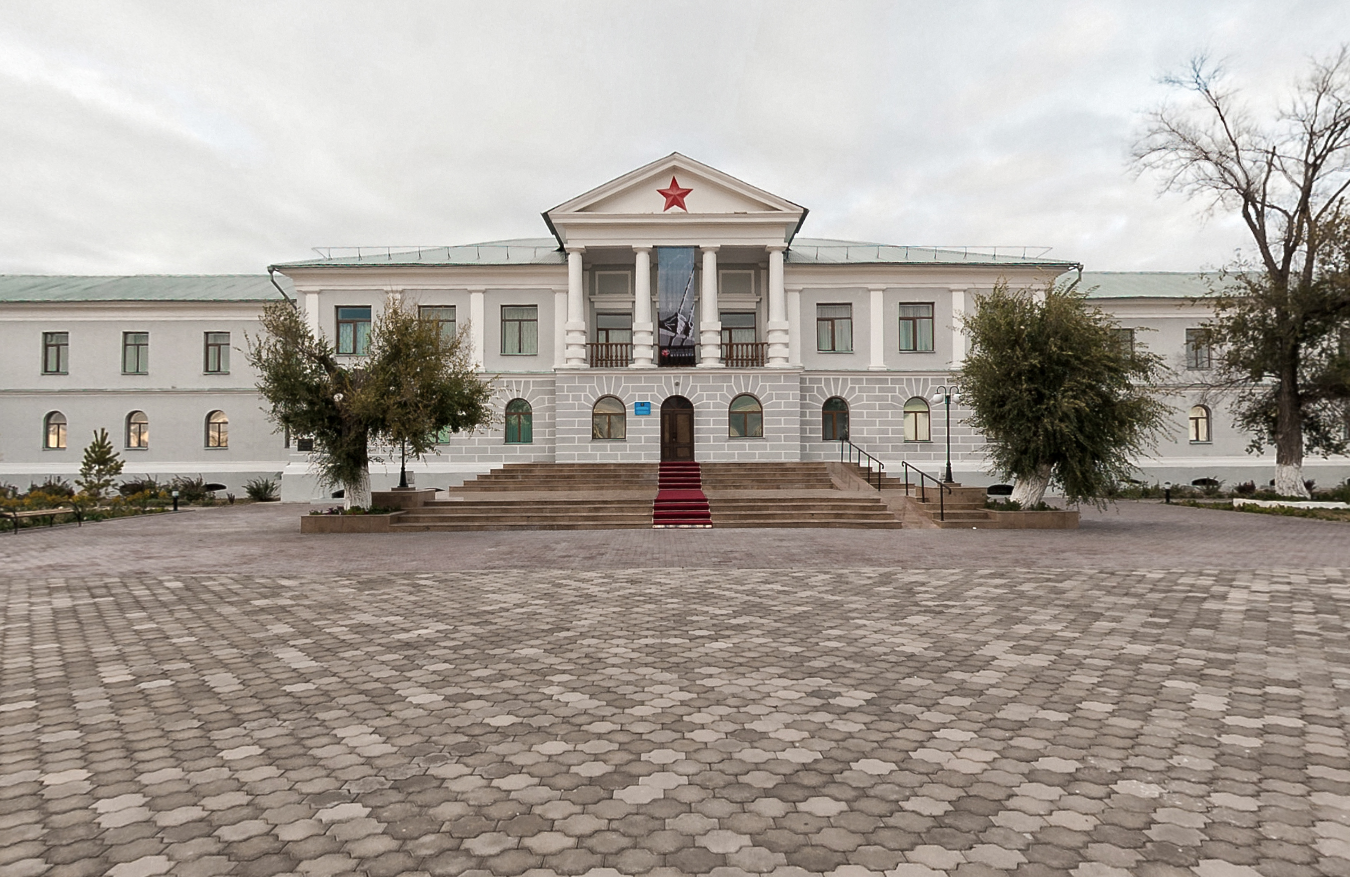
The Karagandy Corrective Labor Camp. Photo credit: karlagmuseum.kz.
More than five million people were deported to labor camps across Kazakhstan during the Soviet era, transforming the country into one of the main centers of repression in the vast Gulag system.
Since 1997, Kazakhstan has observed the Day of Remembrance of Victims of Political Repression, reflecting on one of the darkest chapters in the nation’s history. The date commemorates not only those imprisoned or executed during Stalin-era purges but also the victims of the famine of 1932–1933, which claimed the lives of millions and altered the demographic and cultural landscape of the Kazakh people.
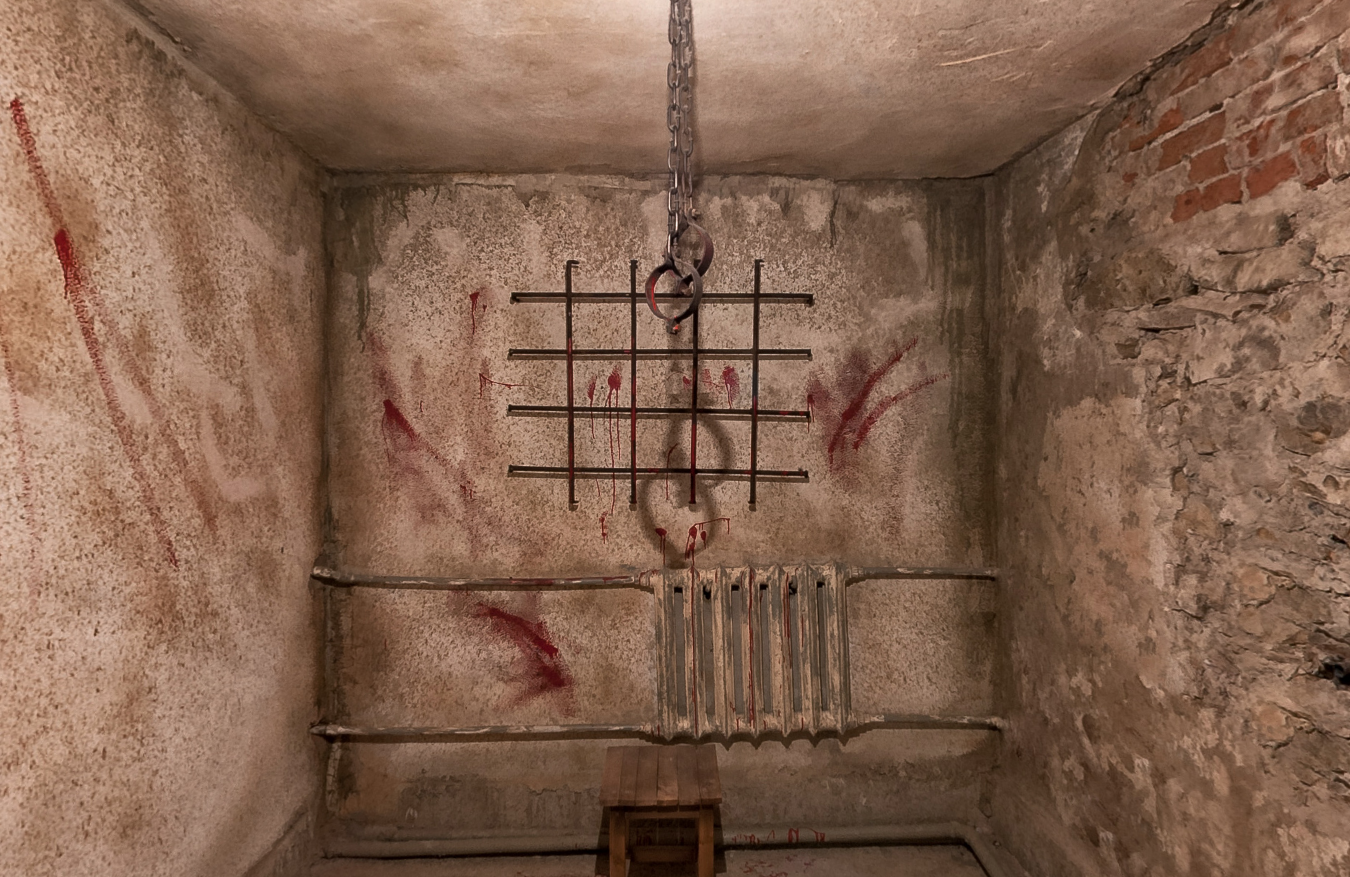
The execution wall, an exhibit in Karlag. Photo credit: karlagmuseum.kz.
During the decades of Soviet political repression, Kazakhstan became a destination for mass deportations and forced labor. Historians estimate that more than five million people were sent to camps and special settlements on Kazakh territory.
At the same time, repression targeted Kazakhstan’s own population. Between 1921 and 1954, nearly 100,000 people in the country were convicted on political charges, with around 25,000 sentenced to death.
The campaign intensified in the late 1920s. In 1928, Soviet authorities launched arrests of former members of the Alash movement, including prominent intellectuals and political leaders such as Mirzhakyp Dulatuly, Magzhan Zhumabayev and Zhusipbek Aimauytov. Many leading figures of Kazakhstan’s national intelligentsia were later accused of nationalism, espionage or anti-Soviet activities.
During the height of the Great Terror in 1937–1938, thousands of Kazakh political, cultural and academic figures were arrested. Among them were Alikhan Bokeikhan, Akhmet Baitursynuly, Mirzhakyp Dulatuly, Alimkhan Yermekov and Khalel Dosmukhameduly.
In 1937 alone, nearly 105,000 people were arrested in Kazakhstan, with about 22,000 sentenced to execution. The loss of so many intellectuals, educators, officials and community leaders left deep scars on the country’s demographic and intellectual development.
The Gulag system in Kazakhstan
One of the primary instruments of Soviet repression was the Gulag system — a network of labor camps spread across the Soviet Union.
Between 1929 and 1953, more than 14 million people passed through Gulag camps, while millions more were deported to remote regions, including Kazakhstan. At various points, the Gulag population ranged from approximately 500,000 prisoners to more than 1.7 million.
Several of the Soviet Union’s most notorious camps were located in Kazakhstan. The Karagandy Corrective Labor Camp, better known as Karlag, was among the largest camps in the Gulag network.
Established in 1931, Karlag eventually covered more than 1.7 million hectares across central Kazakhstan. Over nearly three decades of operation, it held more than one million prisoners. The camp was created to supply food and labor for the rapidly developing industrial centers of central Kazakhstan, particularly the coal and metallurgical industries.
Before the camp’s establishment, thousands of Kazakh families, along with Russian, German and Ukrainian settlers, lived on the territory. Many were forcibly displaced, losing homes, livestock and livelihoods.
Karlag functioned largely as a state within a state, reporting directly to Moscow’s Gulag administration. Among its prisoners were prominent intellectuals and public figures, including historian and ethnologist Lev Gumilyov.
Mortality rates were especially severe during World War II. In 1943 alone, hundreds of prisoners died each month due to hunger, disease and harsh conditions.
ALZHIR: The camp for wives of traitors
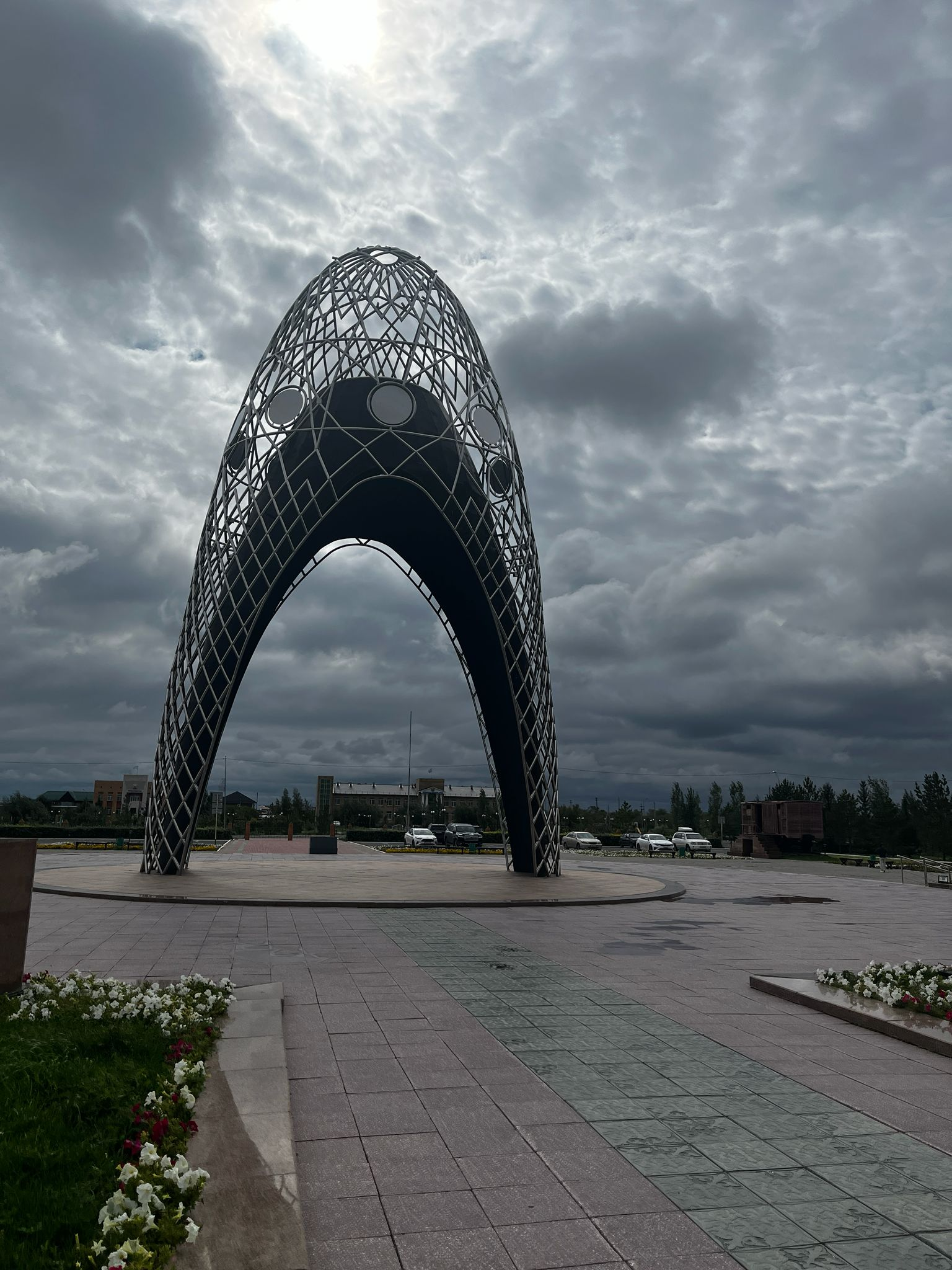
Museum and memorial complex of victims of political repressions and totalitarianism ALZHIR. Photo credit: Giuseppe Bocchino.
Another site was the Akmola Camp for Wives of Traitors to the Motherland, known by its Russian acronym ALZHIR.
Operating between 1938 and 1953 as part of Karlag, ALZHIR became the largest women’s camp in the Soviet Union. Nearly 20,000 women passed through its gates. Many were imprisoned solely because they were related to men accused of political crimes. Among the inmates were artists, actresses, writers and wives of prominent political figures.
The camp remains one of the most striking symbols of collective punishment during the Stalinist period.
Steplag and the Kengir uprising
The Steplag labor camp near present-day Zhezkazgan housed primarily political prisoners. Established in 1948, the camp held tens of thousands of inmates who worked in copper and manganese mines, coal operations and major infrastructure projects.
Steplag is best remembered for the Kengir uprising of 1954, one of the largest prisoner revolts in Gulag history. For 40 days, prisoners effectively controlled parts of the camp, demanding justice and an end to abuses. The uprising involved nearly 5,200 inmates, including many women. Soviet authorities eventually crushed the revolt using military force, including tanks. Hundreds are believed to have died.
Among the camp’s prisoners was future Nobel Prize-winning writer Aleksandr Solzhenitsyn, whose works later exposed the realities of the Gulag system to the world.
The great famine of 1932–1933
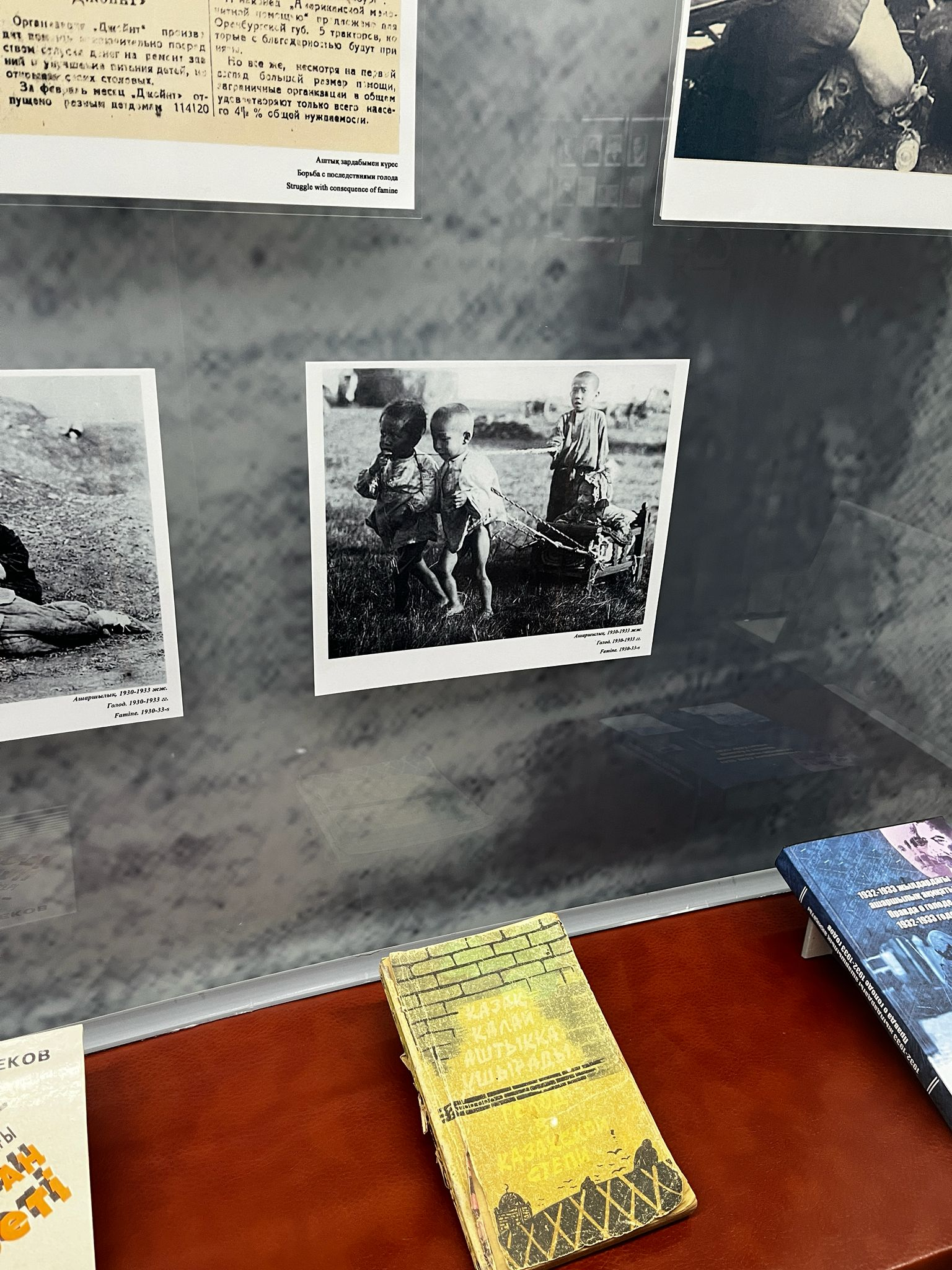
Archive photos from ALZHIR exposition. Photo credit: Giuseppe Bocchino.
Alongside political repression, Kazakhstan endured one of the worst humanitarian catastrophes in its history. The famine of 1932–1933, triggered largely by forced collectivization and the confiscation of livestock, devastated the traditionally nomadic Kazakh population.
By 1933, Kazakhstan’s livestock population had collapsed from nearly 40 million animals to a fraction of that number. The consequences were catastrophic. Historians estimate that nearly 2.4 million people died from starvation, disease and related causes. Nearly half of the ethnic Kazakh population was lost during the crisis.
In an attempt to survive, hundreds of thousands of families fled Kazakhstan. Many crossed into China, Iran, Afghanistan and other neighboring territories. Overall, around 1.3 million people left the republic during the famine years, with approximately 670,000 never returning.
The famine fundamentally transformed Kazakhstan’s demographic structure and remains one of the defining tragedies of the 20th century in Central Asia.
Preserving memory
Today, museums, memorials and archival projects across Kazakhstan preserve the memory of those who suffered under political repression and famine.
Sites such as the Karlag Museum in the Karagandy Region and the ALZHIR Memorial Complex near Astana serve as reminders of the human cost of totalitarian policies.
Each year on May 31, Kazakhstan honors the victims not only by remembering the past but also by reaffirming the importance of human rights, historical truth and national memory. The date is both a tribute to those who perished and a reminder of the resilience of generations who endured some of the most traumatic events in the nation’s history.
