
There are songs that don’t just become popular. Instead, they settle into the bloodstream of a country. Over time, they stop belonging to the artist and start belonging to people. They become something close to an unofficial national language of feeling. For Batyrkhan Shukenov, or Batyr, as he was known at home and far beyond, this wasn’t accidental. It was the result of something rarer than talent: emotional precision.
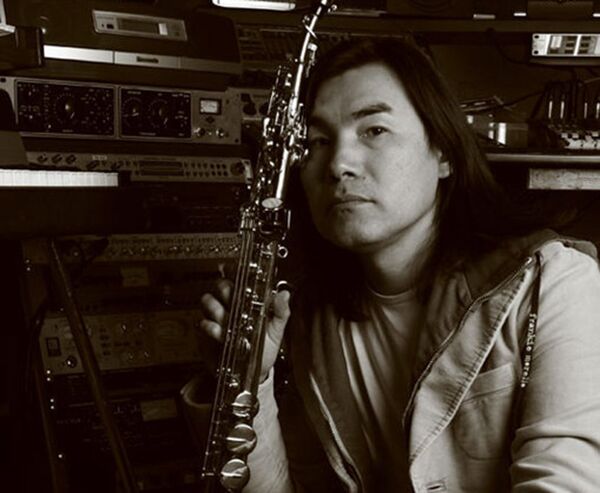
Batyrkhan Shukenov. Photo credit: Batyr.net
One of those songs is “Otan Ana.” Translated into English, it becomes Motherland, but that translation flattens it. In Kazakh, it carries weight—ancestry, memory, obligation, love that is not always easy.
When Batyr died on April 28, 2015, at the height of his life, the reaction was immediate and unfiltered. The entire country grieved. And Kazakhstan, for all its modern nation-building, has had very few moments like that, moments not orchestrated by the state, not political, not performative. Moments that come from the heart. This was one of them.
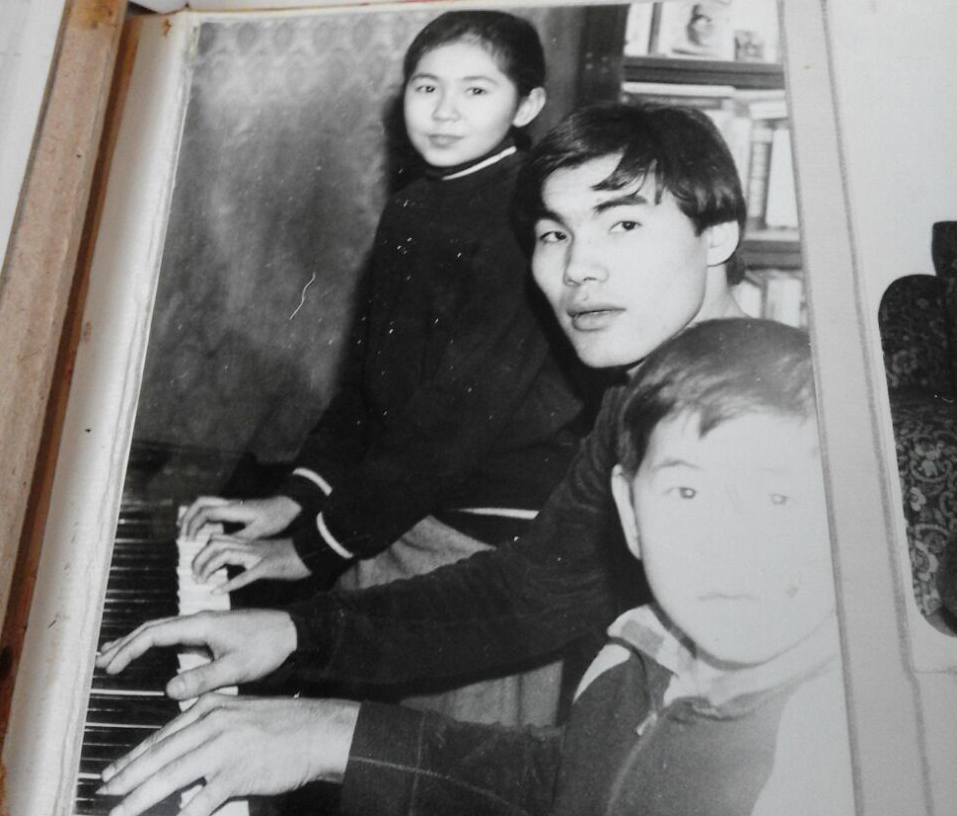
Photo credit: bmtv.kz
“Otan Ana” and “Sagym Dunie” (a fleeting, illusory world) are not just songs I like. They are songs that stayed with me at a very specific time, when I moved to the United States in the early 2010s, still, in many ways, a child. There is a particular kind of loneliness that comes with leaving before you fully understand what you’re leaving. His music filled that gap without explaining it.
Batyr, born on May 18, 1962, was not a designed artist. There was no early blueprint of greatness. As a child, he was focused on football, known for his precision as a penalty kicker, hours spent aiming for that exact top corner. Discipline came before art.
Music entered almost incidentally. At 12, he won a vocal competition at Artek, one of the Soviet Union’s most prestigious youth camps, often reserved for top-performing children from across the country. Then came school ensembles, then jazz, introduced by his teacher, Leonid Pak, which would permanently shape his musical instincts. He learned the saxophone, bass guitar, and dombra, not as decoration, but as language.
Formal training followed: first in Saint Petersburg, then in Almaty at the Kurmangazy Conservatory. From there, the trajectory could have been predictable: technical musician, respected, contained.
Instead, he became the voice of A’Studio, a band that quickly crossed beyond Kazakhstan’s borders and remains one of the most successful acts in the Russian-language music market. With A’Studio, Batyr entered the broader Soviet and post-Soviet space. Songs like “Julia” were not just hits—they were cultural markers. He was no longer just Kazakh; he was regional, recognizable, exportable.
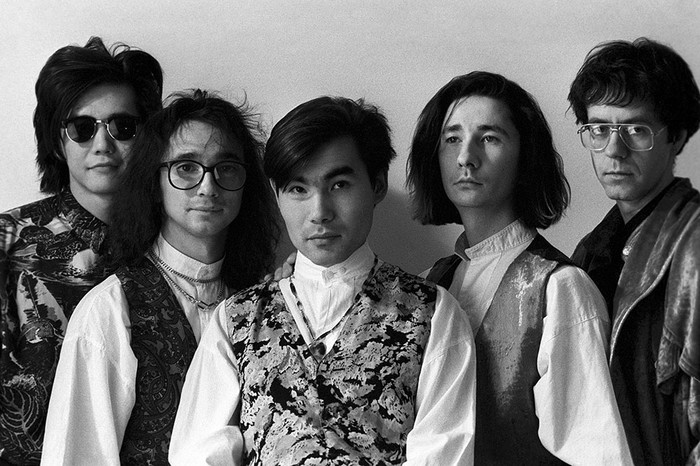
Members of A-Studio photographed in 1990. Photo credit: tass.com
And then, at the peak of that success, he left the band. Not because the success wasn’t enough, but because it wasn’t the right kind. He shifted toward something more rooted, more introspective, more aligned with identity rather than industry. That decision, in retrospect, defines him more than any chart success.
His solo work, especially “Otan Ana,” that I mentioned earlier, did something unusual. It articulated patriotism without sounding like instruction. No slogans. No grandstanding. Just feeling. And that’s much harder to achieve.
In Kazakh, there is a phrase: kassietti adam. A person with a special, almost sacred gift. The kind of person who doesn’t just perform but channels something that others recognize instantly, even if they can’t explain it. Batyr was that. Not because his voice was technically perfect, though it was unmistakable. But it was honest in a way that is uncomfortable for most artists. There was no protective layer. It felt direct, almost exposed. That’s why I think his music stays with us to this day.
I remember being in America, far from home, falling asleep to “Sagym Dunie”, not as background music, but as something grounding. I performed it once at a college concert, probably not perfectly, but that wasn’t the point.
Looking back, I think I owe him something, not in a dramatic sense, but in a quiet, structural way. His music articulated something I didn’t yet have the language for: what it means to belong to a country that is still defining itself. Kazakhstan is not an easy identity. It carries a heavy past, an ambitious future, and a present that doesn’t always resolve cleanly. Loving it is not always straightforward. But Batyr made that complexity feel natural.
He, and maybe unintentionally, taught a generation that patriotism is not built on slogans or economic arguments. It doesn’t come from comparison charts or political messaging. It comes from something much deeper. Something almost instinctive. The kind of feeling that rises somewhere in your chest when the first notes of “Otan Ana” begin.
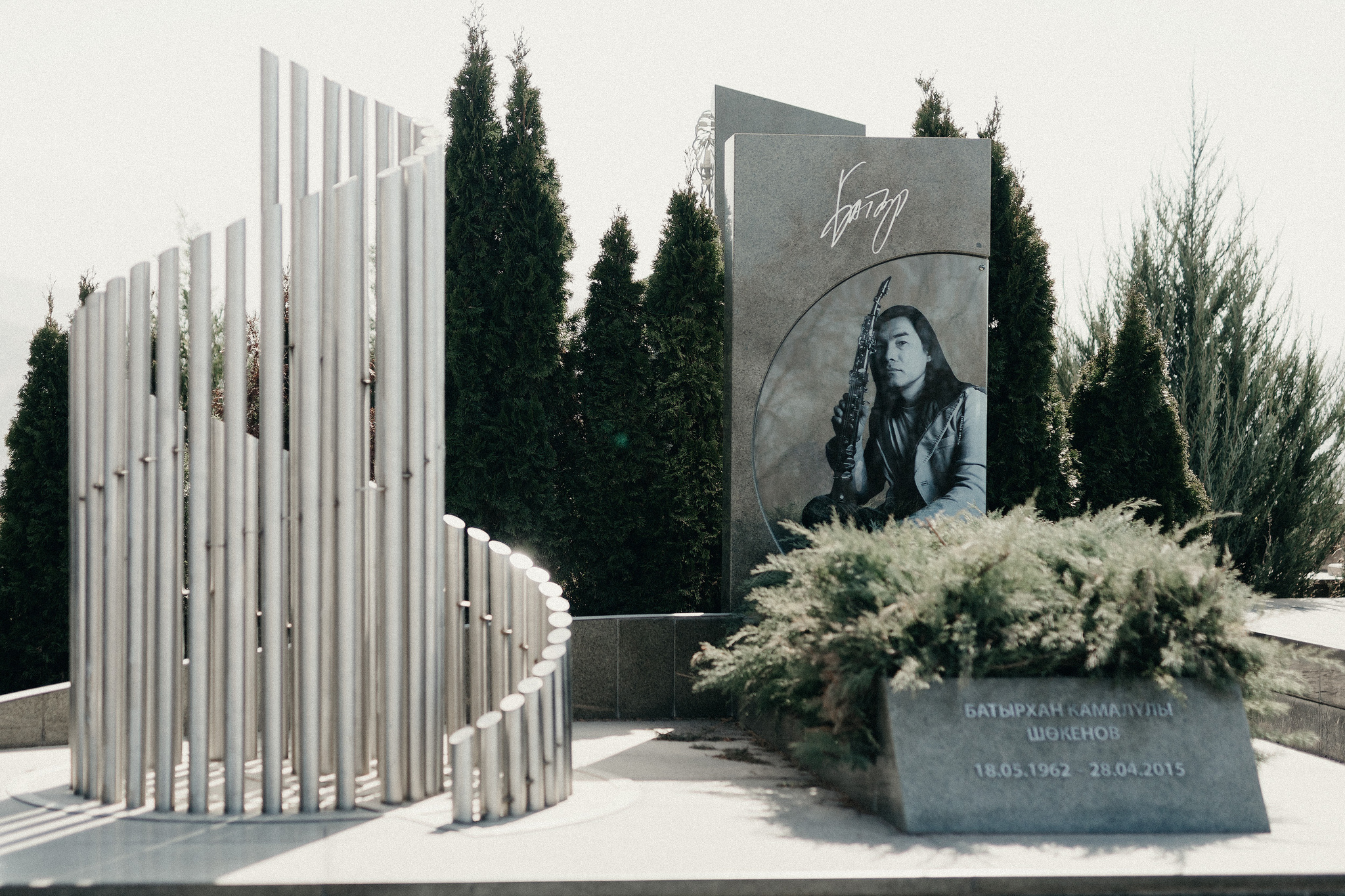
In Almaty stands the grave and monument of renowned artist Batyrkhan Shukenov. Photo credit: pikabu.ru
And that’s the thing about Batyr. He didn’t just sing about the country. He made people feel it, whether they were in Kazakhstan or thousands of kilometers away, trying to understand what home actually means. And years later, that feeling hasn’t gone anywhere. If anything, it has become stronger.
