
More and more Kazakhs say that everything matters. This is not an inability to choose, but evidence of a structural shift in which social life is no longer organized around a single answer. Sometimes sociological data does more than reveal trends, it makes us, as sociologists, pause. Look more closely. And even feel a sense of surprise.
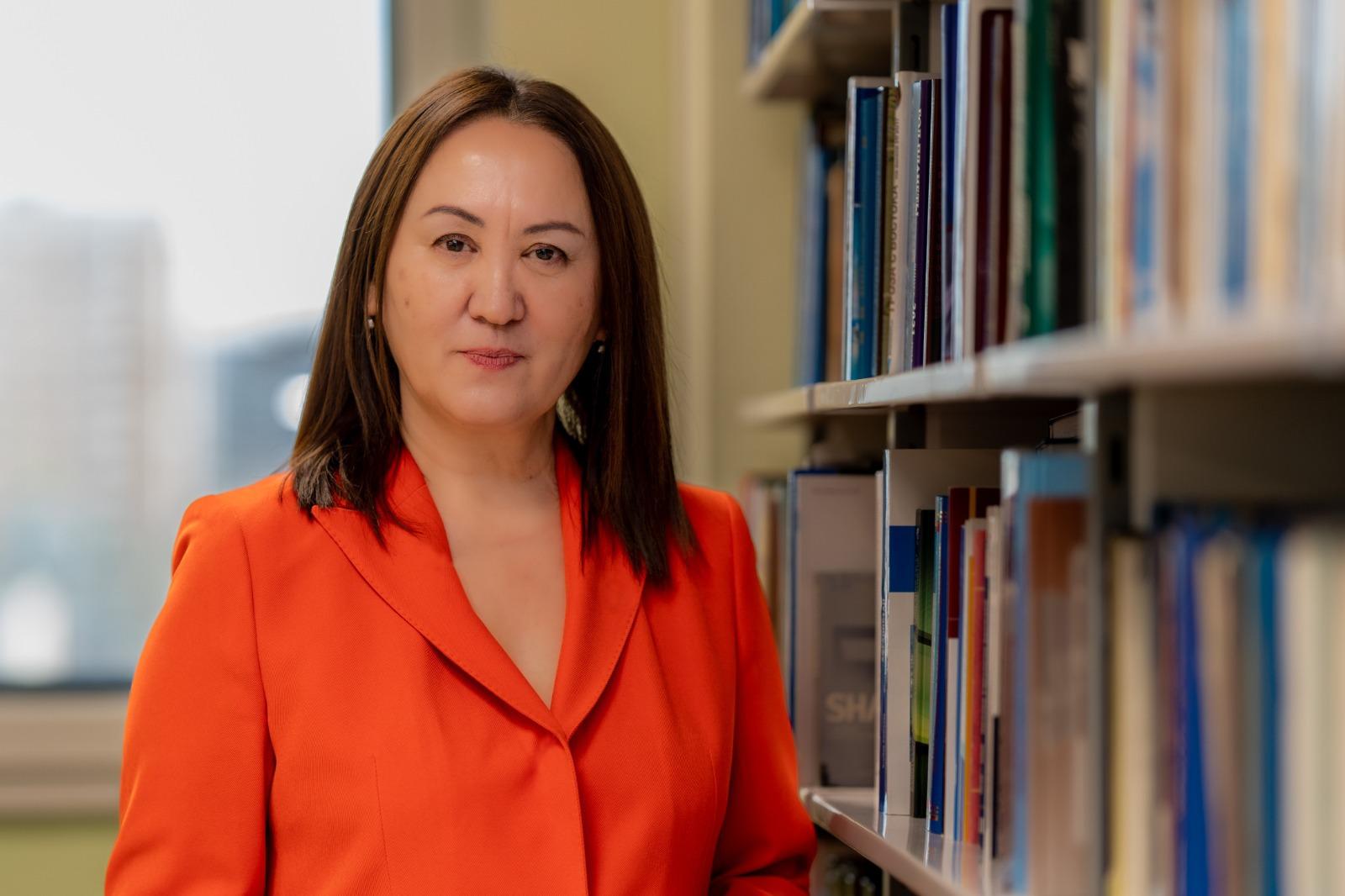
Aigul Zabirova.
Responses to questions about personal priorities revealed an unusually high level of consensus. Nearly all values surveyed were described not simply as important, but as very important. Around 90% of respondents said independence matters deeply, while 91% emphasized self-care. Another 92% highlighted loyalty to a partner, and 89% stressed loyalty to the country.
Family, children, responsibility and personal development all ranked highly at the same time.
At some point, you find yourself asking: where is the choice? After all, if something becomes more important, shouldn’t something else recede? But that is not what we observe here.
Many Kazakhs affirmed multiple priorities at once such as value independence (91%), having children (87%), being married (81%), pursuing personal development (81%), and taking responsibility (85%).
Rather than appearing contradictory, it increasingly feels like a natural way of life. Why? Because today these values are no longer perceived as mutually exclusive. This is no longer an ‘either–or’ logic, but a logic of combination: one can be independent and have a family, build a career while seeking work–life balance, pursue personal development while caring for others.
This is becoming a new, and increasingly common, way of organizing life in the 21st century. If we look more closely, values in the past were more rigid: family or career, tradition or modernity. Today, these boundaries have become blurred. Individuals increasingly inhabit multiple states at once. This is not a conflict. It is an overlay, and one that is becoming normalized.
It is precisely here that sociologists begin to sense a deeper shift. We are no longer dealing simply with a set of values, but with a transformation of social character itself. If we try to describe this new character in simple terms, it is a person who wants to rely on themselves, but not to be alone. They do not abandon the family, yet no longer dissolve into it.
They aspire to a career, while 87% say it is important to maintain a balance between work and personal life.
At the same time, the meaning of family is evolving. In the past, family was often viewed primarily as a social expectation. Today, it increasingly appears as a personal choice valued for the emotional support and stability it provides. In this changing system of values, family is no longer seen as opposing individuality, but as something that can reinforce it.
A similar pattern can be seen in attitudes toward responsibility. On the one hand, people increasingly emphasize independence and self-realization. On the other hand, moral commitments remain highly significant: loyalty to a partner (92%), loyalty to one’s country (89%), and personal responsibility (85%). In other words, individuals are becoming more independent without becoming less connected to others.
The same complexity appears in attitudes toward digital life. Technology has become central to modern existence, yet many people are increasingly exhausted by constant connectivity. While 74% of respondents said digital skills are important, nearly 46% also emphasized the need to disconnect from the internet entirely.
Perhaps the real question is not what Kazakhstan’s citizens want, but what stands behind this growing desire to have everything at once. Does it reflect freedom of choice, or freedom from the need to choose?
A society that seeks to combine everything simultaneously may finally be allowing itself to imagine life without rigid limits. Or perhaps its value system is still taking shape. It may also reflect a society that is no longer rushing to make definitive choices after already understanding the cost such choices can carry. The data does not provide a clear answer, but it raises the question.
What, then, does all of this mean? When viewed as a whole, the findings reveal a relatively clear social picture. This is a person who no longer makes a strict choice between the old and the new, but instead attempts to hold them together. Researchers say Kazakhstan may be moving toward a social reality in which different dimensions of life increasingly coexist at the same time.
People appear less willing to trade family for career or stability for freedom. And perhaps the central question today is no longer what this new social model should look like, but whether society is ready to recognize it.
Aigul Zabirova is a chief research fellow at the Kazakhstan Institute for Strategic Studies under the President of Kazakhstan (KazISS). She is a doctor of sociology and a professor.
Disclaimer: The views and opinions expressed in this article are those of the author and do not necessarily reflect the position of The Astana Times.
