
ALMATY – Astana has adopted a citywide concept of inclusive policy aimed at creating an accessible environment across nearly all areas of urban life, Astana Mayor Zhenis Kassymbek said during an April 21 government meeting reviewing social policy initiatives.
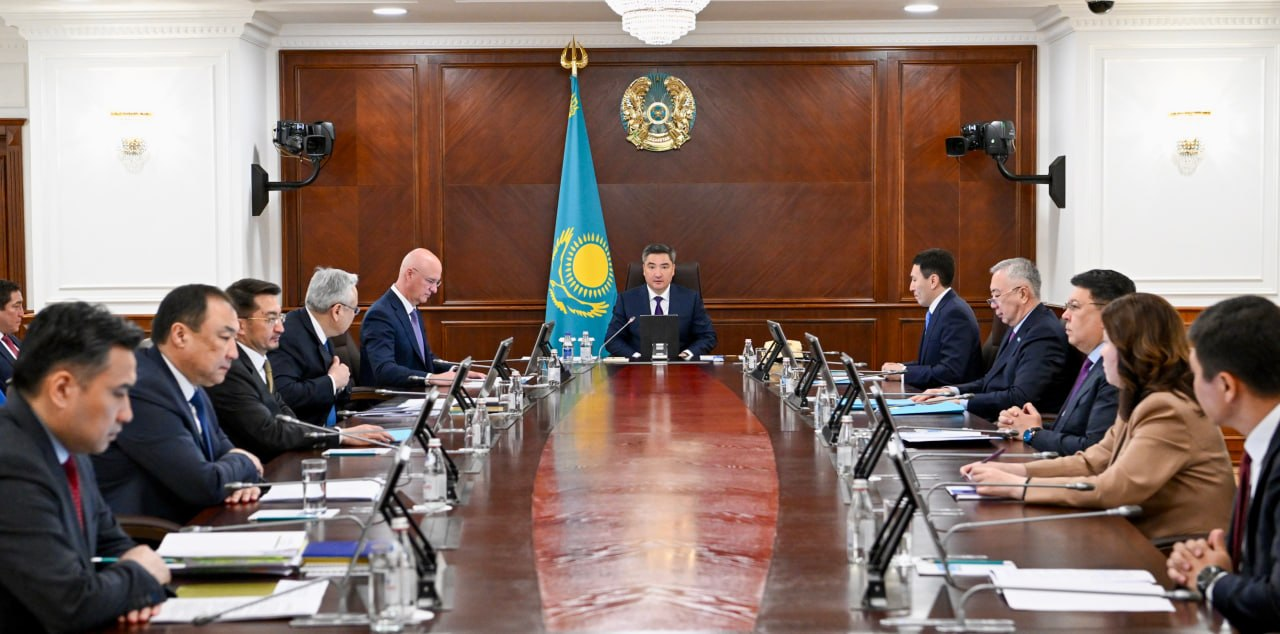
Government officials discuss measures to expand inclusive policies and social support during an April 21 meeting. Photo credit: Prime Minister’s press service.
He also announced a 12% increase in funding for inclusion and rehabilitation measures in 2026. According to him, the city continues to prioritize social spending, with around 60% of its budget allocated to areas such as social protection, education, healthcare, and support services.
Authorities reported that Astana provides a full range of medical and rehabilitation services, as well as employment support measures, including job placement, training, participation in state programs, and grant opportunities.
“Since the beginning of the year, around 300 people have been covered by employment initiatives, including 65 participants in the Bastau Business program,” Kassymbek said.
A structured system of special social services has also been developed, with seven state institutions and eight non-governmental organizations providing support to 7,183 residents.
Focus on inclusive education and a barrier-free city
According to Kassymbek, the city now operates 24 specialized institutions and is constructing a new special school with a capacity for 800 students, which is expected to ensure full coverage of children requiring specialized support.
Efforts to create a barrier-free urban environment are being integrated at the design stage of infrastructure projects. Accessibility improvements are planned across 173 locations as part of ongoing urban development.
“Public transport accessibility has also improved, with more than 93% of vehicles now adapted for passengers with disabilities. The InvaTaxi service has expanded to serve over 2,500 users, with a pilot project underway in partnership with Yandex Go,” Kassymbek said.
Accessible tourism and sports infrastructure
Astana is also working to make tourism infrastructure more inclusive. Five accessible walking routes have been developed, with ongoing monitoring and information available through the inva.gov.kz portal.
The city continues to expand sports and rehabilitation facilities, including the Zhardem center, which provides care for adults with neuropsychiatric conditions in a setting designed to resemble home environments.
Additional facilities include the Paralympic Training Center and the Tarlan ice arena. The recently opened Inclusive Sports Center, operated by the Kazakhstan Boccia Federation, can accommodate at least 300 visitors daily and offers training in 12 adaptive sports.
Innovation and future plans
Authorities are also introducing digital and technological solutions to improve accessibility. These include the development of a smart device that enables hands-free control of equipment, the integration of services into the Smart Astana platform, and the use of artificial intelligence to enhance the quality and safety of social services.
“Plans are also underway to build a new rehabilitation center with support from the Zayed Charitable and Humanitarian Foundation,” Kassymbek said.
Seven theaters in the city, including the Kanattylar (Wings) inclusive theater, are contributing to the development of inclusive culture. A new educational program, Inclusive Theater Artist, will offer 26 grants between 2026 and 2030 to train specialists in the field.
