
ASTANA — Nuclear medicine is entering a new stage of development in Kazakhstan. Modern technologies now make it possible to detect dangerous diseases at an early stage and improve the treatment effectiveness, Khabar agency reported on Feb. 26.

Photo credit: oncologybuddies.com
The network of diagnostic centers equipped with high-tech equipment is steadily expanding across the country. Advanced methods are being introduced in specialized institutions, research volumes are increasing, and specialist training is being strengthened.
Today, PET scans and radionuclide diagnostics are widely used in Kazakhstan, helping detect oncological diseases at the earliest stages and significantly increasing patients’ chances of timely and effective treatment.
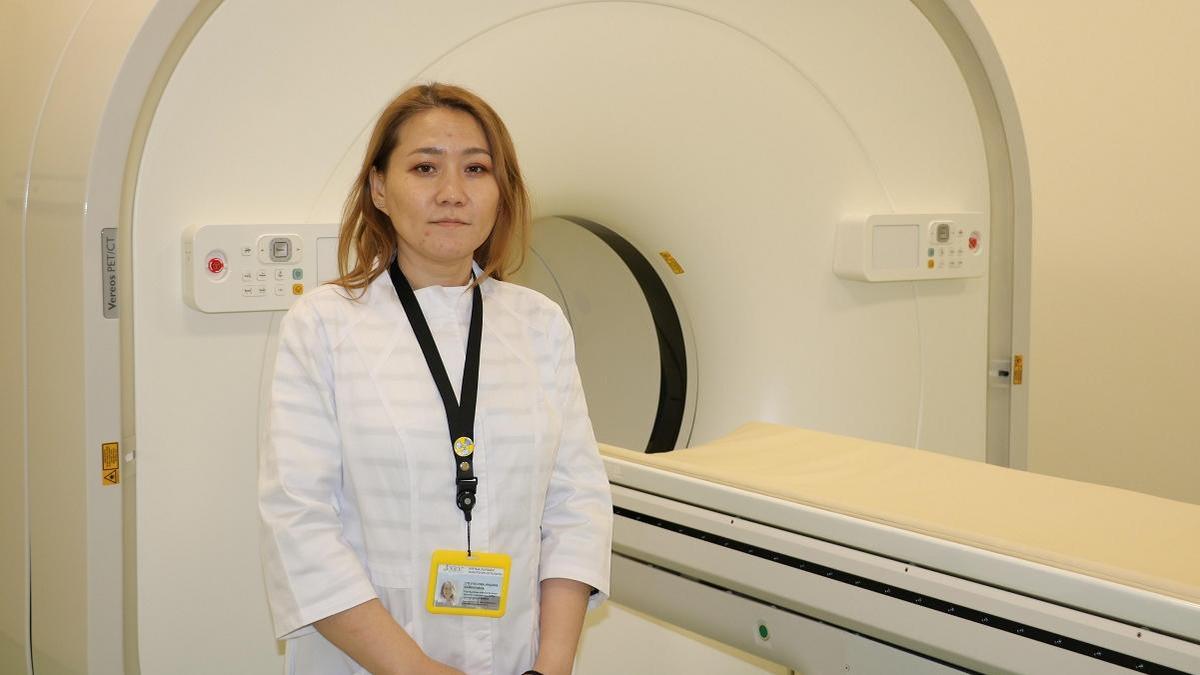
Indira Tleulesova, head of the Radiation Technology Center at the National Research Oncology Center (NROC). Photo credit: cancercenter.edu.kz
According to Indira Tleulesova, head of the Radiation Technology Center at the National Research Oncology Center (NROC), radiation medicine is developing in two key areas: radiation oncology and nuclear medicine. Nuclear medicine uses radioactive sources and radiopharmaceuticals for both diagnosis and therapy, typically administered intravenously or orally to the patient.
PET diagnostics are particularly well developed in Kazakhstan. Patients are usually injected with the drug fluorodeoxyglucose, which enables a full-body examination and assessment of disease prevalence.
“A breakthrough was the introduction of the first proton therapy unit in Central Asia, based at the National Research Oncology Center. This type of radiation therapy uses external radiation: the patient is placed on a table and irradiated from the outside, targeting cancer cells while minimally affecting healthy tissues,” she said.
Today, the Radiation Technology Center at NROC covers the full cycle – from production and diagnostics to treatment using radioactive sources. Special attention is given to developing radiopharmaceutical production, which strengthens the healthcare system’s independence and expands opportunities for nuclear medicine in Kazakhstan.
According to Fail Zhamaldinov, head of the Production Department of the Cyclotron Production Complex, this complex is an in-hospital production site designed to manufacture radiopharmaceuticals for oncological diagnostics. All production stages comply strictly with good manufacturing practice (GMP) standards, ensuring product quality and stable operation.
Global diagnostic standards are gradually becoming the norm in Kazakhstan. Modern technologies, domestic radiopharmaceuticals and highly trained personnel are shaping a new level of medical care. The rapid development of nuclear medicine is already influencing the healthcare system and citizens’ quality of life.
