
ASTANA — Kazakhstan produced 99.6 million tons of crude oil and gas condensate in 2025, up 12% from the previous year, according to figures released by the Kazakhstan Association of Oil and Gas and Energy Sector Organizations on Feb.17.
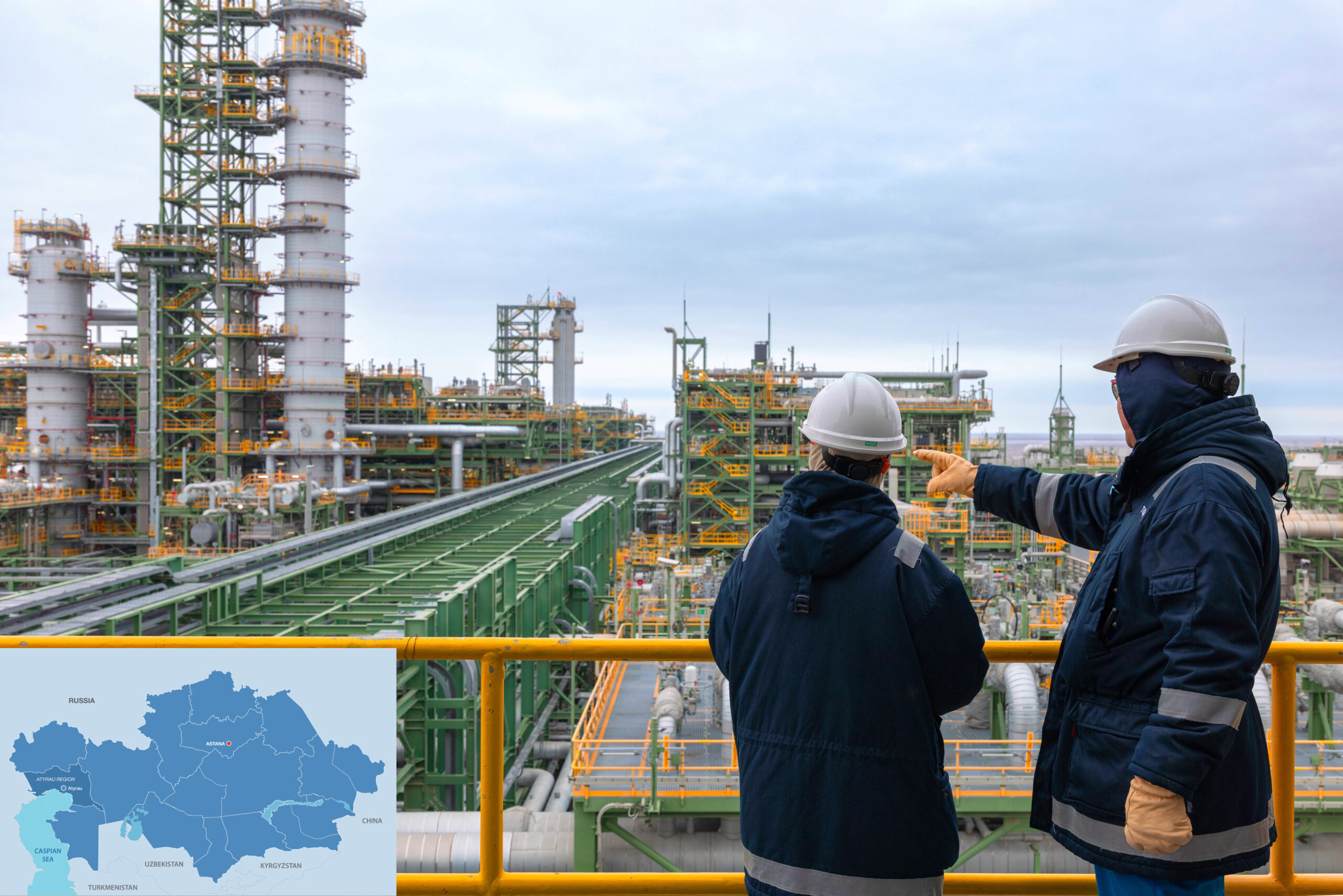
Photo credit: tengizchevroil.com Click to see the map in full size. The map is designed by The Astana Times.
The increase was driven largely by expansion at the Tengiz oil field in western Kazakhstan, as industry representatives point to continued pricing differences between export and domestic markets. Large-scale projects accounted for approximately 70% of total production. Output increased by 12% or 11.8 million tons compared with 2024, primarily due to the launch of the Future Growth Project at Tengiz.
Tengiz, one of the world’s largest and deepest oil fields, is located in the Atyrau Region near the Caspian Sea. Discovered in 1979, it is operated by Tengizchevroil, a joint venture led by Chevron in partnership with ExxonMobil, KazMunayGas and Lukoil. The expansion is designed to increase annual production by around 12 million tons, raising Tengiz output to approximately 39 million tons per year.
The growth, therefore, came mainly from expanding an existing flagship field rather than bringing new deposits online. Outside the major projects, production remained broadly stable, while some regions saw declines due to the natural depletion of mature fields.
Domestic supply and refining capacity
Approximately 30 million tons of oil were produced by other companies, most of which supply the domestic market.
Kazakhstan’s refineries processed 18.4 million tons of crude in 2025, accounting for 61% of the domestic supply. Over the past three years, the refining share has increased from 57% to 61%, or approximately 1.2 million tons.
The country operates three major refineries in Atyrau, Pavlodar and Shymkent, producing gasoline, diesel and other petroleum products. Under the oil refining industry development concept for 2025-2040, the government plans to expand and modernize existing facilities rather than build new ones. Refining volumes are expected to continue rising to meet domestic demand.
Price liberalization and investment signals
The government has been gradually liberalizing fuel prices to move toward parity between export and domestic supply prices, seeking to make domestic sales more economically attractive for subsoil users, companies licensed to extract natural resources.
“However, extraction mechanisms such as additional excise taxes and reinvestment policies tied to contractual obligations have so far failed to deliver the stated benefits or provide subsoil users with the expected economic returns. As a result, the extractive sector finds itself facing rising production burdens while price disparities persist, further compounded by additional extraction mechanisms,” said the association.
As a result, companies face growing obligations to supply the domestic market while export sales remain more profitable. The pricing gap, combined with additional fiscal mechanisms, continues to affect the upstream segment – exploration and production.
The association highlighted that the central issue now extends beyond price parity. The industry requires stronger investment incentives to support reserve replacement, developing new resources to offset depletion and to advance hard-to-recover reserves that demand higher capital and advanced technologies.
