
ASTANA – In January, Anar Burasheva stood atop Mount Vinson, the highest peak in Antarctica, becoming the first woman from Kazakhstan to complete the Seven Summits, the challenge of climbing the highest mountain on each continent. In an interview with The Astana Times, Burasheva reflects on the physical and mental toll behind that achievement.
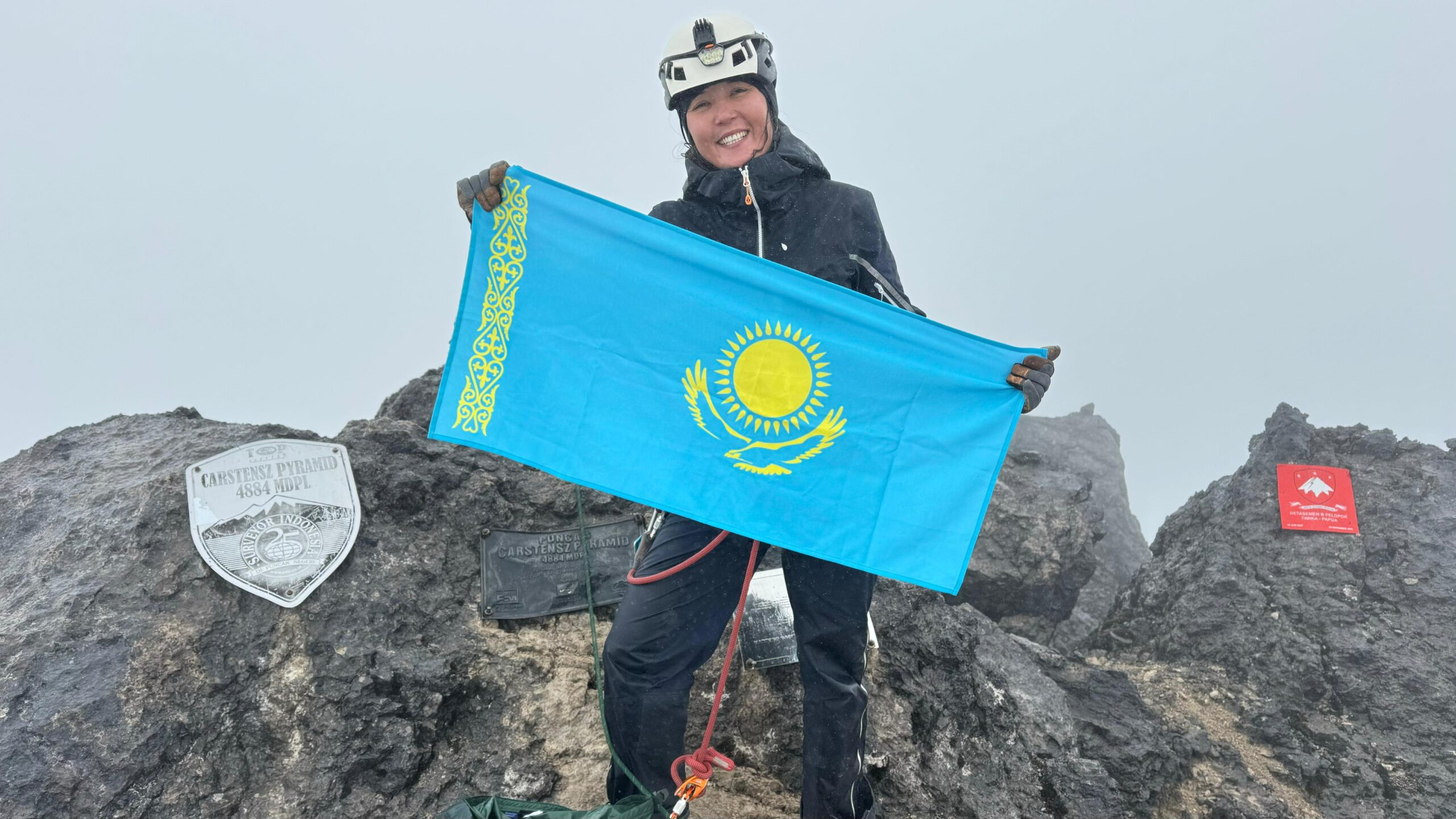
Puncak Jaya, or Carstensz Pyramid, is a mountain peak on the continent of Oceania. Photo credit: personal archive
The Seven Summits is a mountaineering challenge to climb the highest peak on each of the seven continents. It was first completed in 1985 by American mountaineer Richard Bass. The list includes Mount Everest in Asia, Aconcagua in South America, Denali in North America, Kilimanjaro in Africa, Mount Elbrus in Europe, Mount Vinson in Antarctica, and Carstensz Pyramid, also known as Puncak Jaya, in Oceania.
The moment that set Burasheva on this path came three years earlier, when she accepted an invitation to join an expedition to Mount Everest. “It was a turning point in my life, a move from the office to the mountains,” she recalls.
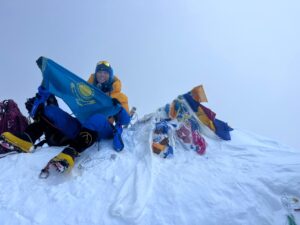
At the Everest. Photo credit: personal archive
The journey took around two years. Burasheva structured that period in cycles: several months of training followed by an ascent. Using that approach, she climbed three peaks in 2024 and completed the remaining four in 2025 and early 2026.
The first emotion Burasheva felt atop Mount Vinson was gratitude. “Gratitude to my sponsors, to my family for their support, and to my friends. I also feel deep regret that my father was unable to see this day,” Burasheva said.
While all summits require physical endurance and mental strength, Burasheva highlighted Denali as the most challenging one.
“It was June 2025. The peak rises to 6,200 meters and is the highest point in North America. We faced very poor weather conditions and were forced to spend extended periods in high-altitude camps: 10 days at 4,200 meters and seven days at 5,200 meters, with wind chill temperatures reaching minus 50 degrees Celsius,” Burasheva said.
“In addition, it was challenging to work with American guides operating on Denali, as they follow specific rules and procedures that I had not encountered during previous international expeditions,” she added.
Preparation for expeditions
The core of the preparation is endurance training, she noted. Altitude adaptation works best with regular exposure, something Almaty’s proximity to the mountains allows.
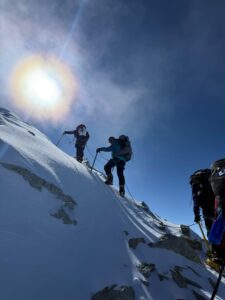
On the way to Mount Vinson. Photo credit: personal archive
“For us, who live in Almaty, we are fortunate to live close to the mountains, which allows us to build endurance at altitude. This includes hiking, mountain running, strength training in the mountains, and similar activities,” Burasheva said.
“Everything I do in the mountains adds to my preparation; it is a major advantage,” she added.
The path toward high peaks, however, is not defined by strength alone. Mental preparedness and emotional resilience are also key.
“Then there is mental preparation, which largely comes from expedition experience, experience that prepares you for unexpected situations and for dealing with different kinds of people,” said Burasheva.
“Finally, there is medical preparation. I undergo full medical checkups twice a year so that any health issues have been treated and I arrive at the mountain in the best possible health,” she said.
When choosing a company to join, Burasheva said, she carefully studies its track record and the guides it works with. “I need to know that these people know the mountains well and are physically strong and experienced,” she added.
A sport defined by risk
In a sport defined by risk, she said her attention is focused on preparation.
“I don’t really focus on the idea that the mountains are dangerous. I focus more on preparation because I believe proper preparation helps minimize risks. In addition, the ability to think clearly in the mountains and make the right decisions based on snow conditions and the weather is very important. That is why I believe it is essential to prepare thoroughly, choose a strong team, and strive to make the right decisions at every stage of the ascent,” Burasheva explained.
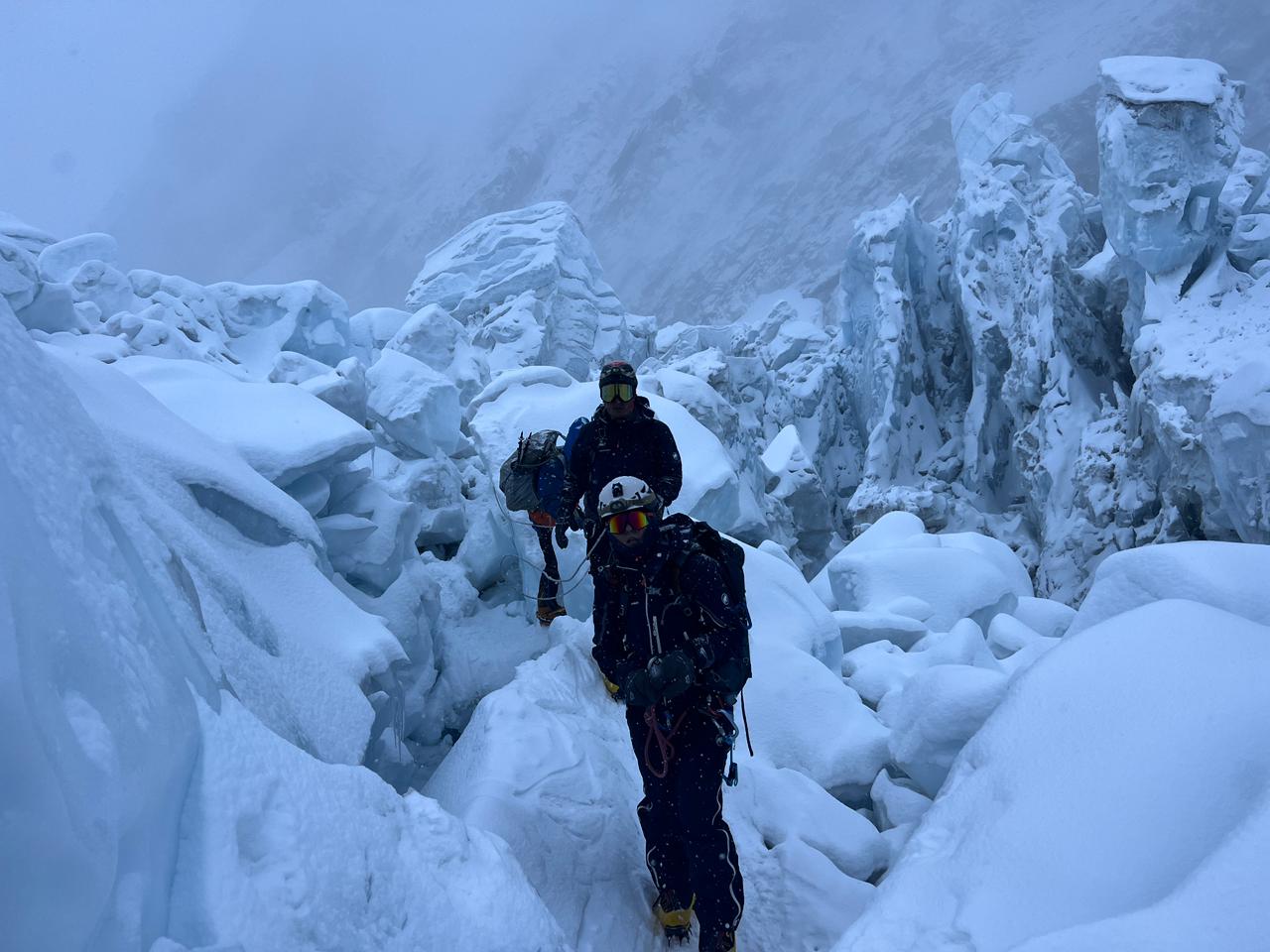
Through the Khumbu Glacier, toward Everest Base Camp. Photo credit: personal archive
She said one of the questions she is asked most often is whether she has seen bodies in the mountains. For reasons she still finds puzzling, the question seems to interest many people, both those far removed from the mountains and those familiar with them. People who are not connected to the mountains, she added, also frequently ask why she chooses to do it at all.
An example for a younger generation
The meaning she finds in the mountains extends well beyond climbing.
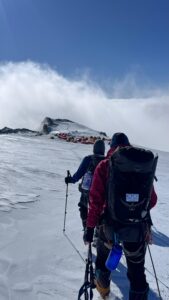
Returning to the high camp on Mount Vinson (Antarctica). Photo credit: personal archive
“I really like the phrase ‘everyone has their own Everest,’ and I would like, through my example, to show that young women should strive for their most ambitious dreams, regardless of the stereotypes in our society or the social barriers they may face. I want every girl to pursue her own Everest,” she said.
This is, however, not only about young women, but also about an entire generation.
“I believe you can move toward your goal at any age. I found myself in the mountains when I was 30,” she added.
Looking ahead
Burasheva has cited fellow mountaineers as key sources of motivation. In a separate interview, she said Kazakh alpinist Maksut Zhumayev has been a major influence on her journey. She also pointed to Alina Pekova, the first Russian woman to complete all 14 of the world’s 8,000-meter peaks, the same feat achieved by Zhumayev, saying she hopes to follow in their footsteps.
So far, Burasheva has climbed three of the 14 peaks. “I would very much like to finish the project and climb them all,” she said. Reaching this goal, however, requires significant financial resources and physical commitment. Burasheva hopes to find the support needed to complete it.
