
ASTANA — Kurultai reflects a long-standing steppe tradition of collective decision-making, with roots in the Kazakh Khanate. Historians assess its renewed political relevance in today’s reform agenda.
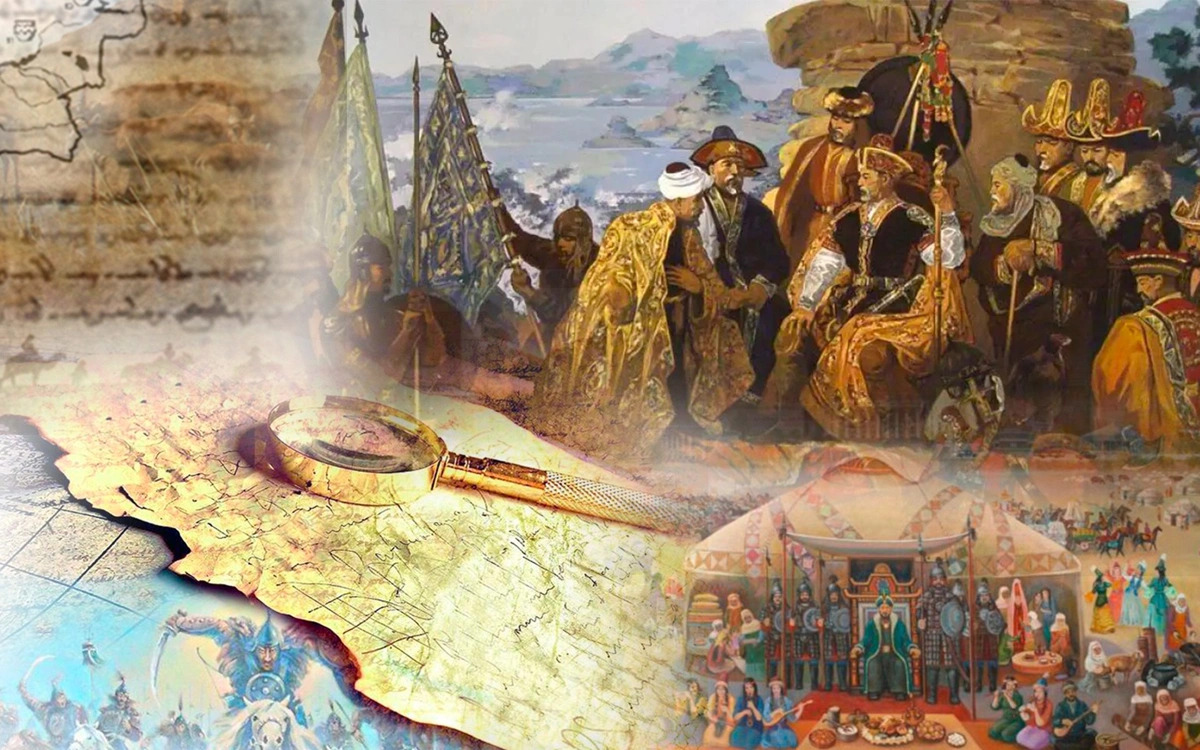
Photo credit: DALL-E
The idea of a kurultai has been revived in the National Kurultai, a consultative platform established in 2022, and its latest meeting took place on Jan. 20 in Kyzylorda. It brings together lawmakers, civil society representatives, scholars and public figures to discuss key national issues. President Kassym-Jomart Tokayev has described it as a platform for consolidating society.
The general idea behind a kurultai, which means a congregation in Kazakh, is to unite Kazakhs. In the Kazakh Khanate, the kurultai functioned as the highest consultative body, where decisions on leadership, war and peace were discussed and endorsed collectively in a nomadic society that relied on balance among influential groups rather than centralized authority.

Zharlykassyn Zhappasov. Photo credit: personal archive
“The kurultai was not simply a meeting, but an institution that maintained internal stability through coordination of interests,” said historian Zharlykassyn Zhappasov.
Historians note that kurultai assemblies existed long before the Kazakh Khanate and were part of governance systems among early nomadic societies.
“In the earliest state formations of the Saka, Hun and Wusun periods, kurultai assemblies became part of the system of governance. These meetings addressed key issues, including war, boundaries between tribes, the use of pastures and arable land, irrigation and other economic matters,” said Arman Zhumadil, historian and associate professor at the Kazakh-British Technical University.
He added that the tradition continued to evolve in the Mongol-Turkic era. In 1206, Genghis Khan was proclaimed khan at an all-Mongol kurultai.
Unlike modern parliamentary voting, decisions at kurultai meetings were reached through open debate and agreement among sultans, biys, batyrs and clan leaders. This system allowed the khan’s authority to gain legitimacy only when supported by key social groups, historians note.
According to Zhumadil, the kurultai gained particular significance in the early 18th century, when the fate of the Kazakh people hung by a thread amid Dzungar raids. Zhumadil said the strength of the kurultai lay in the power of the spoken word, with authority grounded in persuasion, reputation and public trust.
“During kurultais, zhyrau [instrumentalists] lifted the spirit of the people, while eloquent and authoritative biys [judges] through their fair judgments, were able to end endless disputes with a single phrase, preventing fragmentation and preserving unity,” he said. “It was an era of traditional Kazakh society in which the power of the spoken word carried absolute weight. The defining feature of steppe civilization is democracy and freedom of speech.”
Zhappasov also noted that the unifying role of the kurultai was most evident during periods of heightened external threat.
“Fragmented actions by individual clans weakened resistance, making it essential to bring forces under a single plan and coordinate joint efforts. In this way, the kurultai within the political system of the Kazakh Khanate served as a key institution that legitimized authority, ensured consensus among major social groups and mobilized the country in the face of external danger. It stood at the core of a system of governance aligned with the nature of nomadic statehood,” Zhappasov said.
Historians, however, caution against equating the traditional kurultai with Kazakhstan’s modern National Kurultai, which operates as a consultative and advisory body under the president. Yet, they emphasize a strong symbolic and conceptual continuity.
“Therefore, from a scholarly perspective, the modern National Kurultai is not a direct legal continuation of the traditional kurultai but rather a contemporary model of symbolic and conceptual continuity that revives a culture of consensus-building through consultation, adapting it to present-day conditions,” said Zhappasov.
The article was originally published in Kazinform.
