
ASTANA — The Caspian Sea has lost 36,000 square kilometers of its surface area over the past 18 years, as water levels along Kazakhstan’s coast continue to fall, posing serious ecological and economic challenges for the region.
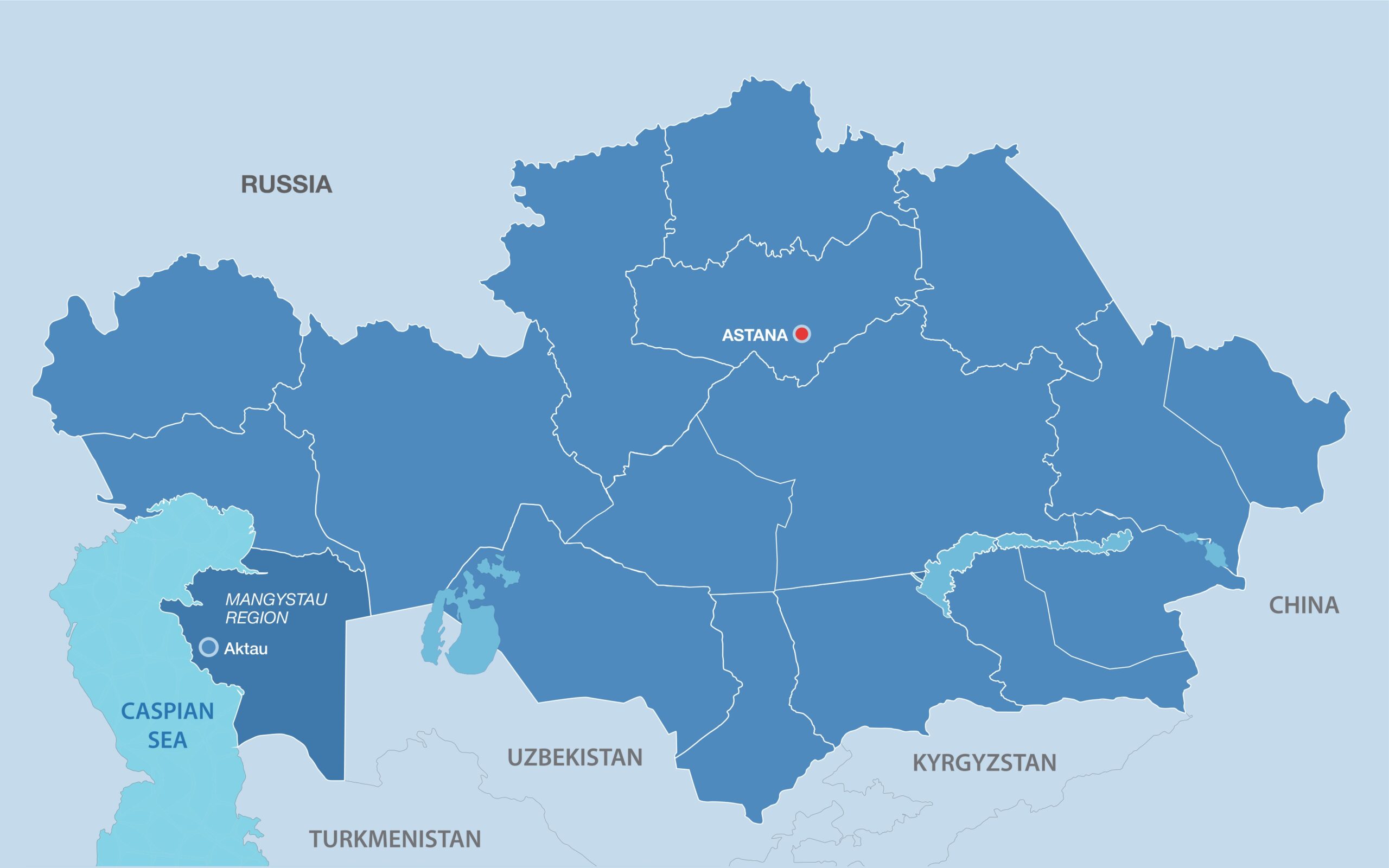
Photo credit: Galiya Urmanova. Click to see the map in full size. The map is designed by The Astana Times.
As of September, the average water level of the Caspian Sea along Kazakhstan’s shores was recorded at minus 29.31 meters, marking a continued decline. The northern and eastern sections of the sea, which are monitored by Kazhydromet national hydrometeorological service, have experienced reductions of 20 and 17 centimeters, respectively, compared to last year, reported Kazinform on Nov. 16.
Over the last two decades, the sea has shrunk the most in the northeast, with the shoreline retreating by 30-35 kilometers. The shrinking waters have affected local fisheries, disrupted fish migration routes, and complicated navigation for cargo vessels. Key economic concerns include the impact on fishing communities and ongoing work to deepen the fairway to the Kashagan oil field, which threatens marine life during construction.
In response, Kazakhstan established the Caspian Sea Research Institute in Aktau, tasked with studying fluctuations in sea levels, the impact on ecosystems, fish populations, and the causes of mass seal deaths. The institute will also develop conservation strategies and technologies to preserve marine resources. Plans include opening a master’s program in Oceanology and Hydrobiology to address the shortage of specialized scientists.
Environmental advocates have launched the initiative Caspian – My Sea! to raise public awareness and encourage cross-border cooperation among the five Caspian littoral states: Azerbaijan, Iran, Kazakhstan, Russia, and Turkmenistan. The movement aims to protect the sea’s ecosystem, promote sustainable resource use, and strengthen local engagement in conservation efforts.
Experts warn that without coordinated action, the Caspian Sea could face a fate similar to the Aral Sea, with devastating consequences for biodiversity, regional economies, and millions of residents who rely on its resources.
