
Editor’s note: The Astana Times continues a section featuring articles by our readers. As a platform that values diverse perspectives and meaningful conversations, we believe that this section provides space for readers to share their thoughts and insights on various topics that matter to them and the AT audience.
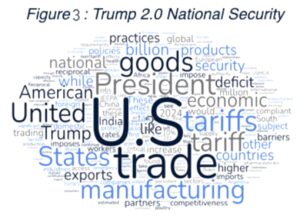
How should heads of state and CEOs adapt to Trump 2.0 and beyond? And what does this mean for Kazakhstan? Foreign leaders and executives increasingly find Donald Trump 2.0 very different from Joe Biden, Barack Obama or even Trump 1.0. Successful relationship-building now depends on abandoning old habits of diplomatic elitism and adopting the language and mindset of a dealmaker. A word-frequency analysis of four official U.S. national strategies across four presidencies reveals one simple but unforgiving lesson: the playbook has changed.
Drop diplomatic formalities
 Polished speeches, joint communiqués and appeals to shared values signal alignment with the old style that Trump 2.0 rejects. Skip the protocol and speak directly in the language of business.
Lead with U.S. benefits
Trump 2.0 demands visible wins for American companies and workers. Every deal should be framed as a headline: “X country brings Y billion $ investment and creates Z thousand jobs in the U.S.” or “American company wins Y billion $ contract in X country.” If tangible benefits are not clear from day one, the deal dies.
Package proposals as deals, not policies
 Trump 2.0 dismisses abstract frameworks, strategy pledges or alliance-building language. He understands contracts, projects, and transactions. Presenting initiatives as discrete deals can be branded as presidential victories.
Speak in strength, not process
Endless negotiation rounds or committee-driven processes are red flags. Trump 2.0 wants closure. Come with numbers, timelines, and the authority to say “yes.” State capitalism prevails.
Expect binary outcomes
 For Trump 2.0, outcomes are simple: America wins visibly, or there is no deal. Incrementalism carries no value.
What does this mean for Kazakhstan?
AI diplomacy
One potential avenue for diplomatic brokerage lies in AI data centers. Kazakhstan offers strategic advantages that are critical to the U.S. pursuit of AI leadership. It can supply refined critical minerals essential for AI infrastructure and deliver abundant, reliable, low-cost electricity to power GPU-intensive data centers. The U.S. AI boom depends on GPU-based computing, which consumes exponentially more energy than traditional CPU architectures. Investment banks now identify energy supply and cooling capacity as the No. 1 bottleneck to U.S. AI expansion—areas where Kazakhstan is well positioned to contribute.
“Capitalist Peace” and “State Capitalism”
AI data center collaboration aligns with both the Trump 2.0 national strategy and Kazakhstan’s development model. Kazakhstan’s business value lies not in its key mineral and energy resources but in its state-capitalism system, which echoes the Trump 2.0 economic approach. With AI already a national priority (Alem.ai and the Sovereign Wealth Fund’s AI portfolio), Kazakhstan stands as a credible and capable partner for hosting advanced GPU-based AI infrastructure. Trump 2.0 could provide a unique chance for mutually beneficial state-capitalist cooperation. Such a venture has big commercial viability and limited exposure to geopolitics, consistent with the increasingly favored idea under Trump 2.0: “capitalist peace,” where economic interests foster national ties.
Kazakhstan once played a meaningful role in the internet and digital revolutions through its mineral production and satellite launch facilities. Missing the AI revolution now risks locking the country into a low-value role as a mere supplier of raw materials and cheap energy. The ongoing AI revolution represents a rare leapfrog opportunity to accelerate Kazakhstan’s economic development, and to reinforce U.S. global technological leadership.
The author is Ed Khanat Khairat, a technology investor based in the UK and a diplomat with United Nations agencies in Geneva, Switzerland. He is a Fulbright Scholar of the U.S. State Department and a graduate of Duke University and Peking University Medical School.
Disclaimer: The views and opinions expressed in this article are those of the author and do not necessarily reflect the position of The Astana Times.
