
This September, Astana once again became the meeting point for faiths and cultures as it hosted the eighth Congress of Leaders of World and Traditional Religions. What makes this gathering unique is its scale and spirit: dozens of religious denominations and international organizations coming together in a single hall to talk, listen, and seek common ground.
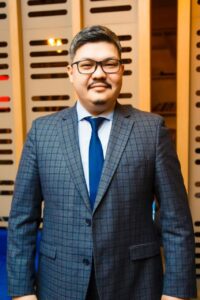
Ozhet A. Shegirbayev.
The first congress in 2003 brought together just 24 delegations. Fast forward to 2025, and nearly 100 delegations from 60 countries took part. The difference is striking – proof that this is no longer a small experiment, but a global fixture attracting growing attention every three years.
Consistency matters. In today’s turbulent world, the fact that the congress has been held regularly for over two decades speaks volumes. It provides a venue for building effective horizontal ties, fostering dialogue and opening doors to negotiation and cooperation.
A three-day program included four breakout sessions, an expert forum and the second forum of young religious leaders. Each gathering provided opportunities for the exchange of ideas and experiences, as well as forming new partnerships that may carry far beyond Astana.
For the first time, a special session under the auspices of the UN Alliance of Civilizations was held on the protection of religious sites. Kazakhstan showcased its extensive experience in preserving sacred heritage, including the mausoleums of Arystan Bab and Khoja Ahmed Yasawi, the Beket-Ata Mosque, the Ascension Cathedral, the Catholic Spiritual Center at Lake Maryamkol, among other sites. The message was clear: Kazakhstan is not only hosting dialogue, but also living it through the protection of its diverse spiritual landmarks.
President Kassym-Jomart Tokayev’s keynote speech gave the congress fresh momentum. He proposed the Movement for Peace initiative, a call for spiritual leaders, with their moral authority, to stand above politics and urge an end to violence. He also underlined religion’s role in confronting climate change as a moral challenge for humanity, while putting forward the idea of an Interfaith Commission on the Ethics of Artificial Intelligence.
These initiatives show that Kazakhstan is not just floating ideas but offering tangible solutions. Kazakhstan has set a new benchmark for understanding the role of religion and spiritual values in the 21st century: not only to safeguard traditions, but also to actively engage in addressing contemporary challenges – from conflicts and ecological crises to the ethical dilemmas of new technologies.
The event has long since moved beyond being a symbolic forum. It has become a genuine force for change – a platform where ideas are born that can shape the international agenda, strengthen trust and restore global discourse to the principles of peace, humanism and responsibility.
The author is Ozhet A. Shegirbayev, Deputy Head of the Information and Analytical Department of the Senate of the Parliament of Kazakhstan.
Disclaimer: The views and opinions expressed in this article are those of the author and do not necessarily reflect the position of The Astana Times.
