
In 2024, the United Nations Development Programme (UNDP) in Kazakhstan, with financial support from the Ministry of Economy, launched the regional program Sustainable Development: Overcoming Local Disparities in the New Regions of Abai and Ulytau. The aim of the program is to reduce regional development imbalances, improve the quality of life of the population, and support the achievement of the Sustainable Development Goals (SDGs) at the regional level.
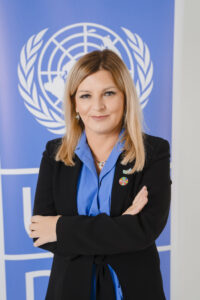
Katarzyna Wawiernia.
One of the key areas has been the implementation of pilot participatory budgeting projects in the districts and villages of these regions. This marks the first-time application of this mechanism at the local level.
As is known, the recently adopted Budget Code, which enshrines the legal status of the participatory budgeting mechanism, opens new opportunities for enhancing the transparency of local budgets, expanding inclusivity, and more accurately addressing the needs of the population. The institutionalization of participatory budgeting is a significant step, giving this initiative an official legal status and transforming it from a voluntary practice into a mandatory element of the budget system.
Since 2014, the participatory budgeting mechanism has already existed within the legal framework, regulated by the Order of the Minister of Finance On the Approval of the Rules for the Development of Local Budget Projects. This enabled its gradual testing in large cities, such as Astana and Almaty, and later its scaling to all regional cities. Today, the mechanism is being implemented in almost all cities with populations over 10,000.
However, the full potential of this mechanism has yet to be realized, as it has not been introduced at the district and rural levels—precisely where it could have the greatest impact on the socio-economic development of sparsely populated areas. Clearly, in such localities, participatory budgeting can become an effective tool for identifying community priorities and improving quality of life through the direct involvement of citizens in allocating budgetary resources.
That is why, within the framework of the Regional Program in Abai and Ulytau regions, UNDP has prioritized supporting local executive bodies in this work. Together with local population, initiatives will be implemented to develop social infrastructure, expand access to green technologies, and enhance community well-being.
To maximize the effectiveness of implementing the participatory budgeting mechanism, UNDP organizes training sessions for local executive and representative bodies, as well as for non-governmental organizations, prior to project activities. A deeper understanding of the importance of this mechanism will enable more effective public engagement in decision-making processes aimed at sustainable regional development.
It is important to note that information and awareness-raising efforts about the opportunities and benefits of participating in the budget process are also key factors for successfully integrating this mechanism into the interbudgetary relations system. This encourages citizen participation, fosters a responsible attitude toward the use of public resources, and strengthens interaction between society and government institutions.
Participatory budgeting becomes particularly effective when citizens understand not only the importance of submitting proposals but also the need for objective discussion and subsequent public oversight.
In this regard, in the further development of relevant secondary legislation, it is necessary to ensure the comprehensive implementation of this mechanism at all levels of budget planning, with a focus on the following areas: (a) expanding the digital platform for participatory budgeting to cover rural areas (districts and auls), which will increase transparency and simplify citizen participation; (b) organizing public consultations to determine budget priorities, ensuring that expenditures meet the real needs of the population; (c) increasing the share of local budgets allocated to initiatives that support the achievement of the SDGs — such as the development of green energy, social inclusion, and climate resilience.
Thus, the current UNDP pilot projects on introducing participatory budgeting in districts and villages may serve as a foundation for developing a phased methodology for its local-level implementation. They also contribute to the scaling of successful practices and the formation of unified approaches and regulations. For the government, the relaunch and gradual rollout of this mechanism becomes a powerful tool to complement ongoing measures with localized, targeted solutions aimed at improving living standards and achieving the SDGs by 2030.
The author is Katarzyna Wawiernia, UNDP Resident Representative in Kazakhstan.
Disclaimer: The views and opinions expressed in this article are those of the author and do not necessarily reflect the position of The Astana Times.
