
I have followed Kazakhstan’s political and constitutional reforms with particular interest. As an expert in constitutional law, I regard the reform process initiated by President Kassym-Jomart Tokayev as a significant stage in the country’s constitutional development. Its emphasis on institutional renewal, a more balanced exercise of public authority, the protection of human rights and the strengthening of constitutional safeguards merits serious attention and recognition.
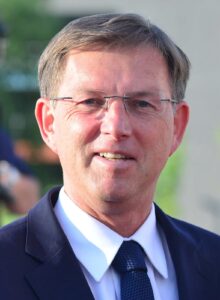
Miro Cerar. Photo credit: Miro Cerar’s personal archive
The nationwide referendum held on March 15 gave Kazakhstan’s citizens an opportunity to express their will on the new Constitution, which entered into force on July 1 and marks an important milestone in the constitutional development of the republic.
The new constitutional framework affirms the importance of human dignity, fundamental rights and freedoms, the supremacy of the Constitution and the accountability of public institutions. The lasting significance of these constitutional commitments will depend on their consistent implementation by every branch of government and on the development of a legal culture grounded in respect for both the letter and the spirit of the Constitution.
Constitutional justice is central to that undertaking. In a constitutional democracy, a Constitutional Court serves as one of the most important guardians of constitutional principles and values, and helps ensure that legislation and the exercise of public authority remain within constitutional limits. It also provides an institutional safeguard for the rights and freedoms guaranteed to individuals. For this role to be fully realized, constitutional review must be accessible, effective, impartial, independent of political influence and exercised with the highest authority of the Constitutional Court.
The success of constitutional reform must therefore be assessed not only by the provisions adopted, but also by the strength and integrity of the institutions entrusted with their implementation. A sound democratic constitutional order requires separation of powers, effective checks and balances, protection of individual rights and freedoms, respect for legal equality, non-discrimination and other forms of justice, legal certainty and, last but not least, accountable public administration. These are enduring principles, and their practical application must remain a continuing responsibility of state authorities.
From the point of view of further constitutional and social developments in Kazakhstan, it is encouraging that some important matters have been set out in President Tokayev’s State of the Nation Address of October 28, entitled “Kazakhstan’s Current Priorities in a New Historical Cycle.” His vision connects economic modernization, infrastructure renewal, technological progress, social welfare and institutional reform. Particularly important is the recognition that sustainable growth must be supported by the rule of law, effective public administration and a predictable and efficient legal environment – conditions that enable investment and innovation while ensuring that progress benefits the people.
The development of digital technologies and artificial intelligence makes this discussion all the more pressing. Innovation should be guided by a careful balance between opportunity and responsibility, with due regard for human rights, ethical standards, public safety and the rule of law. A human-centred and human-controlled approach to technological change is essential if its benefits are to be broadly shared and public trust maintained. In this respect, it is of utmost importance that humanity, by ethical, political and legal means, prevents artificial intelligence from prevailing over humans.
The author is Professor Dr Miro Cerar, Dean and Full Professor, Faculty of Law at University of Ljubljana. He served as the Prime Minister of the Republic of Slovenia (2014–2018) and the Deputy Prime Minister and Minister of Foreign Affairs of the Republic of Slovenia (2018–2020).
Disclaimer: The views and opinions expressed in this article are those of the author and do not necessarily reflect the position of The Astana Times.
