
ASTANA – Kazakhstan and Hong Kong are uniquely positioned to serve as gateways to Central Asia and China, creating opportunities for deeper cooperation across trade, finance, education and connectivity, Hong Kong Chief Executive John Lee said during his visit to Astana on June 2. Leading a business delegation organized by the Hong Kong Trade Development Council (HKTDC), Lee described Kazakhstan and Hong Kong as natural partners whose development models complement one another.
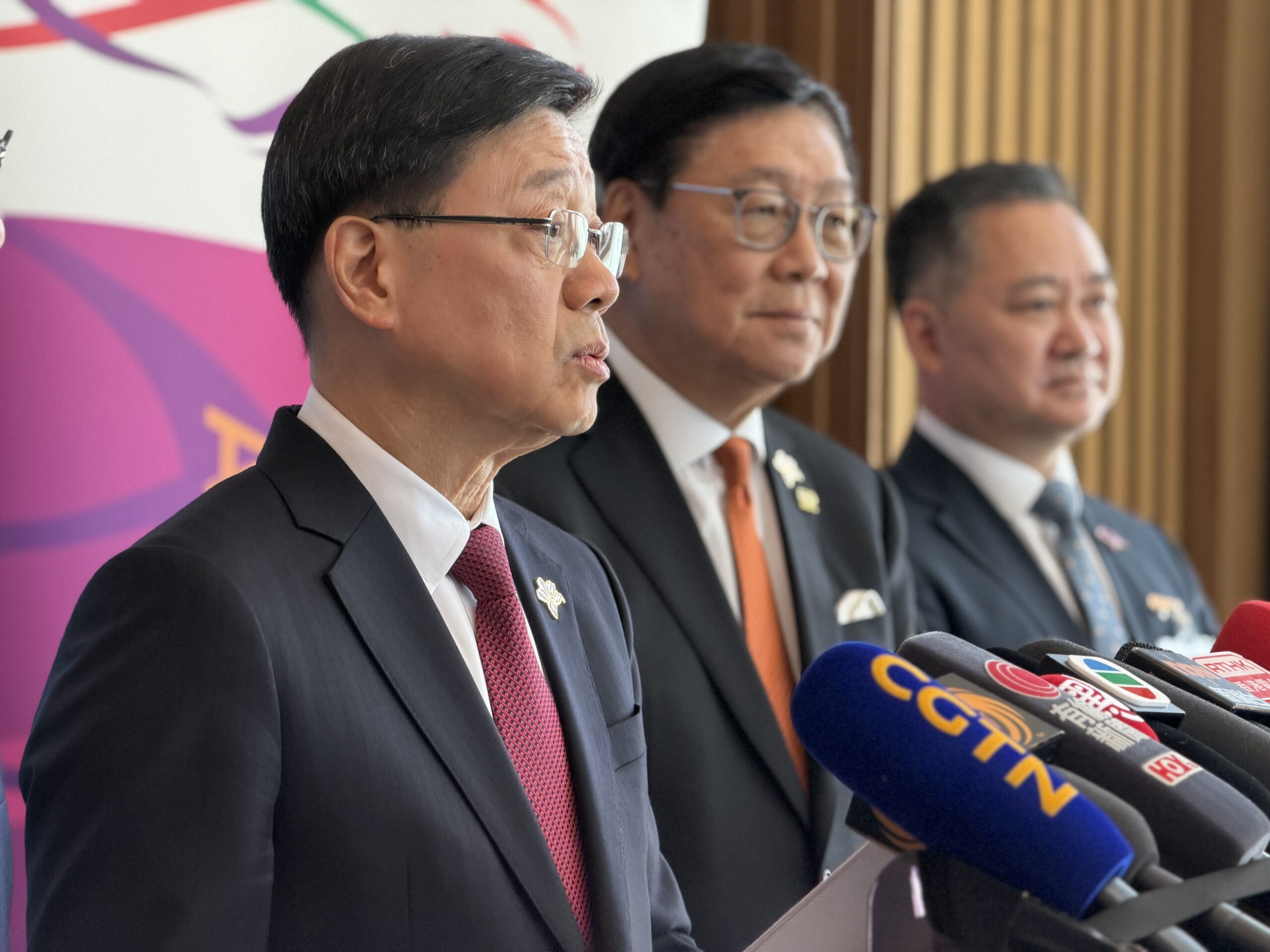
He framed the relationship through a simple comparison: Kazakhstan as the first destination for companies looking at Central Asia, and Hong Kong as the preferred entry point for those seeking access to China.
Photo credit: The Astana Times
“The development models of Hong Kong and Kazakhstan have a lot in common. That is why the opportunities for cooperation between us are enormous,” Lee said.
He framed the relationship through a simple comparison: Kazakhstan as the first destination for companies looking at Central Asia, and Hong Kong as the preferred entry point for those seeking access to China.
“When people think about entering the Central Asian market, the first thing they think about is Kazakhstan. Likewise, when businesses want to enter the Chinese market, the first thing they think about is Hong Kong. One plus one is greater than two,” he said.
The delegation arrived in Kazakhstan as part of a broader Central Asian tour that will continue in Uzbekistan. According to Lee, Kazakhstan was chosen as the first stop because of its growing economic significance, strategic location and role as a regional hub connecting China and Europe.
“Central Asia is a huge market. Development here is taking place at an unprecedented pace, and among the five Central Asian countries, Kazakhstan is developing particularly rapidly,” he said.
The mission brought together approximately 70 business leaders from Hong Kong, alongside representatives of mainland Chinese companies from 17 provinces and municipalities. Participants represented sectors ranging from finance, logistics and professional services to innovation, green industries, energy, mining, biopharmaceuticals, automotive manufacturing and media.
Speaking at a business luncheon in Astana, HKTDC Chairman Frederick Ma noted that Kazakhstan accounted for 53% of Central Asia’s GDP in 2025 and highlighted the country’s ambitions under the Kazakhstan 2050 Strategy to join the world’s 30 most developed nations by mid-century. Ma said Hong Kong sees significant opportunities for cooperation in logistics infrastructure, green finance, the digital economy, agricultural modernization and food processing, while also serving as a platform for Chinese companies seeking to expand into international markets.
During the visit, the delegation held meetings with representatives of the Atameken National Chamber of Entrepreneurs, Baiterek National Managing Holding, Halyk Bank and Samruk-Kazyna. Delegates also visited Astana Hub and the Astana International Financial Centre to explore developments in innovation, technology and financial services.
Lee highlighted transportation connectivity as another priority. He confirmed that direct flights between Hong Kong and Kazakhstan are expected to launch next year, with discussions underway on flight frequency and broader air connectivity with the five Central Asian states. The Hong Kong leader also said both sides are discussing ways to further facilitate travel, including extending visa-free stays and simplifying mobility for business and tourism.
Education emerged as another key pillar of cooperation. During a visit to Nazarbayev University, two memoranda will be signed to expand academic exchanges, joint research initiatives and collaboration. According to Lee, around 500 Kazakh students are currently studying in Hong Kong. He expressed hope that new agreements would encourage greater student mobility, dual-degree programs and closer cooperation between universities.
The visit comes as Kazakhstan is projected to remain the largest economy in Central Asia, with GDP expected to grow by 4.6% in 2026 to approximately $360.5 billion. The International Monetary Fund forecasts economic growth across Central Asia and the Caucasus at 4.8% in 2026, outpacing the projected global average of 3.1%.
The trip, marking the first-ever visit by a Hong Kong Chief Executive to Kazakhstan, resulted in a series of agreements and new commitments across business, education and connectivity. The real measure of success, however, will be whether those understandings translate into tangible projects, stronger commercial ties and lasting people-to-people exchanges in the years ahead.
