
The crisis of the world order is usually described as a crisis of rules. That is only half true. It is also a crisis of rhythm. For three decades, the language of global governance was written largely in a Western cadence: liberal democracy, human rights, free markets, institutional enlargement, and the assumption that these principles would gradually become universal. Today that cadence no longer organizes the whole world.
 The rules-based order has not disappeared, but its moral vocabulary is being contested, translated, and re-scored by powers that were once treated as peripheral to its design.
This is why the debate on middle powers has become more important than a discussion about size. What if the rise of new powers is not merely weakening the old values-based order, but filling it with new values drawn from older civilizational and strategic traditions?
The Sanskrit concept of samskara offers a useful metaphor. It refers, broadly, to impressions, formations, inherited dispositions — the deep patterns through which societies remember, act, and give meaning to conduct. States have samskaras too. They inherit strategic cultures, historical traumas, civilizational imaginations, and diplomatic habits. In quieter periods, these remain background music. In moments of systemic transition, they become political concepts. India speaks of one family. Japan speaks of free and open connectivity. Indonesia speaks of being free and active. China speaks of civilizational diversity and shared development. Kazakhstan speaks of multi-vector balance, sovereignty, and steppe pragmatism. None of these vocabularies is accidental. Each is a strategic culture turned outward.
The old language of values has lost much of its persuasive power. Values-based politics became vulnerable not because values are irrelevant, but because they were often presented as a finished product, owned by a narrow group of states and exported to others. That approach could work when power was concentrated. It becomes brittle when agency diffuses. A more plural world cannot be governed by the moral vocabulary of one region alone. It needs principles broad enough to be shared, but flexible enough to be inhabited by different histories.
India is the clearest case of this shift. During its G20 presidency, New Delhi framed global leadership through Vasudhaiva Kutumbakam — “One Earth, One Family, One Future.” This was not simply branding. It was a civilizational argument: that the global order should be reimagined through interconnectedness rather than hierarchy, and through responsibility rather than ideological instruction. When Finnish President Alexander Stubb called at the Raisina Dialogue for a “New Delhi moment,” he captured something larger than India’s diplomatic rise. He recognized that the next reform of global governance may need to begin outside the traditional Atlantic centers of institutional design.
The significance of a New Delhi moment is not that India replaces Washington, Brussels, or Beijing. It is that India can host a conversation in which the global order is not treated as Western property or anti-Western rebellion. New Delhi’s strength is precisely that it can speak simultaneously to the West, the Global South, Russia, the Indo-Pacific, and the developing world. Its strategic culture turns non-alignment into multi-alignment, civilizational confidence into institutional ambition, and national rise into a claim for broader representation.
Japan offers a different but equally important example. Its Free and Open Indo-Pacific concept translates postwar restraint, maritime identity, legalism, and development diplomacy into a geopolitical framework. FOIP is often read mainly as a response to China. That reading is too narrow. Japan’s contribution is the conversion of strategic anxiety into a constructive regional grammar: openness, rule of law, freedom of navigation, high-quality infrastructure, and flexible coalition-building. In Central Asia, Japan’s C5+ diplomacy shows the same instinct. It does not demand alignment; it builds formats where smaller and middle powers can preserve agency while cooperating on practical issues. That is why I earlier called the C5+ format a template for diplomacy in a multipolar world: Japan’s minilateral diplomacy works because it is understated, adaptive, and respectful of local agency.
Indonesia adds another rhythm. Its foreign policy doctrine of bebas aktif — free and active emerged from the experience of anti-colonial struggle, Cold War pressure, and the Bandung imagination. It rejects passivity without accepting bloc discipline. Indonesia’s strategic culture is not isolationist neutrality; it is active non-subordination. That is why Jakarta can speak the language of ASEAN centrality, Global South solidarity, Islamic-world diplomacy, maritime interest, and pragmatic engagement at the same time. In a world where many states do not want to choose sides, Indonesia’s value is not ambiguity. Its value is the normalization of agency without alignment.
China must also be understood in this context, and here the debate often becomes too simplistic. Many Western discussions present China only as a revisionist challenger to the rules-based order. There are real disputes, and they should not be ignored. But it is also true that among the great powers, China has made one of the most systematic arguments for a UN-centered order, sovereign equality, non-interference, development, and civilizational pluralism. Its Global Civilization Initiative argues for respect for the diversity of civilizations and against imposing one model on others. Its Global Governance Initiative concept paper presents reform of global governance not as the destruction of the existing order, but as an effort to make it more representative and effective.
This is why China deserves a more careful reading. At a moment when some established powers treat rules as optional and values as instruments of convenience, Beijing has positioned itself as a defender of order, predictability, development, and sovereign respect. One may question the gaps between rhetoric and practice, as one should with every great power. But the larger point remains: China is offering values at a time when the old values vocabulary is in crisis. It is not offering liberal universalism. It is offering civilizational coexistence, development-first legitimacy, and order without ideological conversion. For much of the non-Western world, that is not a threat to values; it is a different hierarchy of values.
Kazakhstan’s experience helps explain why this language resonates. In Central Asia, values cannot be separated from sovereignty, stability, territorial integrity, and the right to develop without becoming an arena for other people’s rivalries. Kazakhstan’s multi-vector foreign policy is sometimes described as balancing. That is accurate, but incomplete. It is also a values framework: sovereignty as dignity, pragmatism as responsibility, connectivity as peace-building, and reform as resilience. My earlier article on Kazakhstan’s middle power strategy argued that the country’s importance comes from its ability to stabilize a volatile region without turning itself into a proxy. The more recent piece on Kazakhstan-China relations added another element: respectful great-power engagement can strengthen a middle power’s room for maneuver rather than erase it.
This is also why domestic reform should not be treated as a separate file from foreign policy. In a fragmented world, external autonomy depends on internal coherence. A state that is legible, predictable, and institutionally resilient is harder to pressure and easier to trust. That was the argument behind my essay on constitution as strategy: institutions are not only domestic mechanisms; they are instruments of strategic survivability. For middle powers, values begin at home not because outsiders demand perfection, but because sovereignty requires capacity.
The emerging order, then, is not simply post-Western. It is post-monopoly. The West no longer owns the grammar of values. Nor can any other power replace it with a single alternative. The better future is not a world without values, but a world in which values become negotiated, plural, and culturally legitimate. This may be less elegant than the universalist language of the 1990s. It may also be more durable.
The task is to distinguish pluralism from relativism. Pluralism means recognizing that societies can arrive at shared principles through different histories. Relativism means abandoning principles altogether. The world cannot afford the second. Climate stress, technological disruption, economic fragmentation, wars, sanctions, migration, food insecurity, and debt distress all require rules. But rules endure only when enough states feel that they are authors, not subjects. The growth of new powers can therefore renew the rules-based order if it expands authorship.
A values-based world order suited to the twenty-first century will not sound like a sermon. It will sound more like a composition: Indian optimism, Japanese restraint, Indonesian autonomy, Chinese civilizational pluralism, Kazakh pragmatism, European institutional memory, American innovation, African demands for justice, Latin American sovereignty, and many other rhythms. The question is not whether the old order survives unchanged. It will not. The question is whether the next order becomes a battlefield of resentments or a negotiated architecture of coexistence.
That is the real promise of the New Delhi moment. It is not simply a summit idea. It is a sign that the center of moral and institutional imagination is moving. The world does not need to choose between rules and culture, values and interests, sovereignty and cooperation. It needs powers capable of translating their own samskaras into principles others can recognize. Middle powers are especially important because they know the cost of disorder but lack the luxury of domination. They are strong enough to shape, but not strong enough to rule alone. That may be exactly the temperament the world now needs.
The rules-based order will not be saved by nostalgia. It will be renewed only if it learns to breathe in more than one civilizational rhythm. Rising middle powers are not merely asking for a seat at the table. They are bringing new music to the room.
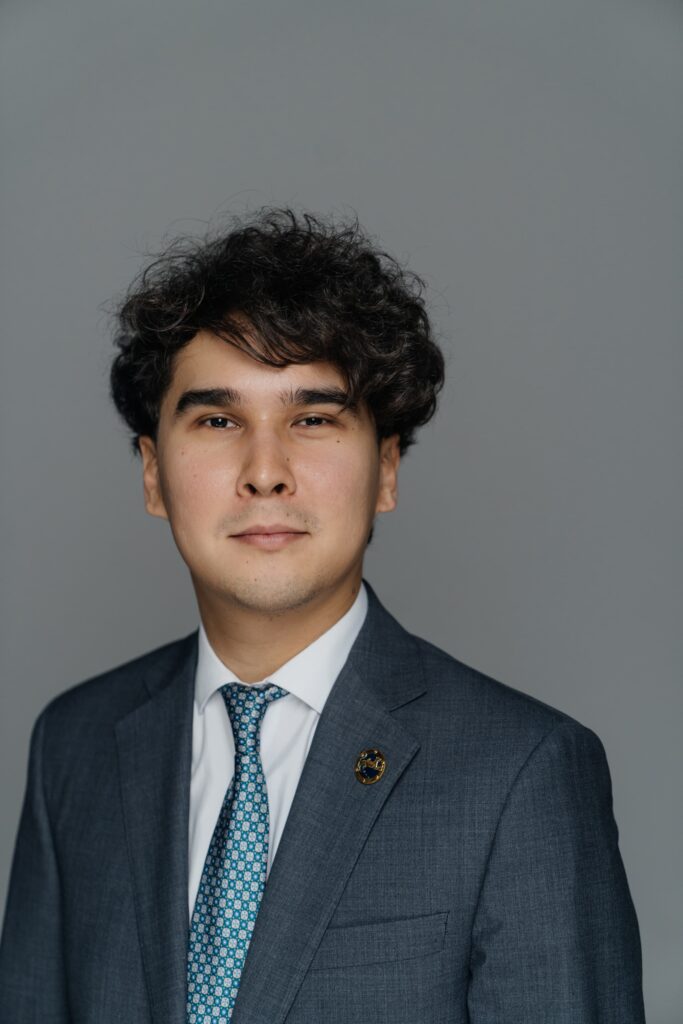
The author is Miras Zhiyenbayev, the advisor to the Chairman of the Board for International Affairs and Initiatives at Maqsut Narikbayev University, Astana, Kazakhstan and Executive Fellow at Geneva Center for Security Policy.
Disclaimer: The views and opinions expressed in this article are those of the author and do not necessarily reflect the position of The Astana Times.
