
ALMATY – Books shape the mind, but they often mean more than just a source of knowledge. For many, they are tied to warm memories of childhood reading, familiar pages, and illustrations that bring stories to life and immerse readers in entirely different worlds.
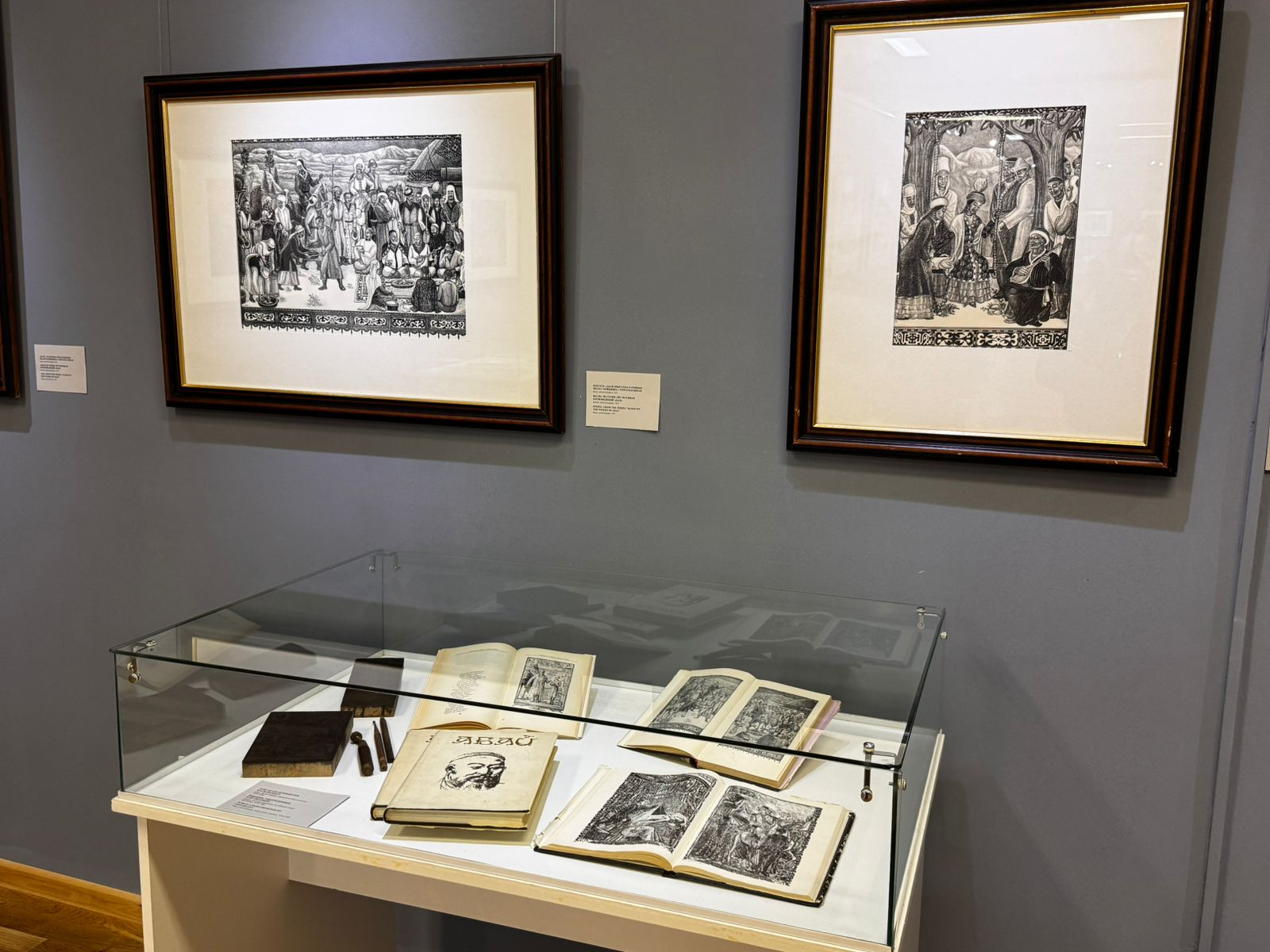
Unlike traditional retrospectives, the exhibition presents artworks alongside the actual publications they were created for. Photo credit: The Astana Times.
This connection between literature and visual art lies at the heart of the exhibition at the Abylkhan Kasteyev National Museum of Arts, which is hosting Issatay Issabayev: The Book World until May 3.
The exhibition marks the 90th anniversary of Issabayev, one of the founders of Kazakh graphic art, and offers an opportunity to explore his legacy through both original illustrations and the books in which they appeared.
Bringing books and art together
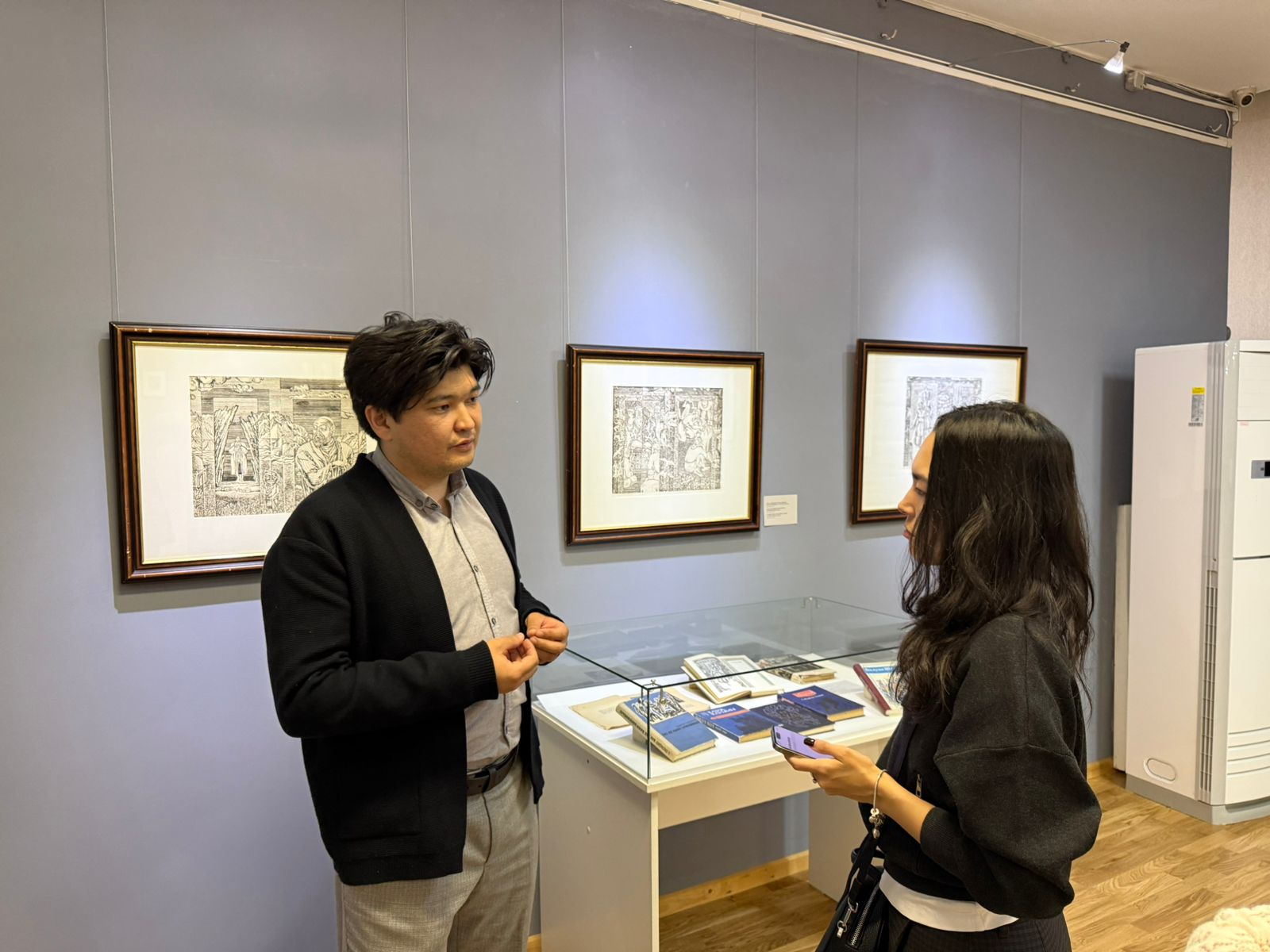
Speaking with The Astana Times, exhibition curator Sanzhar Syrgabayev shared tha value of the artist’s legacy.
Unlike traditional retrospectives, the exhibition presents artworks alongside the publications they were created for, with many being rare editions from the 1970s to 1990s that are seldom seen today. Visitors can view original illustrations next to the books, reconnecting the visual image with the text it was designed to accompany.
Speaking with The Astana Times, exhibition curator Sanzhar Syrgabayev said this approach is unprecedented in Kazakhstan’s museum practice.
“We all grew up on books published by major houses such as Zhazushy (The writer) in the 1960s, 70s, and 80s. These books were illustrated by leading artists, including Issabayev. What makes this exhibition unique is that, for the first time in a museum setting, we are showing the artworks together with the books they were created for,” he said.
Many of the books on display come from the artist’s personal archive, carefully preserved by his family and provided to the museum specifically for the exhibition.
A window into literary heritage
The exhibition also serves as a cultural time capsule, bringing visitors back to an era when illustrated books played a central role in shaping visual imagination. According to Syrgabayev, Issabayev’s work spans a wide range of themes, from Kazakh epic poetry to classical literature.
One of the central highlights is his illustration series for the heroic epic Koblandy Batyr, presented alongside the published edition. The exhibition is arranged chronologically, allowing visitors to trace the evolution of his artistic style from the 1960s onward.
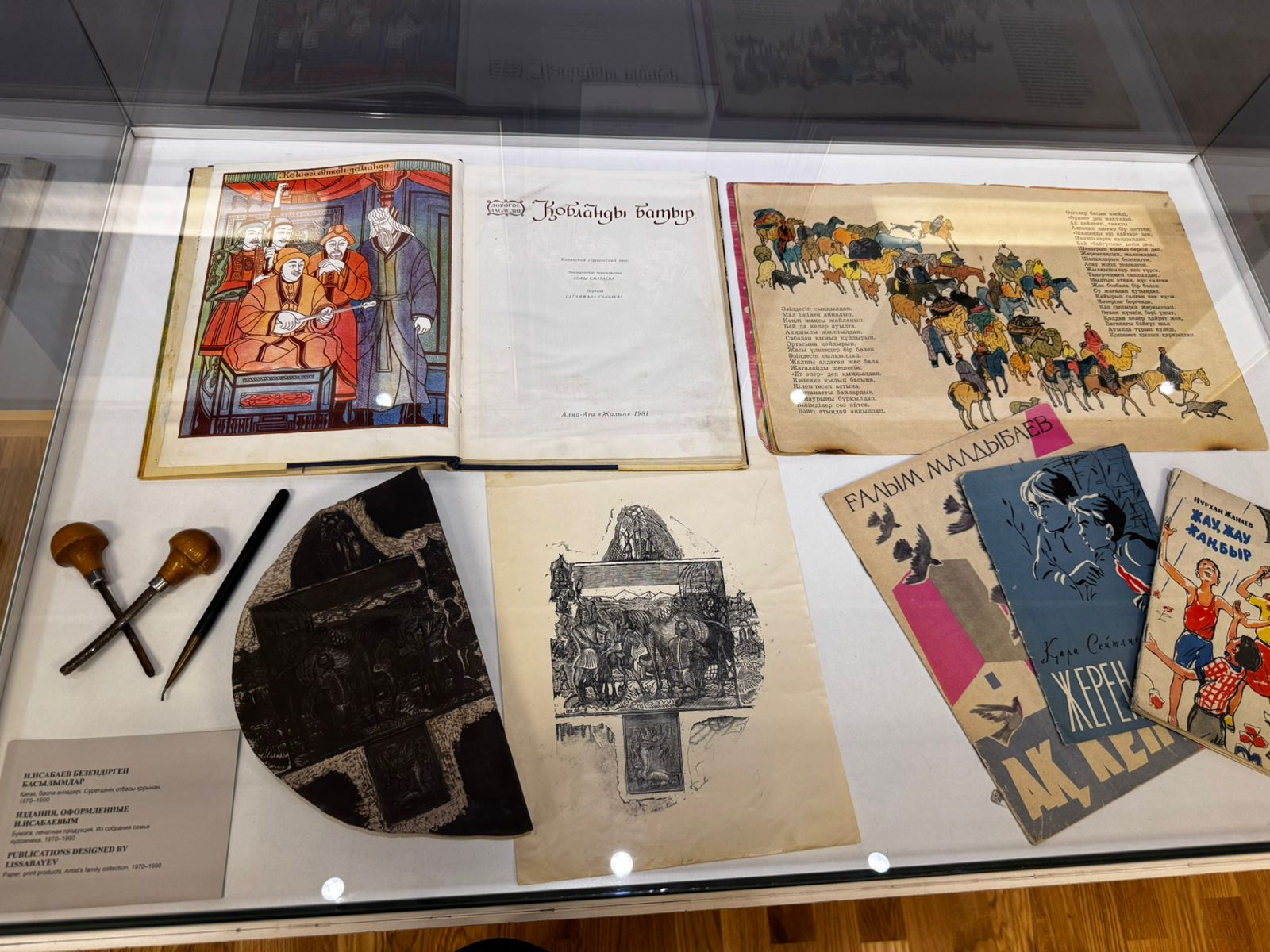
One of the central highlights is his illustration series for the heroic epic Koblandy Batyr, presented alongside the published edition. Photo credit: The Astana Times.
A particularly distinctive aspect of Issabayev’s work is his interpretation of Abai Kunanbayev in the books. Rather than portraying Abai solely as a distant, monumental thinker, the artist approached him in a more intimate and human way.
“If you look at the illustrated book, Abai can simply be lying down, drinking tea, playing the dombra, or just talking. He is not only an unattainable great thinker, but also an ordinary person,” Syrgabayev said.
Craftsmanship in the age of digital art
He also emphasized the technical mastery behind Issabayev’s work, particularly significant in today’s digital age.
“Today, people mostly create digital images that are easy to correct. But Issabayev worked with complex graphic techniques that required time, precision, and incredible attention to detail,” he said.
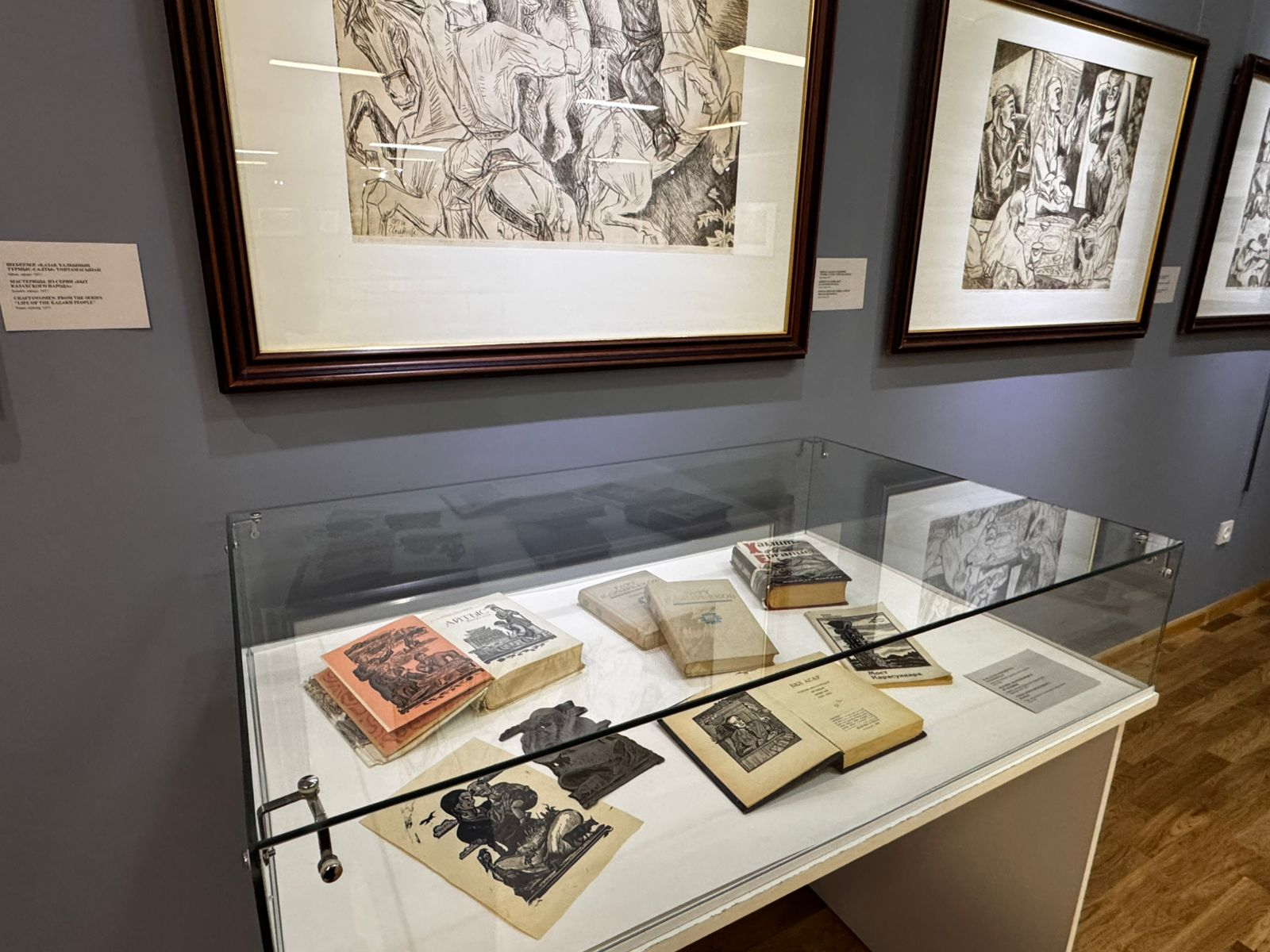
The exhibition even includes some of the artist’s original tools, offering insight into his meticulous process. Photo credit: The Astana Times.
Among these techniques are linocut, woodcut (xylography), and lithography – labor-intensive methods that involve carving, printing, and working in reverse. The exhibition even includes some of the artist’s original tools, offering insight into his meticulous process.
A legacy revisited
The curator noted that Issabayev belonged to the generation of “Sixtiers” – artists who moved beyond Soviet realism and began exploring new artistic directions, including elements of modernism and further cubism. This influence can be seen in his later works and in his evolving interpretation of literary figures such as Abai.
Beyond its artistic value, the exhibition is part of a broader national initiative to reassess Issabayev’s contribution to Kazakh art. Similar events have taken place in other cities, with further exhibitions and academic discussions planned throughout the year.
The exhibition invites visitors to rediscover the enduring cultural significance of the printed book both as an artistic object and as a vessel of memory.
