
ASTANA — Kazakhstan is no longer aiming simply to feed itself. It is positioning its agricultural sector as a regional export engine, according to Vice Minister of Agriculture Yerbol Taszhurekov, speaking at a thematic session on the second day of the Regional Ecological Summit (RES-2026) on April 23.
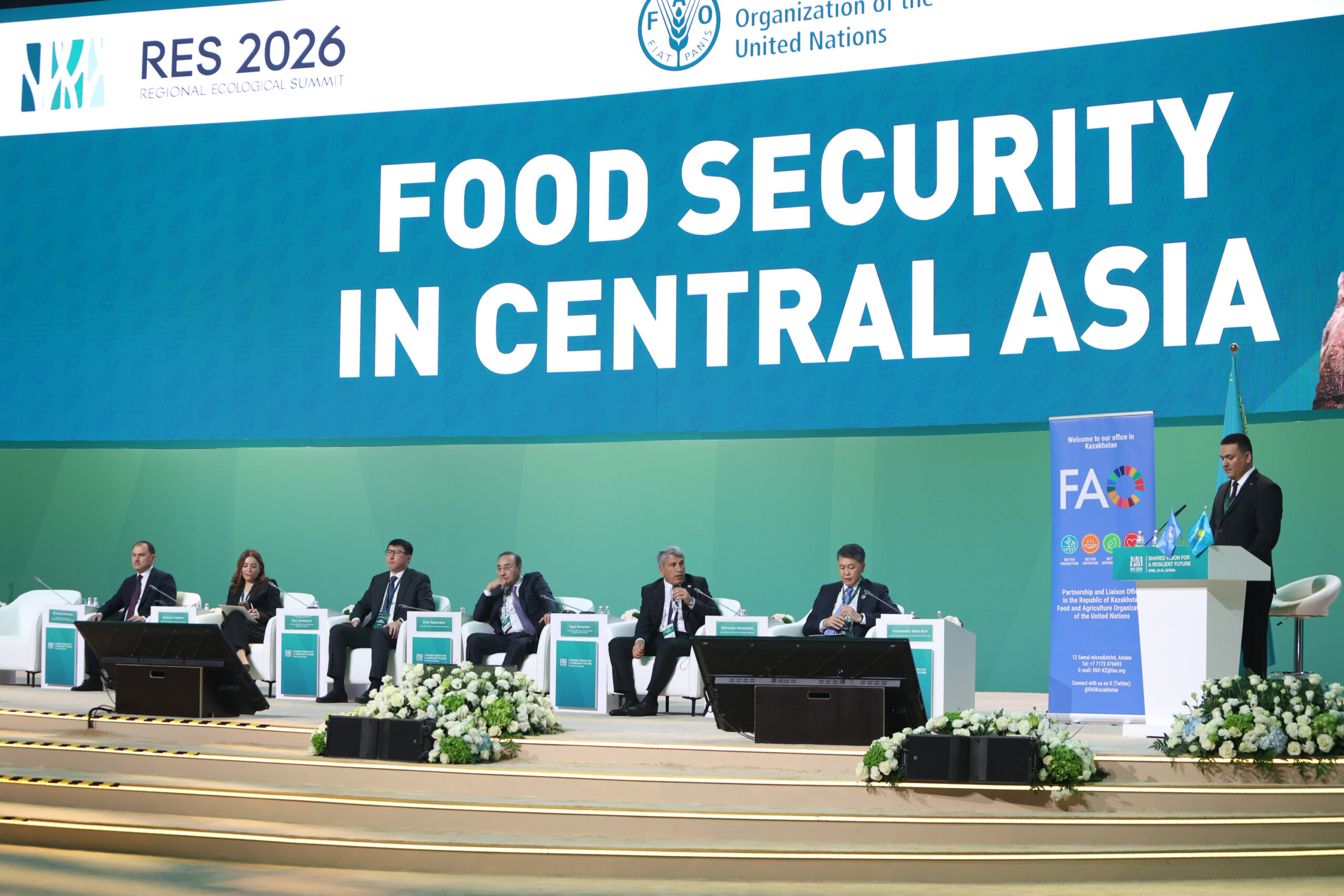
Photo credit: RES
Taszhurekov framed the shift in blunt economic terms: across agricultural production, this year accounted for $20 billion, up 5.9%, with investments in fixed capital increasing to 53%, reaching $3.2 billion. The growth, he stressed, is structural rather than cyclical.
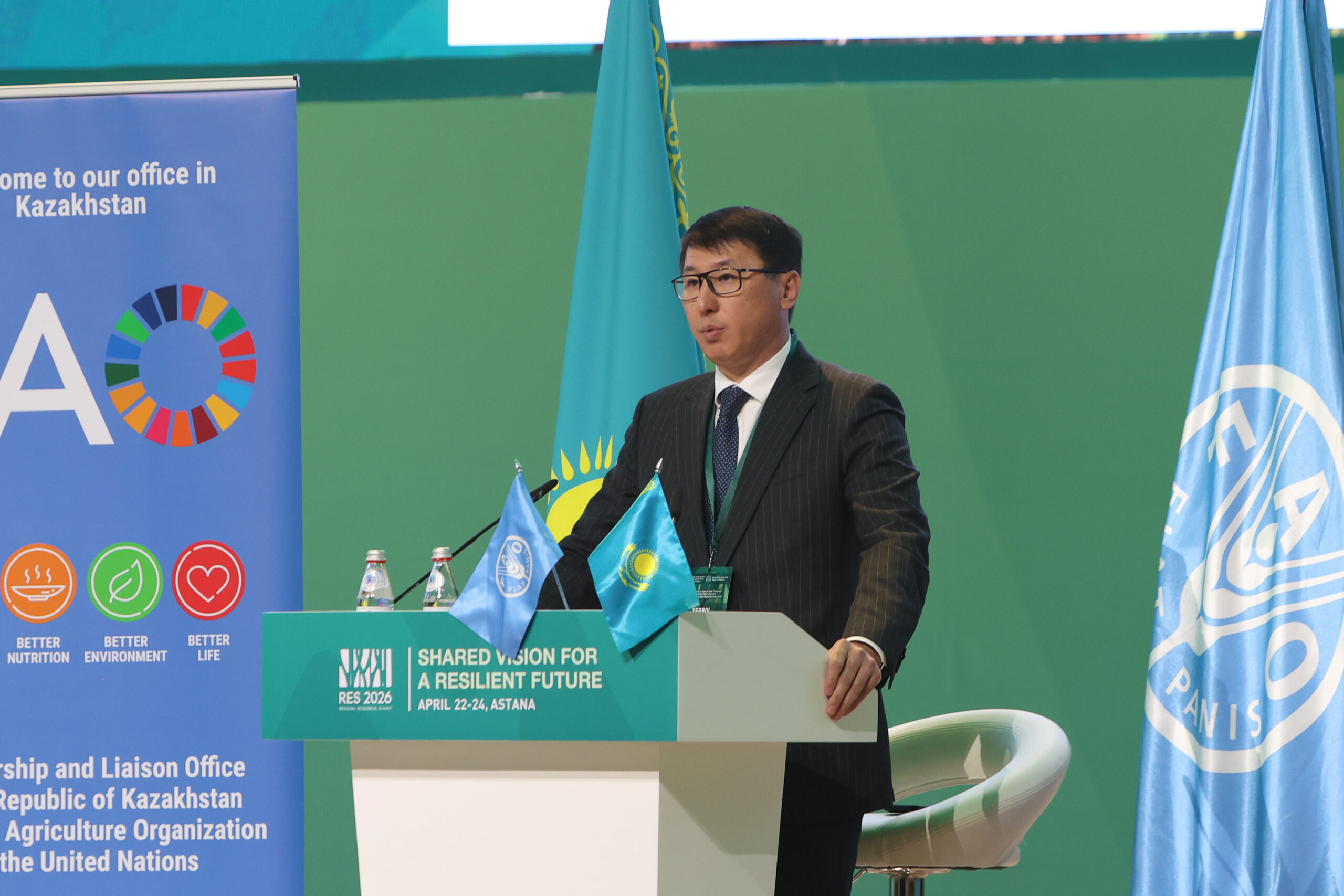
Vice Minister of Agriculture Yerbol Taszhurekov. Photo credit: RES
“This is not the fortune of growth, this is the result of the systemic work to create a favorable investment environment,” he said, noting that the system is now producing a stable domestic base.
The country ensures a supply of main products such as flour, vegetables, eggs, meat and dairy products.
“Agro-industrial exports have already reached $7.2 billion, with grain and flour accounting for $3.5 billion, while processed products are gaining ground. We export processed products. Their growth accounted for 38%, it is $3.6 billion,” Taszhurekov said.
He shared that Kazakhstan plans a targeted program to launch six deep grain-processing projects designed to lock in that shift, moving the country further away from raw-commodity dependence and toward value-added production.
“Kazakhstan gradually forms the sustainable food foundation in order to ensure export of key products to neighboring countries,” he said.
Water becomes the region’s defining constraint
But beneath that expansion lies a constraint that every speaker returned to — water.
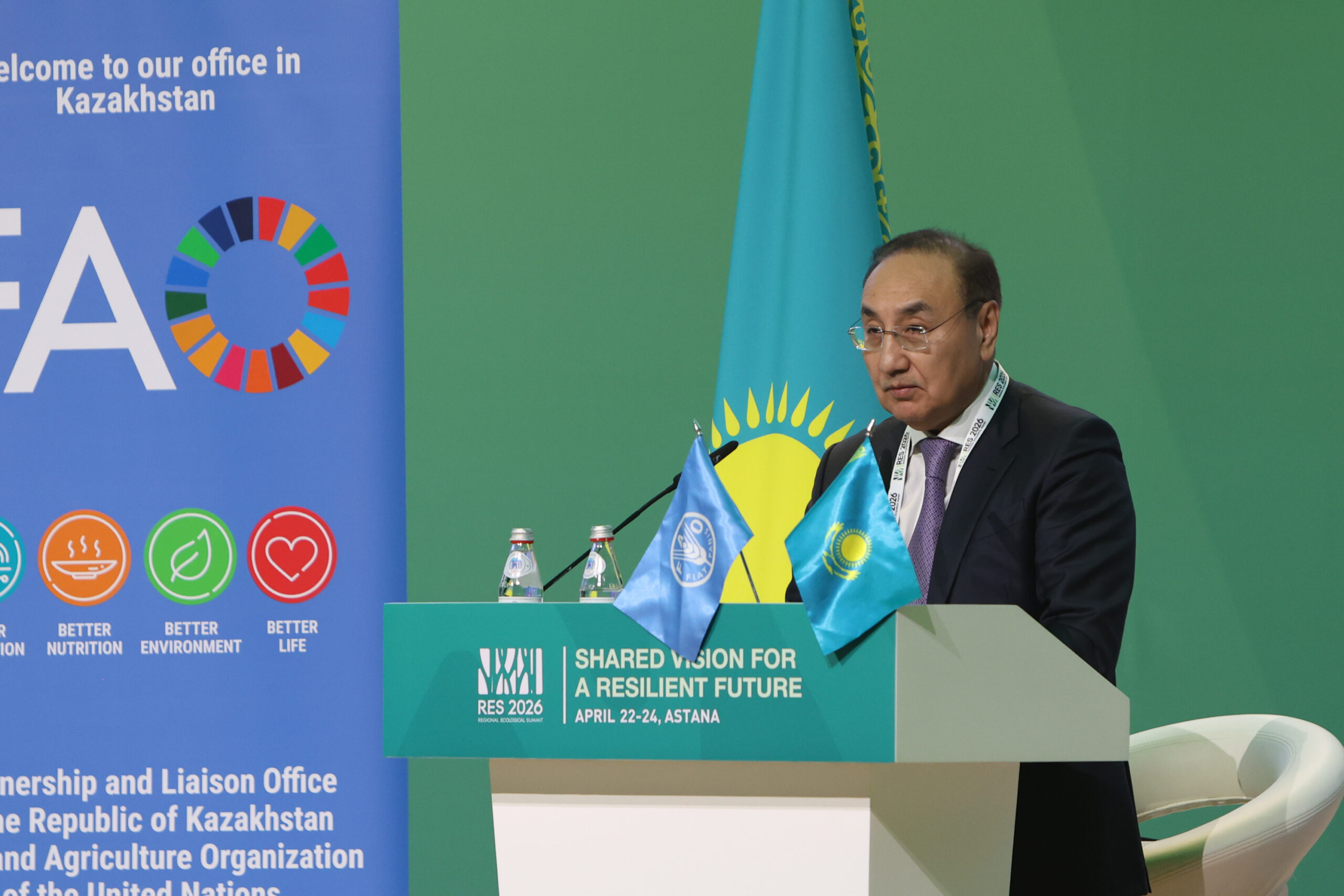
Kazakh Vice Minister of Water Resources and Irrigation Talgat Manusov. Photo credit: RES
Kazakh Vice Minister of Water Resources and Irrigation Talgat Manusov outlined the scale of the challenge more directly. According to him, Central Asia today faces serious climate risks with changing river runoff patterns, declining water levels, and increasingly volatile precipitation.
“All of this has an impact on agriculture and food security of the region,” he said.
Kazakhstan’s response is to treat water as a strategic asset rather than a background variable. He said that a new Water Code formalizes that approach, recognizing water as “the inherent part of every environment that affects the development of economies,” while policy is shifting toward efficiency, monitoring, and control.
Manusov noted that the shift is increasingly digital.
“The system forms a digital water resource management infrastructure,” Manusov said, describing a growing database of water assets and monitoring systems designed to improve allocation and reduce losses.
At the same time, water-saving technologies are being scaled across agriculture, expanding by 150,000 hectares annually with state subsidies covering up to 80% of investment costs. The target of 750,000 hectares by 2030 reflects a simple calculation: Kazakhstan’s export ambitions will only hold if water use becomes significantly more efficient.
Food security becomes a collective regional challenge
The regional context makes that calculation more fragile. Central Asia remains one of the few regions without deep economic integration, despite shared infrastructure, water systems, and agricultural dependencies. That lack of cohesion surfaced repeatedly in Astana, often between the lines.
Deputy Minister – Director of the Service for Water Resources, Agriculture and Processing Industry of the Kyrgyz Republic Almaz Zheenaliev warned that the consequences of inaction would not remain confined to agriculture.
“If we do not respond to these challenges on a systemic basis, then the implications will be very noticeable, resulting in destabilization of food, higher prices, lower yields and higher social tension,” he said.
Despite significant water resources, he acknowledged that “the effectiveness of its use still remains a key problem,” calling for coordinated irrigation modernization, joint monitoring systems, and stronger scientific cooperation. His argument was blunt: “Water must not be the source of disputes. It shall serve as a factor for sustainable development.”
Uzbekistan presented perhaps the most dangerous scenario. Acting Deputy Minister of Agriculture of Uzbekistan, Jamshidjon Abduzukhurov, pointed to projections indicating that water resources in the Amudarya and Syrdarya basins could shrink sharply by mid-century, while climate impacts are already evident.
“Climate change, soil salinity and harmful pests have reduced the yield of many crops to 50%,” he said.
Uzbekistan’s response has been partly technological, including a 32% reduction in water and fertilizer use in cotton cultivation and partly structural, with new mechanisms to bring land into production through subsidized auctions. But the broader point was less about policy tools than about scale: fragmented national responses are no longer sufficient. The region, he argued, is moving toward “one regional strategy” built on shared technologies and coordinated adaptation.
For Tajikistan, the constraints are even more structural. Deputy Minister of Agriculture of Tajikistan Bahromjon Ahmadzoda acknowledged that despite stable growth, the country remains dependent on imports and limited by geography.
“We still have to import grain, oil seeds, we still have limited land resources,” he said, pointing to mountainous terrain and increasing climate volatility.
According to him, droughts, soil degradation, and desertification are already affecting productivity, particularly in remote areas of Tajikistan. Ahmadzoda framed food security more broadly than output alone.
“It consists of four components: the availability of food, quality of food, safety of food, and the resilience of the supply systems,” he said.
Georgia approached the same problem from a different angle: not production, but movement. First Deputy Minister Nina Tandilashvili said that supply chains are now as critical as harvests.
“Ensuring food security today requires not only increased agricultural production, but also the ability to safely, efficiently and predictably move goods across the regions,” she said, positioning Georgia as “a natural bridge between Europe and Asia.”
Tandilashvili noted that with global supply routes increasingly disrupted, stable transit corridors are becoming a strategic asset. Backed by roughly $300 million in investment in irrigation and land management, alongside reforms in water governance and logistics infrastructure, Georgia is betting on connectivity as its contribution to regional food security.
“Food security is definitely a shared responsibility,” she added
Kazakh Vice Minister of Agriculture Taszhurekov echoed that conclusion, saying that food security in Central Asia is the region’s collective task.
The RES 2026, running through April 24, has drawn international attention for its focus on coordinated climate action. In a letter addressed to President Kassym-Jomart Tokayev and summit participants, His Grace The Duke of Richmond and Gordon CBE DL praised the initiative, saying Kazakhstan has brought globally relevant issues to the forefront and that such platforms are essential for building understanding, strengthening commitment and advancing joint solutions.
