
ALMATY – Almaty hosts a Regional Capacity Development Center of the International Monetary Fund (IMF) serving the Caucasus, Central Asia, and Mongolia, as Kazakhstan’s Senate (Parliament’s upper chamber) ratified the agreement on April 23.
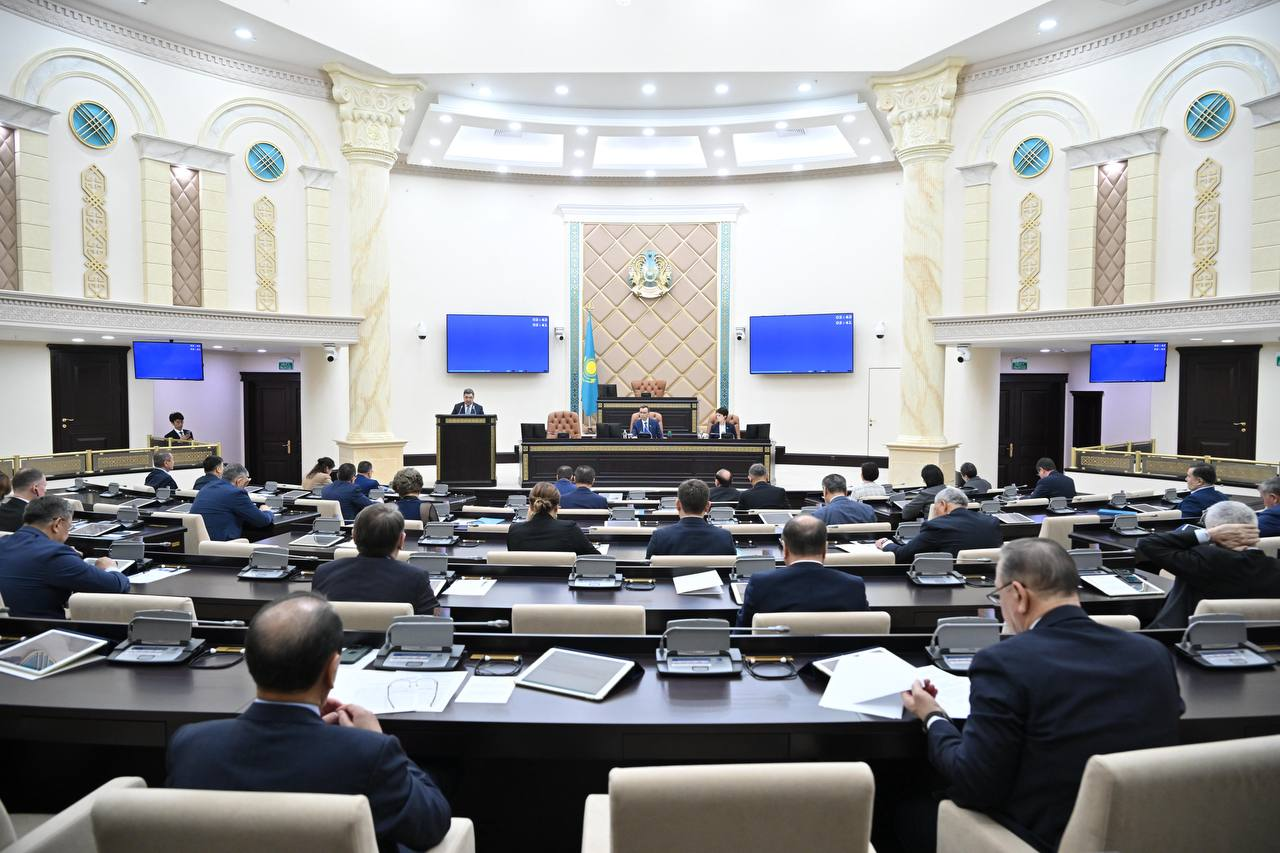
Kazakhstan’s Senate approved a law ratifying a memorandum of understanding between the government and the International Monetary Fund (IMF) to establish a Regional Capacity Development Center for the Caucasus, Central Asia, and Mongolia in Almaty. Photo credit: senate’s press service.
The center will support countries in the region in strengthening public institutions and enhancing the skills of government officials, senate deputy Nuriya Niyazova said during the session.
According to Niyazova, the center will serve 11 countries, with the possibility of expanding to additional beneficiaries in the future. Its primary goal is to assist governments in developing strong institutions and improving the design and implementation of sound economic policies.
The memorandum also provides the center and its staff with privileges and immunities in line with Article 9 of the IMF’s Articles of Agreement.
“The center will help improve the professional capacity of civil servants, strengthen budget planning, and enhance public financial management,” Niyazova said, noting that this would enable countries to respond more effectively to economic shocks.
Strategic role for Kazakhstan
The decision to locate the center in Almaty followed a competitive selection process among Central Asian countries. Officials say the initiative will also contribute to the development of business and educational tourism in the city, supporting small and medium-sized enterprises.
“In the context of global uncertainty, the resilience of a national economy depends on the effectiveness of state institutions and the quality of human capital. In this regard, the center represents a direct investment in the institutional maturity of the financial system,” Niyazova added.
Earlier on April 1, National Bank Governor Timur Suleimenov said the law regulates the functioning of the center, including its structure, staffing, governance, and participation in training programs.
He noted that the center will serve as both a platform for consultations and seminars and a strategic resource, bringing together countries with a combined population of around 100 million as part of the IMF’s global network.
