
ALMATY – The North Aral Sea is slowly coming back to life and with it, renewed hope for the thousands of people whose livelihoods depend on its waters. A recent television report by Almaty.tv captured not only rising water levels, but also the voices of fishermen and villagers who see the sea’s recovery as a turning point for their future.
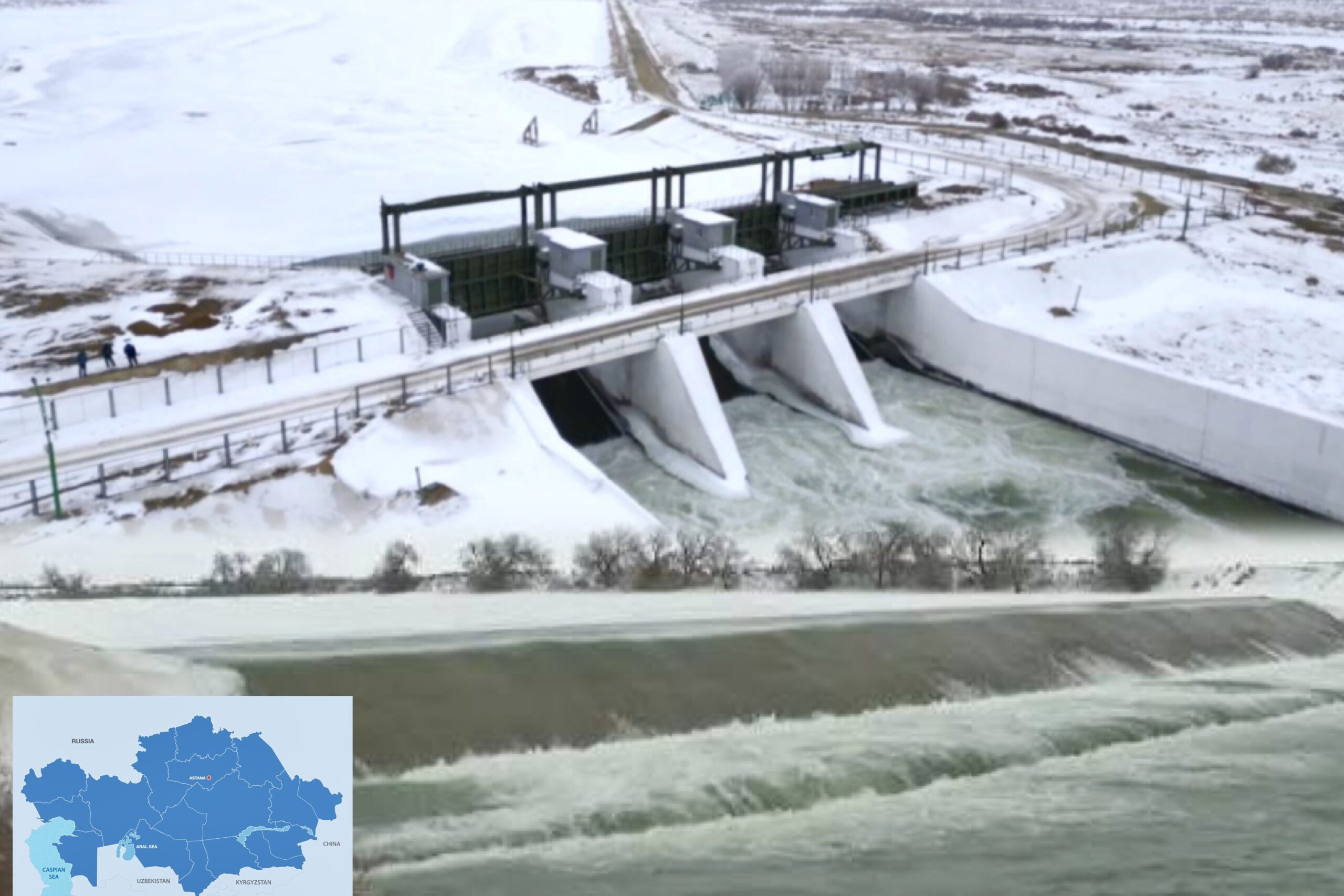
Photo credit: almaty.tv Click to see the map in full size. The map is designed by The Astana Times.
According to recent data, the water volume in the North Aral Sea has increased to 23 billion cubic meters, marking a significant step in ongoing restoration efforts. Authorities plan to reinforce the protective dam and begin a new phase of the North Aral Sea conservation project by the end of the year.
Residents say the recovery of the sea is bringing renewed hope.
“Earlier, salinity levels were low, but now there is a real chance for fish to survive. I hope the water inflow remains stable,” said Azimbay Zholmurzayev, a resident of Karateren village.
Fishing remains the backbone of the local economy. In the village of Bogen, home to 200 families, nearly every household relies on the sea.
“Almost every family here has a fisherman,” said Torekhan Dilzhanov, a local resident. “People’s well-being directly depends on the sea. Everyone is waiting and hoping the Aral will continue to fill.”
Today, up to 8,000 tons of fish are caught annually in the North Aral Sea – a figure experts say would have been unimaginable decades ago, when the sea’s dramatic shrinkage became one of the world’s environmental disasters.
Up to 8,000 tons of fish are caught annually in the North Aral Sea. Specialists attribute this progress to long-term preservation efforts. Specialists attribute the gradual recovery to years of targeted conservation efforts. Reconstruction of the Kokaral Dam began in 2022, and once completed, it is expected to ensure a more stable and predictable water supply.
According to Zhorabek Nurymbetov, head of the Kyzylorda branch of the state water enterprise, a key role was played by a regional agreement signed by the water resource ministers of Uzbekistan, Tajikistan, the Kyrgyz Republic and Kazakhstan. The agreement, reached during a meeting of Central Asian presidents, provides for an equal distribution of water inflow among the countries.
“We are now fully using our allocated water limit,” he said.
