
ASTANA – Kazakhstan plans to invest $2.6 billion in deep grain processing projects by 2028 as part of a broader effort to shift its agriculture sector toward higher value-added production, Agriculture Minister Aidarbek Saparov said during year-end government briefings on Dec. 24.
Five large investment projects are scheduled to launch by 2028, with a combined annual processing capacity of 4.8 million metric tons of wheat and corn.
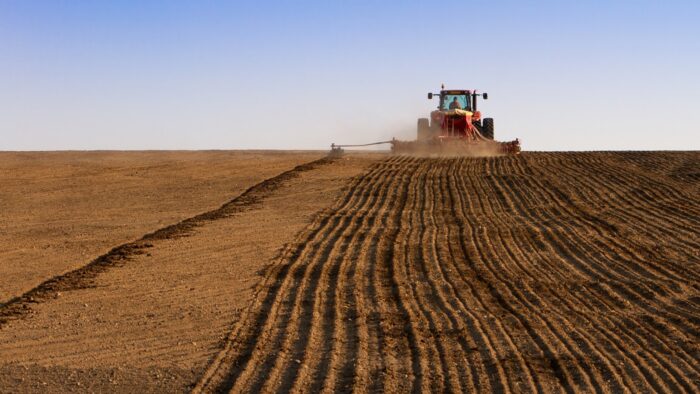
In 2025, grain exports from the new harvest reached 3.9 million tons, up 13.6% from a year earlier. Photo credit: primeminister.kz
“The product range will be expanded to include amino acids, syrups and vitamins. These products target markets in the United States and Europe, as well as China, India and the Middle East. A stable raw material base gives us a competitive advantage,” Saparov said.
According to Saparov, over the first 11 months of 2025, food production totaled 3.5 trillion tenge (US$6.8 billion), up 8.7% year on year, while beverage production reached 1.1 trillion tenge (US$2.1 billion), up 9.2%.
This year, 40 projects are under implementation, 29 of which have already been commissioned. Most focus on processing oilseeds, meat, fruit and wool, as well as compound feed production.
“We are moving away from a raw-material focus and creating higher added value. New plants process meat, milk, wool, oilseeds and fruit, supplying the domestic market with high-quality food products,” Saparov said.
Record grain and flour exports
Gross agricultural output grew 6.1% in the first 11 months of 2025 to 9.2 trillion tenge (US$17 billion). Livestock production rose 3.5%, while crop output increased 7.5%.
Grain exports from the new harvest reached 3.9 million tons, up 13.6% from a year earlier. Export potential is estimated at 13 million tons, with shipments reaching 45 countries.
“A record 2024 harvest significantly boosted grain and flour exports. During the 2024-2025 marketing year, Kazakhstan exported 13.4 million tons of grain, and more than 15 million tons, including feed flour. The remaining volumes were used domestically for feed, processing and seed,” Saparov said.
Rising meat exports
Saparov noted that Kazakhstan has signed 16 veterinary certificates with seven countries, opening new export destinations.
Beef exports reached 30,200 tons in the first 10 months of the year, up 1.7 times, while mutton exports rose to 25,500 tons, nearly doubling. New markets include Azerbaijan for livestock products, Mongolia for small ruminants, Morocco for feed, Iran for hides and the European Union for honey.

Agriculture Minister Aidarbek Saparov said during year-end government briefings on Dec. 24. Photo credit: gov.kz
Saparov highlighted that Kazakhstan is also working to expand exports of meat and dairy products to Japan, South Korea and the United Arab Emirates. Honey exports are under discussion with Qatar and the United Kingdom, while artemia cyst supply negotiations are underway with Ecuador.
“This growth reflects strong demand for high-quality Kazakh meat. We will continue diversifying export markets to ensure stable sales of value-added products,” he said.
Digital shift in agriculture
Saparov said the ministry has completed digitizing agricultural land maps. One of next year’s key initiatives will be cooperation with the UN Food and Agriculture Organization to map soil carbon content, supporting carbon farming and green investment.
The ministry is also introducing artificial intelligence and big data tools to analyze the sector.
“Digital data will help farmers make better decisions and allow the state to improve subsidies, agricultural insurance and land monitoring,” Saparov said.
Vice Minister of Agriculture Ermek Kenzhehanuly also noted that an updated digital transformation roadmap for the agro-industrial sector was approved in September, covering 144 business processes.
More than 200,000 users are now registered across agricultural information systems, which processed over 188,000 applications in the past year. Digitization of agricultural maps in an open format has also been completed.
“Our strategic goal for 2026 is to create a unified e–agro-industrial ecosystem. This will enable data-driven sector management, reduce administrative burdens on farmers and introduce artificial intelligence technologies,” Kenzhehanuly said.
