
ALMATY – Kazakhstan’s Ministry of Energy reported that the incident at the Caspian Pipeline Consortium’s (CPC) marine terminal did not have a critical impact on the country’s annual oil production and supply plans.
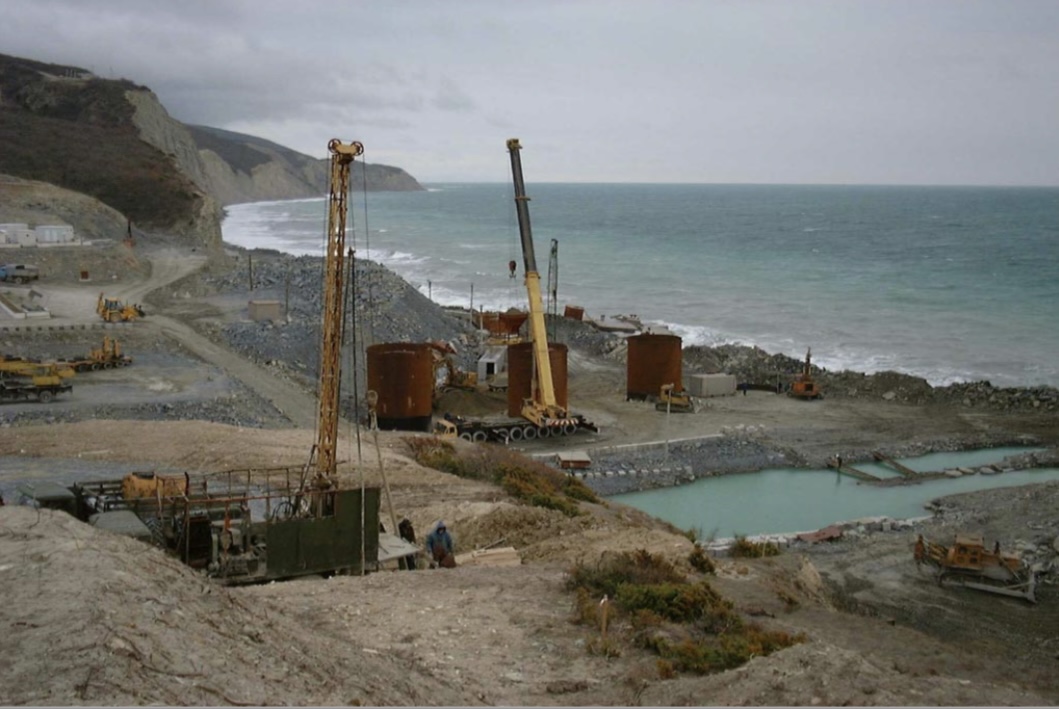
Photo credit: CPC
The ministry clarified that 72 million tonnes represents the projected throughput capacity of the Kazakh section of the CPC pipeline. The 2025 transportation plan initially set volumes at 57 million tonnes, while forecast data based on 11 months indicates approximately 68 million tonnes, or 119.3% of the plan. These projections were formed according to the production schedules of upstream companies, reported the ministry on Dec. 11.
“The cited 4 million tonnes represent free pipeline capacity, not lost production or export volumes. The incident at the marine terminal has not had a critical impact on achieving the annual targets,” reads the official statement.
Temporary production adjustments
According to the ministry, the temporary reduction in production amounted to about 480,000 tonnes, a technologically necessary measure due to the filling of storage facilities during repair operations. This volume is not a loss and will be offset through increased shipment rates once the terminal resumes standard operations.
Oil loading at the CPC terminal continues via the functioning SPM-1 (single point mooring). Technical work to replace hoses on SPM-3 is in its final stage, with completion expected on Dec. 15. Commissioning the repaired facility will restore full throughput capacity.
Alternative routes activated to minimize constraints
To mitigate restrictions during the repair period, the ministry and major operators activated alternative export routes. While Kazakhstan does not have a full substitute for the CPC pipeline, which handles the bulk of exports, additional channels have been engaged.
Part of the volumes, including production from Kashagan, was promptly redirected to China via the Atasu–Alashankou pipeline, utilizing a legitimate and technically feasible route based on commercial agreements among shareholders.
Transportation volumes through the Atyrau–Samara pipeline have also been increased, and rail transport is being used as an additional measure. Shipments through the ports of Novorossiysk and Ust-Luga are operating normally without restrictions.
Industrial cooperation agreement
In a move to enhance Kazakhstan’s industrial capacity in the oil transport sector, the Ust-Kamenogorsk Valve Plant (UKAZ) and CPC-K, the Kazakh subsidiary of the Caspian Pipeline Consortium, signed a cooperation agreement with the participation of First Deputy Prime Minister Roman Sklyar. The document was signed by UKAZ General Director Alexander Budris and CPC General Director Nikolai Gorban on Dec. 10.
The agreement focuses on expanding local production of shut-off valves, pumping units, and electric motors, thereby increasing the share of domestically manufactured equipment used in main oil pipeline systems. It also aims to deepen long-term cooperation between Kazakhstan’s largest producer of pipeline equipment and one of the region’s central oil transport operators.
As part of the partnership, CPC-K will be supplied with high-tech materials, components, and equipment produced in Kazakhstan. The parties will also jointly work on maintenance, modernization, testing, and the development and implementation of new technological solutions.
