
ALMATY — Ancient geoglyphs in Kazakhstan’s Turgai Trough in northern Kazakhstan once again demonstrated their connection to solar cycles on Dec. 21, the day of the winter solstice, reinforcing scientific arguments that the structures functioned as early astronomical and calendar systems.
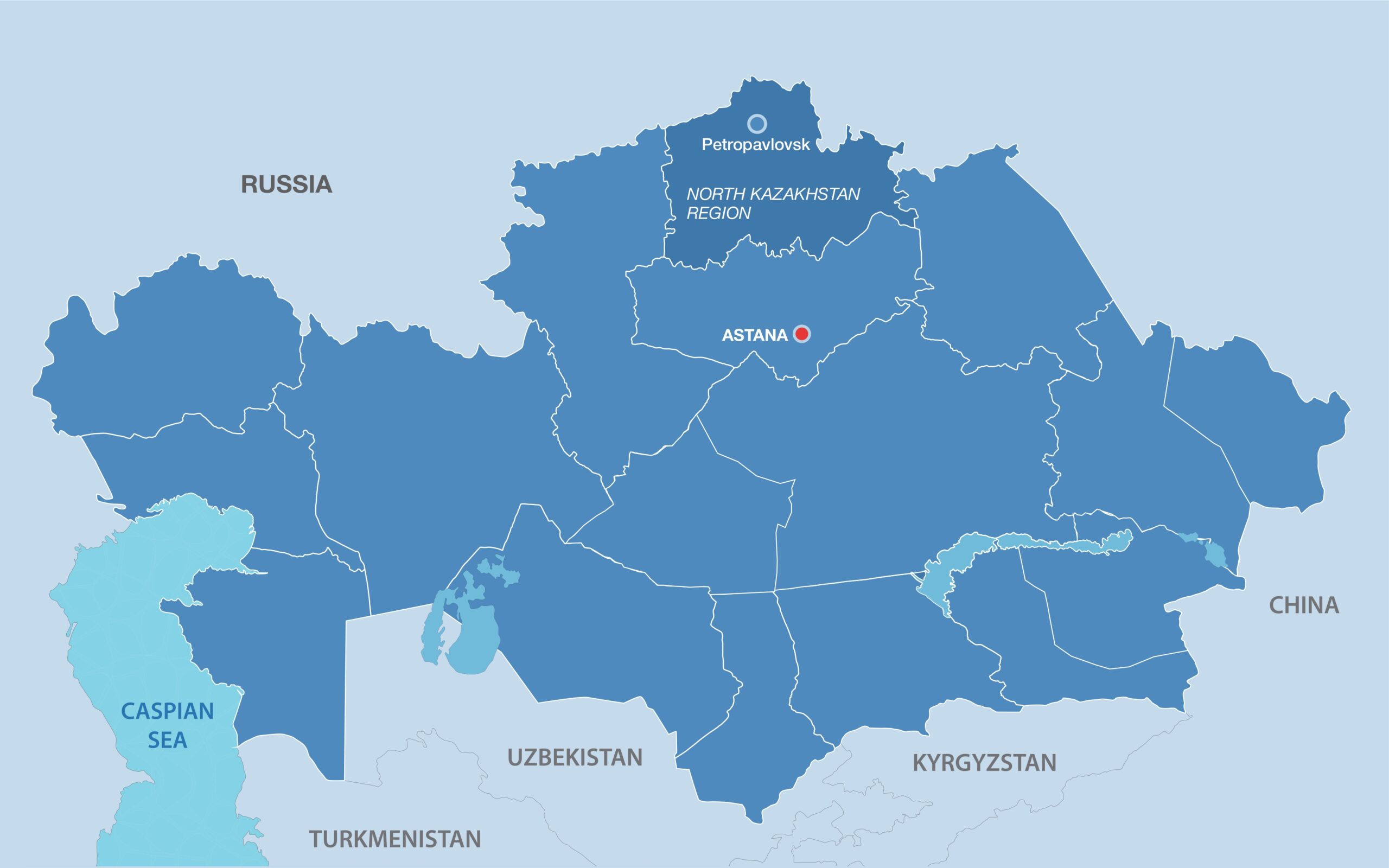
The Turgai geoglyphs – a number of massive earth constructions arranged in geometric shapes the size of several football fields located in the Turgai Trough in northern Kazakhstan. Photo credit: turgay.kz. Click to see the map in full size. The map is designed by The Astana Times.
According to Kostanai-based researcher Dmitry Dey, the phenomenon occurs every year when the sun rises for several consecutive days at nearly the same point on the horizon, precisely aligning with markers embedded in the earthworks thousands of years ago, Kazinform reported.
“In the area of the Ustogai geoglyphs, the sun hovers above the outermost mound for about three days. This is not an accident or a rare coincidence, it happens annually,” Dey said.
Solar cycles and ancient calendars

Photo credit: turgay.kz
Dey explained that the alignment is caused by the tilt of the Earth’s axis. Over the course of the year, the sunrise point shifts along the horizon from northeast to southeast, reaching its southernmost position in late December. After several days of apparent stillness, the sun begins moving back, marking the start of a new solar year – a moment known as the winter solstice.
“From Dec. 25, daylight begins to increase and nights become shorter. For ancient societies, this was a key calendar event,” he said.
Research shows that several Turgai geoglyphs are oriented strictly along the north–south axis, thereby serving as precise solar markers.
“If the orientation is correct, the calendar works fully. Even slight deviations still allow observation of solar rise and set,” Dey noted, adding that possible shifts in the Earth’s poles in distant antiquity could have influenced accuracy.
From satellite images to global attention
The Turgai geoglyphs were discovered in 2007 through the analysis of satellite images on Google Earth. Initially believed to be burial mounds, archaeological excavations later confirmed that they are complex earth structures unrelated to funerary practices.
Since 2008, research has been conducted under the Turgai Discovery project. Between 2023 and December 2025, researchers conducted 11 expeditions, studying eight geoglyphs and their surrounding areas. The work uncovered 11 ancient settlement sites and more than 5,000 artifacts, most of which date to the Neolithic period.
Findings may reshape chronology
A key discovery in 2025 involved fragments of Neolithic pottery found directly on the embankments of one geoglyph, prompting a reassessment of the structures’ age.
“If OSL age determination analysis confirms a dating of around 8,000 years, the Turgai geoglyphs would be among the oldest such objects in the world, older than the Nazca Lines,” Dey said.
Researchers believe that repeated alignments with solar events, including the winter solstice, support the idea that the geoglyphs held sacred and calendrical significance for ancient steppe societies. Beyond their scientific value, the findings also highlight the site’s potential for the development of educational and scientific tourism in Kazakhstan.
