
ALMATY – Before the artists step onto the stage and the audience is taken into music and drama, the theater itself comes to life. Long before the curtain rises, Astana Opera hums with a carefully coordinated process that makes magic exist.
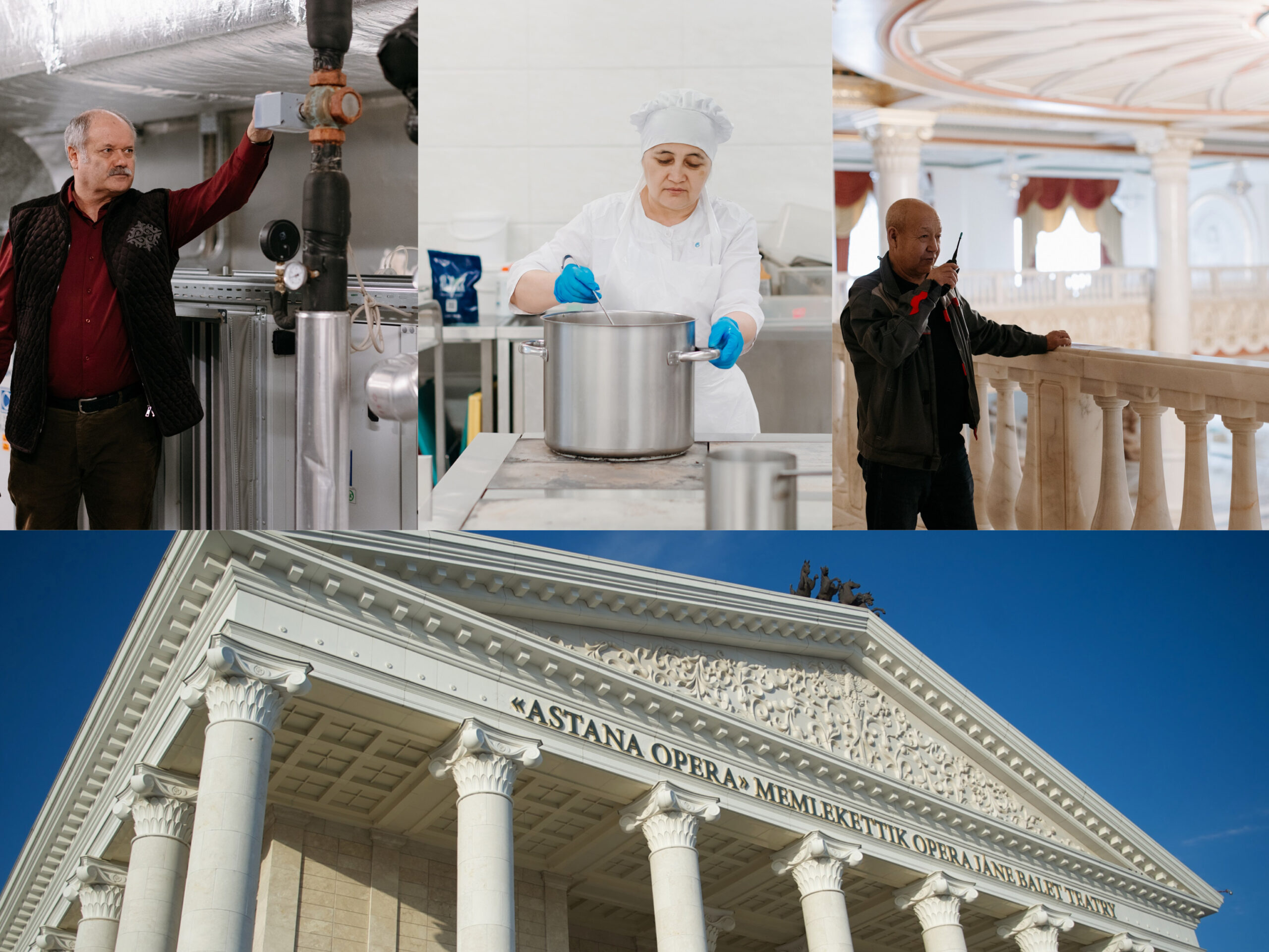
Photo credit: Astana Opera
Those are the invisible characters who make beauty shine. While the audience applauds the stars, their applause silently extends to those behind the scenes — the people who bring light, warmth, and life to the stage long before the curtain rises.
Keeping the lights of art alive
When the lights dim in the theater and the audience is wrapped in darkness, it’s usually part of the director’s vision. But when the electricity suddenly goes out, that’s a different story. In such moments, the energy department’s team, as the invisible heroes of the opera house, steps in.
“Our department is the most important in the theater. Without electricity, there would be no rehearsals, no performances – nothing at all,” said duty electrician Asylbek Battakov.
Lighting the theater before the curtain rises
The duty electricians work on day and night shifts. They are always present, whether during rehearsals, concerts, or even guided tours. They monitor systems, fix faults on the spot, and make sure everything runs smoothly.
Their colleagues, the installation electricians, handle the more complex technical works such as replacing transformers, installing outlets and lamps, and reading and updating wiring schemes. Overseeing the entire process is János Muzsik, a senior engineer from Hungary who graduated from the Budapest Technical University and has devoted his life to energy systems.
“Electricity is invisible but powerful and dangerous. It has no color or smell, but when it hits you, you’ll feel it. That’s why we take safety seriously and keep everything under control,” said chief engineer Oleg Stetsenko.
Precision and timing: the art of light
When the audience enters the theater, everything is ready: the chandeliers sparkle, the stage lights shimmer, and the hall glows softly. But behind this seamless beauty is a carefully timed operation.
“Before the audience arrives, we make sure every system is checked and functioning. We turn on all the equipment, test the lights, and review every circuit,” said the electricians.
“For the artists, we use a special blue light. It doesn’t dazzle, but it helps them move safely across the stage,” said Stetsenko.
After intermission, the hall lights return so spectators can find their seats and then, within seconds, the hall plunges back into theatrical darkness.
Working at heights
Astana Opera shares that one of the most challenging tasks in the theater is changing lamps. To replace 18,368 of them, the team uses scaffolding, lifts, and safety harnesses so that their work often resembles that of mountaineers.
“Our chandeliers are enormous in the foyer, in the Chamber Hall and in the Main Auditorium. They look stunning, but the bulbs do burn out. The main foyer chandelier, Penelope, weighs 1.5 tons, is 5.5 meters tall, and has a diameter of 5 meters,” said Muzsik.
Sharing the hidden craft with young visitors
Despite the routine and technical nature of their work, the electricians of Astana Opera find moments of true inspiration. One of them comes during theater lessons for children, when young visitors discover the magic behind the stage lights.
“When they come to the theater, their eyes light up with excitement. I often hear them say, ‘Oh, I’d love to live here!’ Of course, it’s not just about turning on the lights – for them, it’s real magic. A moment ago it was dark and the lamps were shining. They look at us as if we were wizards,” said Stetsenko.
The hands that feed the stage
In honor of the Year of Working Professions, the team at Astana Opera also highlighted those who nourish the artists – the chefs who ensure the performers stay healthy, energized, and ready for the stage.
“Cooking is timeless. You can study in college or take professional courses. The highest qualification is the sixth category – a master chef who creates their own recipes,” said Saule Yuldasheva, a fourth-category chef who has worked at the theater for 14 years.
Crafting culinary excellence
To work in the theater, chefs should undergo professional training that teaches various techniques, recipes, and kitchen safety rules. Since rehearsals can last for hours and performances take place at different times, the chefs must be flexible and ready to adjust to constant changes in the timetable.
“If we see a big flow of artists, we immediately prepare extra dishes so that no one goes hungry,” says Yuldasheva, who comes from a family of cooks as her mother worked in the profession for 40 years.
Fueling the artists
The menu always emphasizes healthy and balanced meals. According to Yuldasheva, ballet dancers prefer light soups such as pumpkin, mushroom cream, or broccoli, while opera singers favor hearty dishes like chicken or beef pilaf. Thursdays are always for the fish menu.
The nine-member culinary team at Astana Opera always uses fresh, natural ingredients, ensuring the food is not only delicious but also supports the performers’ health and endurance.
Behind every performance at Astana Opera stands an entire world of professionals whose names may never appear on the poster. Yet, without their skill, care, and dedication, the magic of theater would never come alive.
From those who light up the stage to those who bring warmth to the kitchen — they are the invisible forces that make every curtain rise possible.
The article was originally published on the Astana Opera official page.
