
ASTANA — For years, Central Asia was known mostly as a landlocked region, often discussed in terms of its limitations. But according to the Eurasian Development Bank (EDB), the region has proven that being landlocked is not a sentence. It is now transforming into a key transit hub of Eurasia, thanks to its strategic position at the heart of the continent and the implementation of large-scale infrastructure projects.
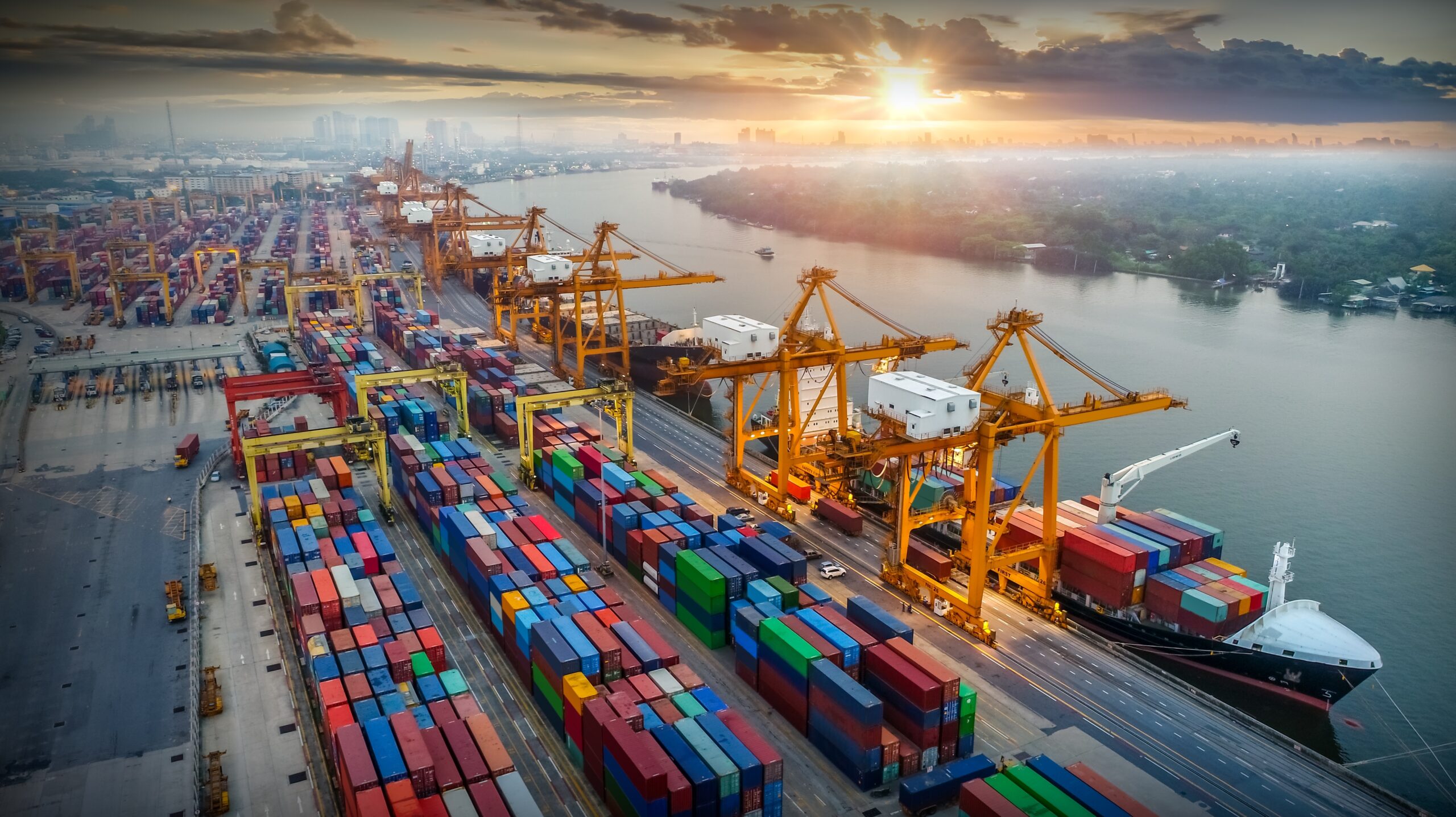
Photo credit: Shutterstock
According to the EDB press service, the volume of transit cargo transported through the region increased by 70% between 2020 and 2024 — a steady trend rather than a temporary spike. Nearly 80% of transit flows pass through Kazakhstan and Uzbekistan, while 60% of total transit cargo is carried by rail. More than 70% of all transit traffic connects China to Russia, Türkiye, Afghanistan, and European countries.
The growth in transit flows is just the beginning. According to an EDB report, the development of the Eurasian Transport Framework is the main driver of the expansion of transit routes and the emergence of Eurasia’s transport crossroads. The EDB’s Transport Projects Observatory estimates that over $52 billion will be invested in the development of transport corridors in Central Asia by 2035.
EDB’s Deputy Chairman of the Management Board and Chief Economist Evgeny Vinokurov said that over the past five years, Central Asia’s foreign trade with China increased twofold. At the same time, transit flows have grown by 70%. He noted that “this is just the beginning.”
“Central Asia, which, unlike other landlocked regions, is particularly distant from global markets, requires high-quality infrastructure. According to our estimates, nearly $53 billion will be needed by 2035. A significant part of this funding should go toward transport projects developing the North–South axis. This includes not only the International North–South Transport Corridor but also the Trans-Afghan Corridor, which opens up new trade opportunities with the Gulf countries and South Asia,” said Vinokurov.
The rise in transit also depends heavily on soft infrastructure. Simplifying border-crossing procedures across Central Asia helps accelerate cargo flows, while coordinating tariff policies reduces the cost of container transportation.
According to the EDB’s Transport Projects Observatory, as of July 2025, there are 325 projects at various stages of implementation from planning to active construction with a total investment volume of $234 billion.
More than half of these projects (over 51%) belong to the road transport sector. By country, seven of the ten largest projects within the Eurasian Transport Framework are located in Russia. Some 60% of all projects by investment value are already being implemented, 13% are at the design documentation stage, and 27% remain under discussion or planning.
Central Asian countries account for over 22% of total investments, with 90 projects either underway or planned, totaling about $53 billion. Approximately 44% of this sum is being realized in Kazakhstan, while nearly two-thirds of investments in the region are directed toward developing major highway networks.
The ten largest projects account for 58% of total investments in the Eurasian Transport Framework across Central Asia.
In total, 113 of 325 projects envisage private-sector participation, nearly half of them in logistics and warehousing. Around 17 projects are being implemented or considered under public-private partnership (PPP) principles, including at least two cross-border PPPs — the China–Kyrgyzstan–Uzbekistan railway corridor and the Trans-Afghan railway corridor.
The growing number of projects attractive to development banks and private investors, including through PPP mechanisms, is becoming a key direction for transport planning and regional cooperation in the sector.
