
ASTANA – A full house gathered inside the main hall of the Kuanyshbayev Kazakh State Drama Theater on Oct. 17 evening in Astana, as the United Nations in Kazakhstan marked UN Day with “Music for Global Goals,” a full orchestral concert that replaced policy rhetoric with Kazakh classical depth and global soundtracks.
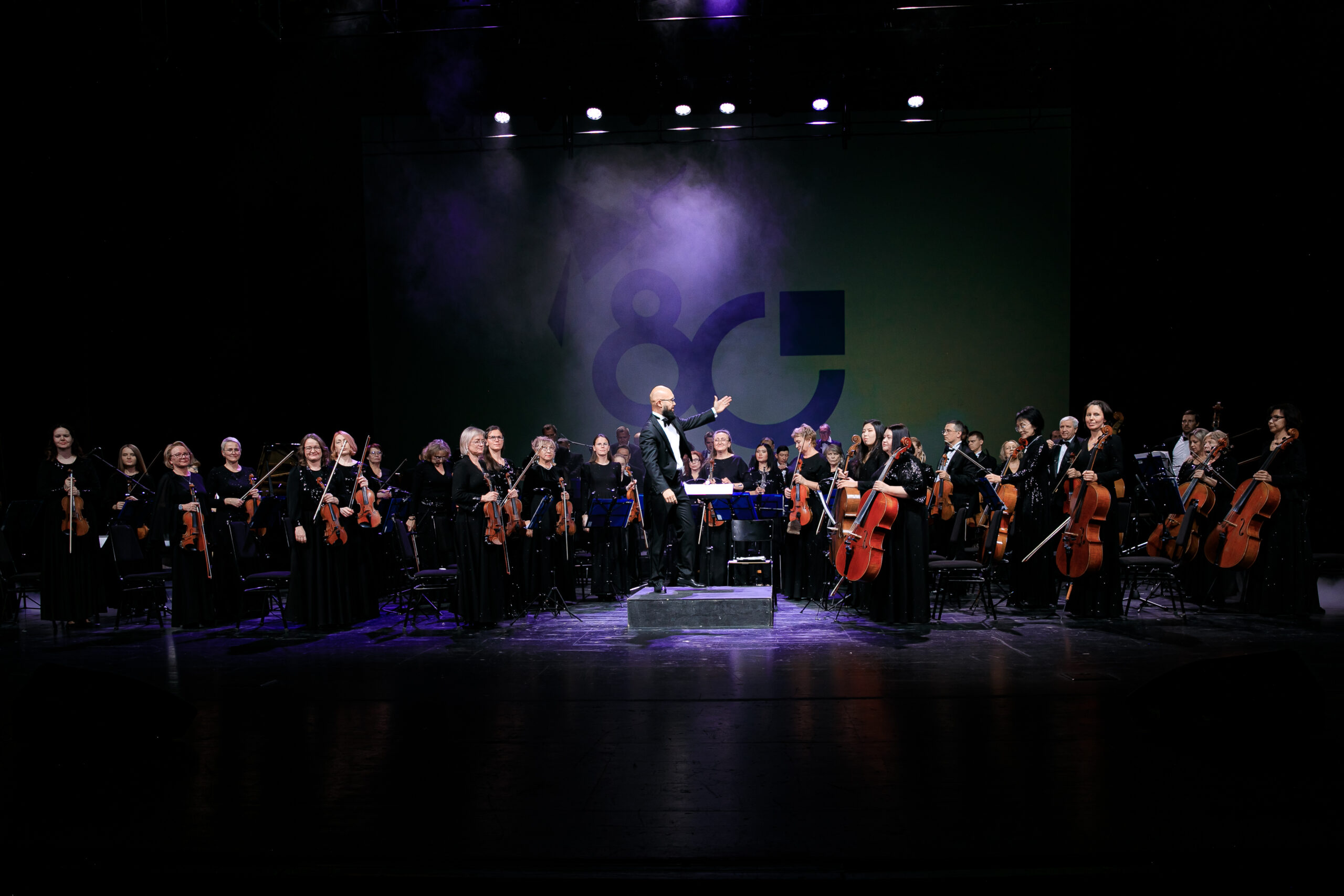
The Yerkegali Rakhmadiyev Academic Symphony Orchestra under rising conductor Yernar Nurtazin. Photo credit: UN in Kazakhstan
Performed by the Yerkegali Rakhmadiyev Academic Symphony Orchestra under rising conductor Yernar Nurtazin, the concert used the universal language of music to evoke the ideals of peace, unity and sustainable development.
The program blended Kazakh classical heritage with global repertoire, from Nurgisa Tlendiyev, Yerkegali Rakhmadiyev and Gaziza Zhubanova to Max Richter, John Williams, Hans Zimmer, Ludovico Einaudi, Adele and Coldplay, symbolizing how the Sustainable Development Goals transcend geography and ideology.
Eighty years later, the UN still serves as a source of hope for billions around the globe, said First Deputy Foreign Minister Yerzhan Ashikbayev in his keynote address.
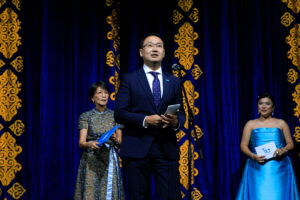
First Deputy Foreign Minister Yerzhan Ashikbayev delivers a keynote address. Photo credit: UN in Kazakhstan
“Over the past eight decades, the United Nations has played an indispensable role in maintaining peace and security, advancing human rights, promoting sustainable development and providing a platform for dialogue and solidarity among nations,” said Ashikbayev addressing nearly 600 representatives of the government, diplomatic corps, civil society, business, media and youth, who came to the concert.
“It has been championing collective efforts on security, nuclear non-proliferation, peacekeeping, development, poverty reduction, sustainability and human rights in many other areas. The world around us has changed profoundly and unfortunately, in some domains, not for the better,” he added.
Ashikbayev reaffirmed Astana’s long-stated commitment to multilateralism.
“For Kazakhstan, the United Nations is more than an institution; it is a strategic partner and a compass, a platform where we work together to shape solutions for humanity’s most pressing challenges,” he said, noting the country’s prominent role in nuclear disarmament, interfaith dialogue, regional cooperation and the empowerment of women and youth.
In her remarks, Sarangoo Radnaaragchaa, UN Resident Coordinator in Kazakhstan, underscored the reality that the “world is in turmoil,” facing an “age of disruption, marked by escalating conflicts, cascading crises and widening inequality.”
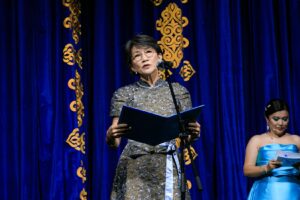
Sarangoo Radnaaragchaa, UN Resident Coordinator in Kazakhstan. Photo credit: UN Kazakhstan
“Trust in multilateral institutions is eroding, and progress on the Sustainable Development Goals is reversing. Yet in this moment of uncertainty, the need for cooperation is greater than ever. We need more of the United Nations, not less,” Radnaaragchaa said.
“International cooperation is not naive. It is pragmatic,” she added, quoting UN Secretary-General António Guterres’ words at the UN General Assembly in New York in September.
“No country can stop a pandemic alone and no army can hold rising temperatures. The United Nations remains a force for peace, a guardian of international law, a catalyst for sustainable development and the lighthouse for human rights. Today’s challenges should not overshadow the progress that world has made with UN support from decolonization and the advancements of human rights to the eradication of smallpox,” she said.
Radnaaragchaa praised Kazakhstan as a “beacon of multilateralism” and a “steadfast supporter” of the UN. Twenty-seven UN agencies are currently operating in the country and Almaty now hosts the UN Regional Center for the Sustainable Development Goals for Central Asia and Afghanistan.
“Kazakhstan continues to lead with conviction. Its commitment to SDGs is unwavering in the world that needs bridge builders. Kazakhstan’s foreign policy is centered on peace, cooperation and development at national level,” she said.
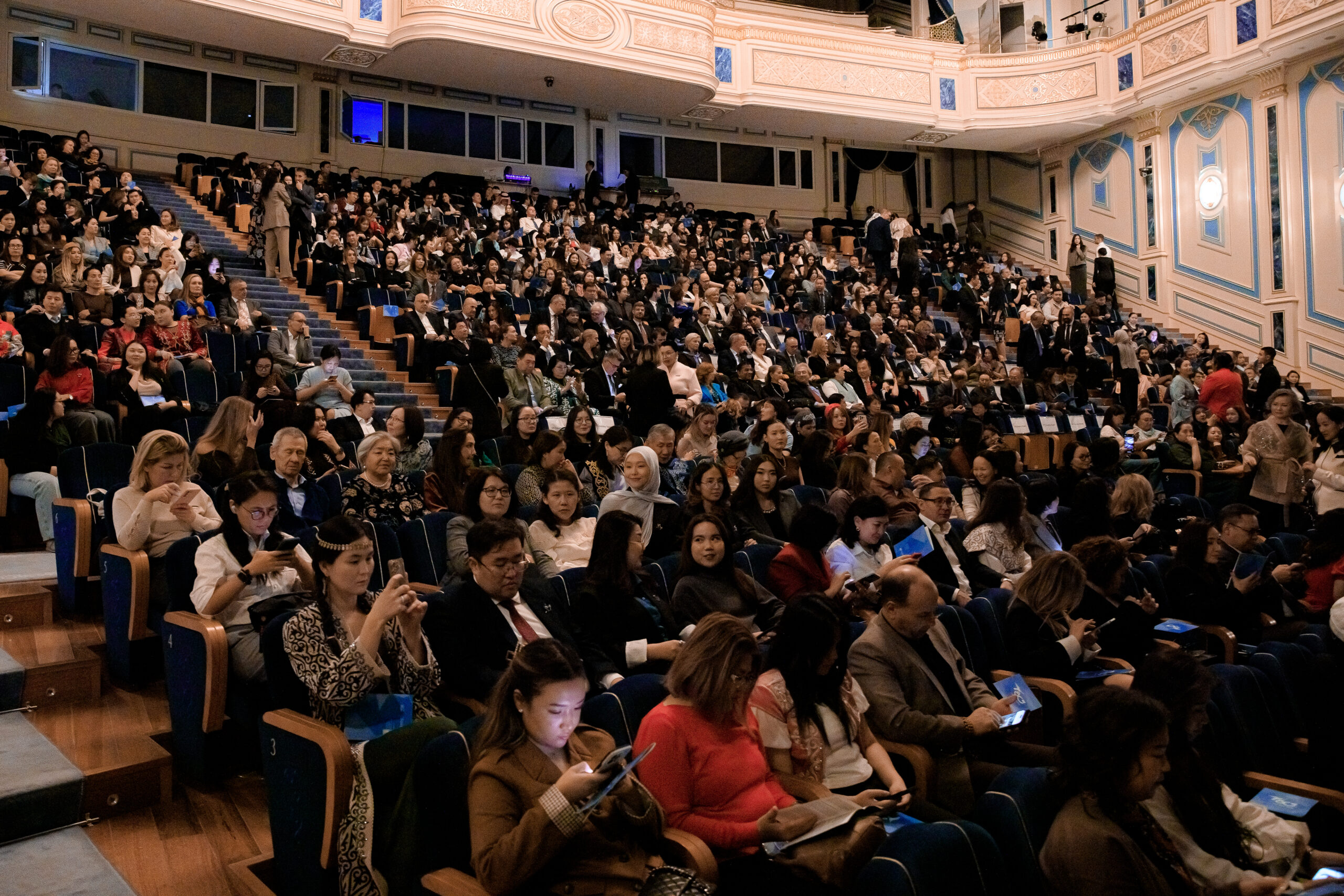
Nearly 600 representatives of the government, diplomatic corps, civil society, business, media and youth came to the concert. Photo credit: UN in Kazakhstan
Radnaaragchaa mentioned the newly signed UN-Kazakhstan Cooperation Framework for 2026-2030, which, according to her, will open avenues for tailored support, joint action and strengthen commitment to international norms and standards.
Throughout the evening, brief remarks from WHO, UNFPA, IOM and UNDP leadership were interwoven between orchestral performances, underscoring how the UN Country Team collaborates with national partners.
The evening also unveiled a UN80 commemorative postage stamp issued in partnership with Kazpost. The concept reflects women and men, girls and boys, persons with disabilities and older generations, united beneath the symbol of the Peace Dove, a visual embodiment of the UN’s mission of harmony and sustainable development.
