
ALMATY – Woman carries many missions in life – she nurtures, she inspires, she perseveres. Even in a world where some girls are denied opportunities, the stories of remarkable women shine as beacons of strength, showing others that no path is too difficult to follow.
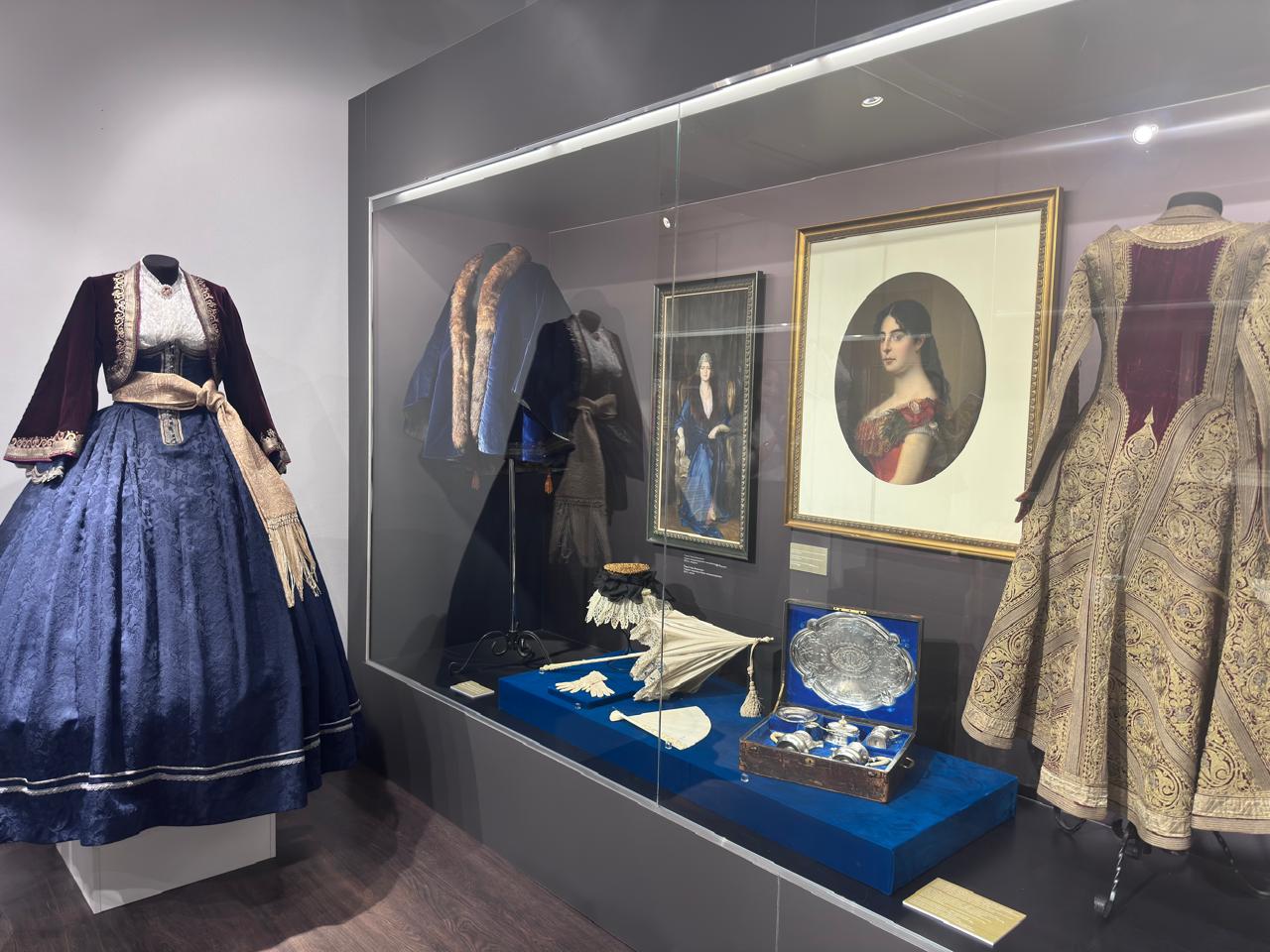
The display features biographies and achievements of artists and scholars who left a profound mark on Serbia’s history. Photo credit: The Astana Times
It was in this spirit that the Almaty Museum opened the exhibition “Serbian Women Through the Ages” on Oct. 3, inviting the public to journey through centuries of resilience and achievement. The landmark event, presented by the Belgrade City Museum, celebrates the power and legacy of women while fostering deeper cultural ties between Kazakhstan and Serbia.
Supported by the ministries of culture of both countries, the exhibition was inaugurated in the presence of distinguished guests, including the First Lady of Serbia Tamara Vučić.
The exhibition covers 7,500 years of history, tracing the role of women in Serbian society from prehistoric times to the modern era. The public has an opportunity to see more than 70 unique artifacts, including archaeological findings, ethnographic objects, applied arts, and portraits of notable Serbian women of the 19th century.
The display also features biographies and achievements of artists, scholars, heroines and athletes, among other women, who left a profound mark on Serbia’s history.
Cultural cooperation and friendship
In her opening statement, Kazakh Minister of Culture and Information Aida Balayeva emphasized that the exhibition represents a new milestone in cultural cooperation between the two nations.
“This event stands as a vivid example of cultural cooperation and a testament to the strengthening friendship between our countries and people,” she said.
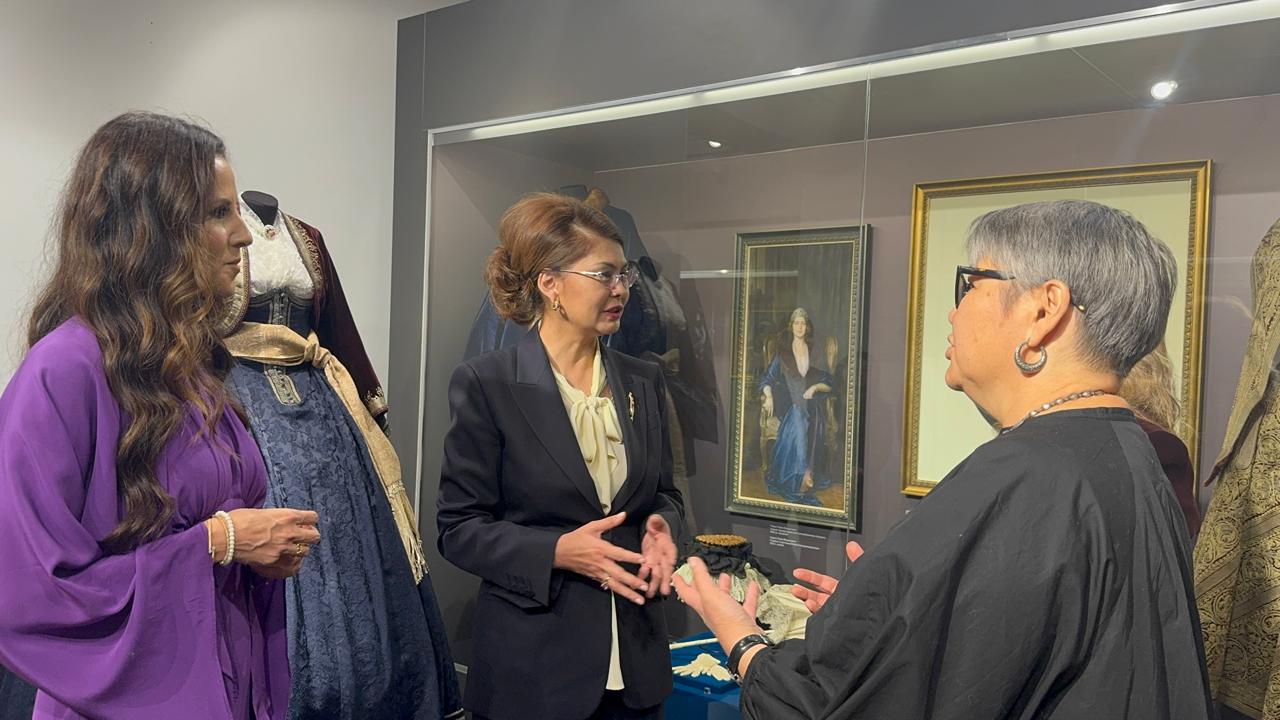
Tamara Vučić and Aida Balayeva discussing the exhibition’s feature. Photo credit: The Astana Times
Balayeva recalled that since the establishment of diplomatic relations in 1996, Kazakhstan and Serbia have built harmonious ties extending far beyond official agreements. Reflecting on the exhibition, Balayeva underlined the universal role of women.
“A woman rocks the cradle with one hand and rolls the world with the other. And in our understanding, a woman is not only the foundation of the family, but also a reflection of the spiritual and cultural image of the nation. This idea is also close to the Serbian people, as beautifully reflected in today’s exhibition,” Balayeva said.
Embracing shared legacies
Director of the Belgrade City Museum Jelena Medaković welcomed the opening as a moment of pride and cultural unity. She highlighted that women have shaped not only families but entire communities throughout history.
“The exhibition presents the image of women as a symbol of inspiration, strength, resilience, creativity, guardianship, motherhood, dignity, and reflects on how it rose throughout history,” she said.
Vučić, in turn, praised Kazakhstan for its hospitality and reflected on the parallels between Serbia and Kazakhstan as crossroads of civilizations. She added that geography has shaped both nations, binding them through resilience and cultural richness.
“Geography has shaped our destinies, bringing together the journeys, migrations, yet through it we have always stood resolutely upon our native soil,” she said.
Vučić emphasized that Serbian women have long been the pillars of family, nation, and culture, from Princess Milica’s medieval leadership to the symbolic Kosovo Maiden of 1389.
“In a single expression, they have embodied love, faith and hope. This exhibition seeks to offer a window into that profound and enduring legacy,” she said.
Continuing museum partnership
Balayeva later highlighted that Kazakhstan also plans to showcase its women’s legacy in Serbia. According to her, the exhibition demonstrated that respect for women defines the spirit of the nation.
“That is how nations should build friendship – by learning each other’s culture and traditions through such events. We have already planned a new exhibition in Serbia, and I believe your people should also know Kazakh women, historical figures who contributed immensely to the development of our nation,” she said.
Running through Nov. 15, the exhibition continues the cultural partnership launched last year between Almaty and Belgrade museums.
Yet, beyond dates and artifacts, it leaves visitors with a timeless message: the story of women is not confined to one country.
