
ASTANA – Kazakhstan is intensifying efforts to expand its role as a key transit link between Europe and Asia while setting its sights on becoming the leading aviation hub in Eurasia, President Kassym-Jomart Tokayev said in his Sept. 8 state-of-the-nation address.
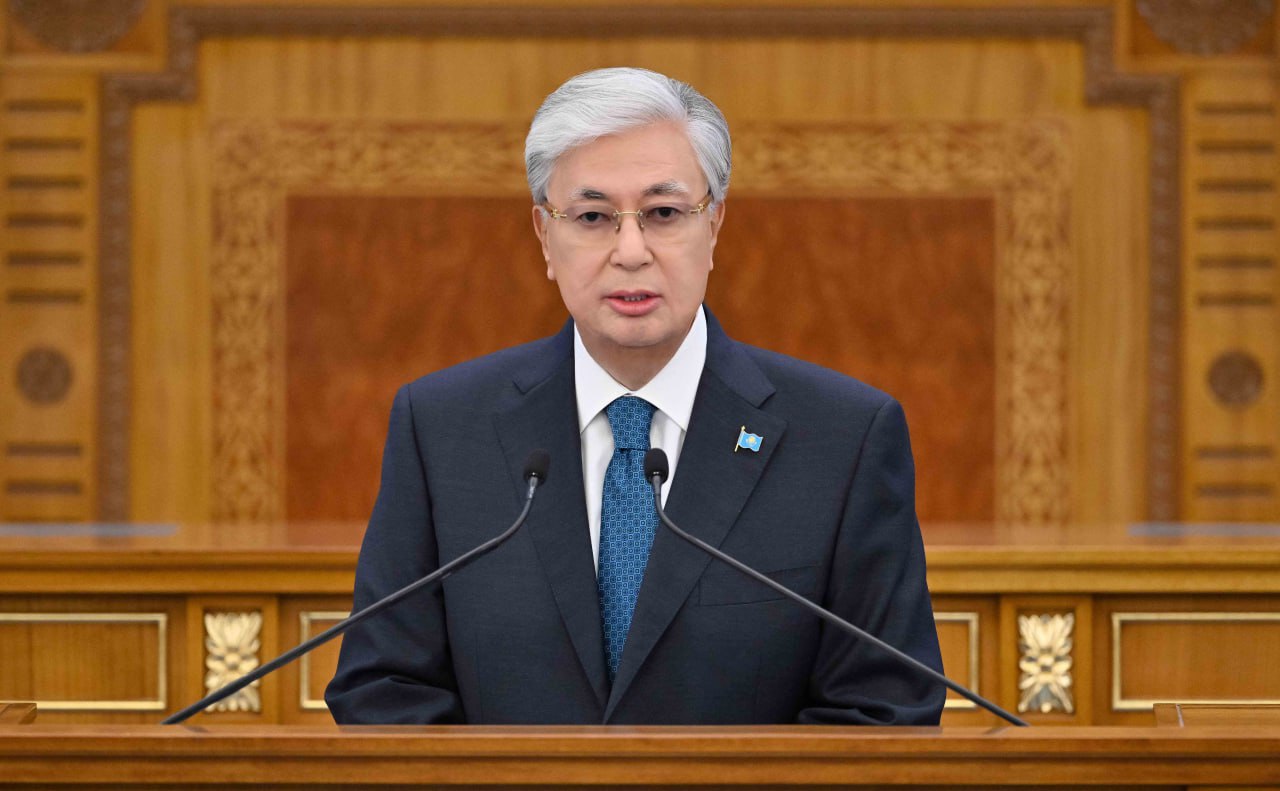
Photo credit: Akorda
Tokayev noted that global competition for transit is intensifying, with cheaper alternative routes emerging, underscoring the need for Kazakhstan to act proactively.
“It is necessary to develop the transport and logistics sector. Kazakhstan is the most important link between Europe and Asia. Thus, last year the volume of cargo transportation through Kazakhstan exceeded one billion tons,” he said.
He emphasized the importance of developing the North-South corridor, which provides access to markets in the Persian Gulf and South Asia, and strengthening the East-West corridor, bolstered by China’s Belt and Road Initiative. The Trans-Caspian International Transport Route, or the Middle Corridor, also remains a priority, with all corridors expected to function as an integrated system that brings investment, jobs, and tangible income to Kazakhstan.
To improve efficiency, Tokayev stressed the need for broad adoption of digital solutions, including artificial intelligence, across the transport and logistics sector. He pointed to ongoing major infrastructure projects, such as the 836-kilometer Dostyk-Moiynty railway, which will significantly increase capacity on the East-West route. Additional projects, such as Bakhty-Ayagoz and Kyzylzhar-Moiynty, are also scheduled to complete Kazakhstan’s railway framework.
Tokayev also addressed the development of road transit, highlighting the construction and repair of 13,000 kilometers of highways, with priority given to key transit corridors. The Saksaul-Beineu road, once completed, will cut transit time from China to Europe through Kazakhstan by nearly a third.
To streamline operations, the government has been tasked with launching by October a single digital customs and logistics system, Smart Cargo, offering private companies equal automated access to infrastructure. The modernization of 42 border checkpoints is also underway, aimed at improving service for carriers and ensuring efficient green corridor cargo transit.
Expanding air cargo
Addressing air transport, Tokayev highlighted recent upgrades to aviation infrastructure, including new terminals in Almaty, Shymkent, and Kyzylorda, as well as ongoing airport construction in Zaysan, Katon-Karagay, and Kenderli. He stressed that while passenger infrastructure is improving, Kazakhstan must also prioritize the rapidly growing air cargo sector.
He reiterated his earlier instruction to double processed air cargo volumes by creating a National Cargo Carrier with foreign partners. With e-commerce and high-tech product flows expanding, air cargo represents a highly profitable segment, he said. The government must also regulate express cargo services to protect consumers.
Looking ahead, Tokayev called for Kazakhstan to embrace unmanned transport technologies, including drones and automated cargo vehicles, ensuring that regulations support rapid deployment.
