
ASTANA — A special session on the Caspian Sea crisis will be held at the Regional Environmental Summit in Astana in 2026. Experts from the Central Asian Climate Fund have prepared a review of the Caspian’s ecological issues.
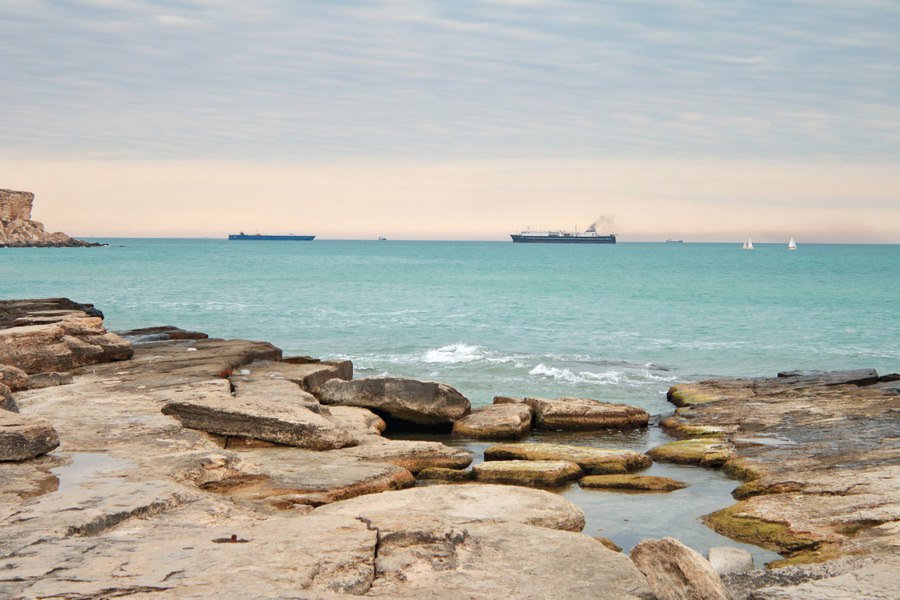
Caspian Sea. Photo credit: advantour.com
In less than 20 years, the surface area of the Caspian Sea has shrunk by more than 34,000 square kilometers — larger than Lake Tanganyika (32,900 square kilometers) or Belgium (32,545 square kilometers). Water quality has also deteriorated from “clean” to a “moderate level of pollution,” with periodic exceedances of harmful substances.
The Caspian Sea, the world’s largest enclosed inland body of water, is unique for its brackish waters, oceanic-type seabed, and biodiversity. It is also among the deepest lakes in the world, home to the endemic Caspian seal and the planet’s largest sturgeon spawning grounds, reported the Project Office for Central Asia on Climate Change and Green Energy.
Call for action
According to Yerlik Karazhan, the head of the Project Office for Central Asia on Climate Change and Green Energy of the Central Asian Climate Fund, the shrinking of the Caspian Sea is a real and urgent problem, caused by a combination of climate change, reduced river inflow, and other factors.
“The sea level is falling, exposing new land areas, reshaping the shoreline, and bringing serious ecological and economic consequences. The mission of our foundation is not only to draw the attention of Caspian-bordering countries to this problem but also to engage the global community in finding solutions to prevent a repeat of the Aral Sea tragedy,” he said.
Shrinking waters
Around 130 rivers flow into the Caspian, but by the early 1970s most had been regulated. Of the total inflow, 86.1% comes from the Volga River, 5.1% from the Kura, 2.9% from the Ural, 2.4% from the Terek, and 3.5% from others.
Due to its vast territory and distance from the ocean, the Caspian region is warming faster than the global average — and even faster than Kazakhstan. According to Kazhydromet, between 1976 and 2024, global average annual air temperature rose by +0.19°C per decade, in Kazakhstan by +0.36°C, and in the Caspian region by +0.51°C.
From 2006 to 2024, the Caspian dropped by 2.14 meters. The State Oceanographic Institute (Russia) estimates the surface area decreased by 34,400 square kilometers — from 392,300 square kilometers to 357,900 square kilometers.
Satellite data from NASA (2020–2025) show the Caspian is shrinking at about 7 centimetres per year, 20 times faster than global sea level rise. If this continues, the shallow northern Caspian may almost completely disappear by 2050.
Scientific forecasts vary. By 2100, under an optimistic +1.5°C scenario, the sea level could drop 5–9 meters. Under a +2–3°C scenario, the fall could reach 10–15 meters. A catastrophic +4°C scenario could result in an 18–21 meter drop, shrinking the surface area by 30% and cutting the volume of water nearly in half.
Pollution
Another major problem is water pollution linked to oil extraction. Between 2005 and 2018, Kazhydromet recorded water quality ranging from “clean” to “moderately polluted.”
In the Northern Caspian, exceedances of maximum permissible concentrations (MPC) occurred in 2007–2009 for copper, iron, and nitrite nitrogen. In 2009, chromium (VI) exceeded MPC by 1.2 times; in 2013, by 1.1 times. From 2010–2012 and 2014–2018, no exceedances were found.
Since January 2019, Kazakhstan has used a Unified Water Quality Classification System for surface waters, with six classes from “best” to “worst.” According to this system, in 2019 the Caspian was assessed as “above class five” — unsuitable for any water use. In recent years, there has been no worsening trend, but levels remain critical.
Extinction risks
The Caspian Sea, formed 5–7 million years ago from the Tethys Ocean, developed a unique ecosystem now at risk.
The population of Caspian seals has declined by 90% in a century — from 1.2 million in the early 20th century to fewer than 100,000 today. The species, endemic to the sea, is critically endangered. Unlike most seals, Caspian seals breed exclusively on ice floes in the north during January and February. With pregnancies lasting 11 months, any disruption directly impacts reproduction.
Studies in 2023–2024 show the area of winter sea ice has decreased by 40% over 20 years. A 5-meter sea level drop would reduce suitable ice for seal breeding by 81%. Pollution, shrinking food supplies, and fishing nets also threaten survival.
The Caspian is also home to six sturgeon species — beluga, Russian, Persian, stellate (sevruga), ship, and sterlet. All are now threatened. Falling water levels make river deltas too shallow for spawning, while feeding grounds in shallows disappear first. Poaching further damages populations.
