
ASTANA – Togzhan Kassenova, a prominent Kazakh expert and a senior fellow at the University at Albany, has joined a new 21-member United Nations scientific panel that will examine the physical effects and societal consequences of a nuclear war from immediate impact to decades-long implications.
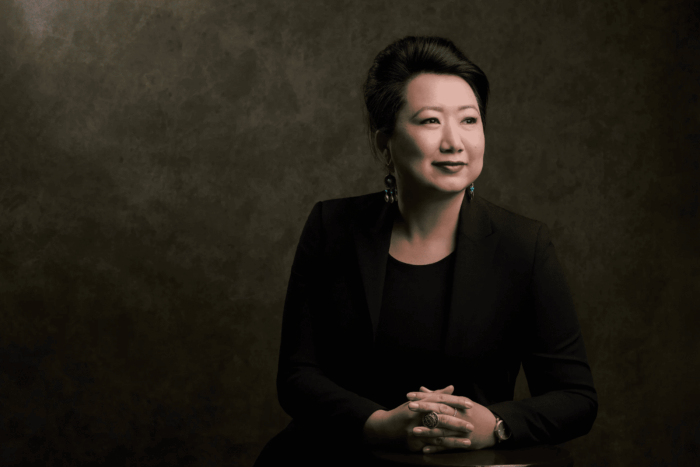
Togzhan Kassenova. Photo credit: togzhankassenova.com
“The panel will study the possible impact of a nuclear war on everything from public health to ecosystems, agriculture, and global socioeconomic systems. The last cross-sectional United Nations study of this kind was undertaken almost four decades ago in 1988,” said the UN in a July 17 statement.
“The panelists are leaders in their fields, across a range of scientific disciplines, and come from all regions of the world. They will seek input from a wide range of stakeholders, from international and regional organizations to the International Committee of the Red Cross to civil society and affected communities,” it said.
The first meeting of the panel is expected in September, while a final report is expected to be presented at the UN General Assembly in 2027. The last time the UN undertook a study of this kind was almost four decades ago in 1988.
UN Secretary-General António Guterres selected the members of the commission based on their outstanding scientific achievements in their respective fields, ensuring impartiality as well as geographical and gender balance. The recommendations and expertise of relevant UN system bodies were also considered in forming the panel.
From 2011 to 2015, Togzhan Kassenova served as a member of the UN Secretary-General’s Advisory Board on Disarmament Matters. She is also engaged in both academic and educational work. In 2022, Kassenova published her book “Atomic Steppe: How Kazakhstan Gave Up the Bomb,” telling a story of how Kazakhstan navigated through multiple challenges after the collapse of the Soviet Union, emerging from being once a nuclear testing ground into an independent and nuclear-free global leader in denuclearization.
“As a Kazakh, I understood that nuclear history played an important part in Kazakhstan’s nation-building, but we, as a society, did not have a chance to reflect on it. Soviet nuclear tests at the Semipalatinsk Polygon left a lasting negative legacy and will continue to haunt the nation for a long time to come. But on the positive side, the public’s fight against nuclear tests and our country’s deliberate choice to be nuclear-free laid the foundation for what Kazakhstan became as a state – a society that reclaimed agency over its own land, a responsible member of the international community that gave up its nuclear inheritance,” Kassenova told in an interview with the Astana Times in 2022.
Kassenova holds a Ph.D. in Politics from the University of Leeds. She is also a Certified Anti-Money Laundering Specialist (CAMS) and serves as a nonresident fellow in the Nuclear Policy Program at the Washington-based Carnegie Endowment for International Peace.
This appointment highlights her high international standing in nuclear policy, disarmament, and the non-proliferation of weapons of mass destruction, as well as her longstanding commitment to nuclear justice. For Kazakhstan, this recognition reinforces the nation’s role as a moral and intellectual authority in nuclear non-proliferation. It strengthens its presence in scientific diplomacy, providing an opportunity to bring Central Asian perspectives into high-level UN policy recommendations.
