
ASTANA — Improving cities, modernizing infrastructure and raising living standards have been recurring priorities in President Kassym-Jomart Tokayev’s state-of-the-nation addresses. His latest address brought these themes together with a renewed push for AI, energy security and technological development, reinforcing priorities he has emphasized throughout his presidency.
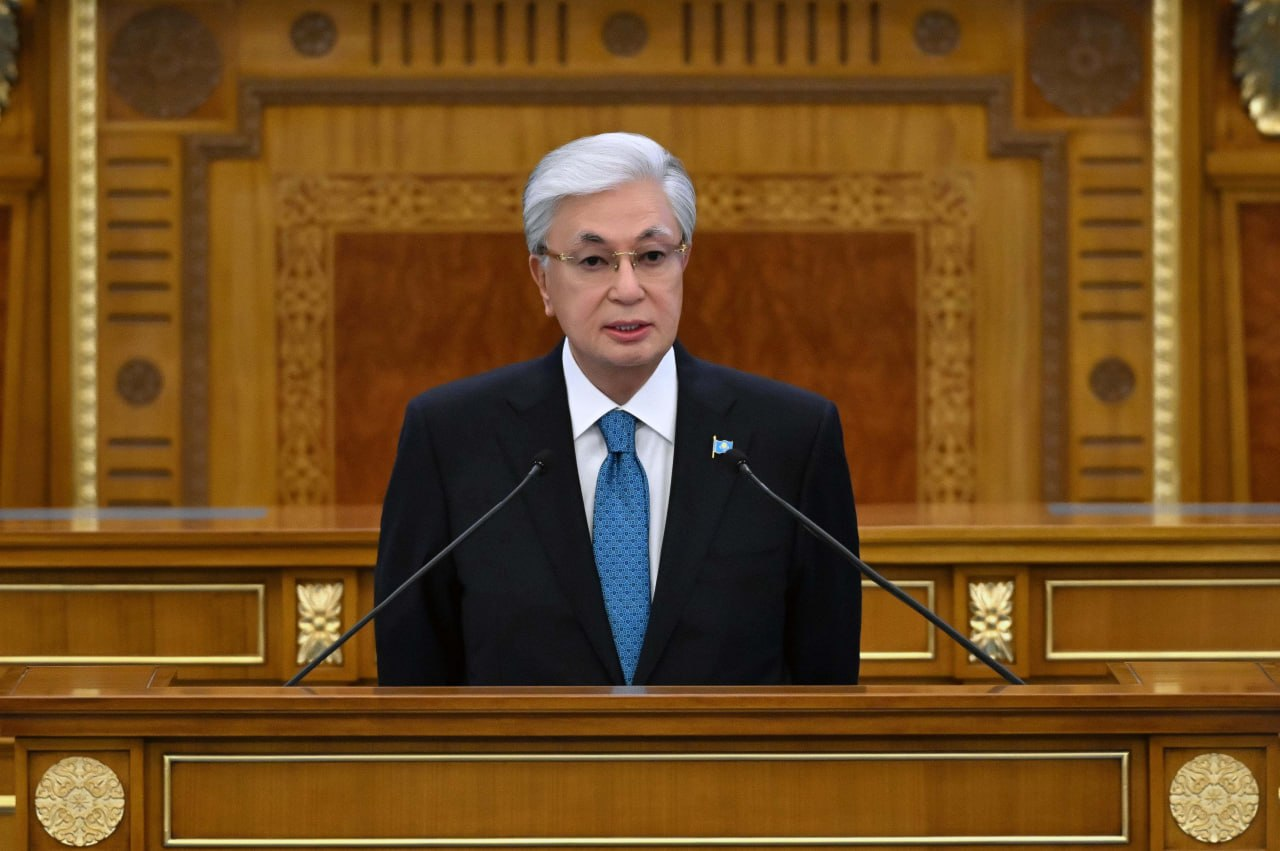
President Kassym-Jomart Tokayev delivers his state-of-the-nation address on Oct. 28. Photo credit: Akorda.
In a comment to The Astana Times, political analyst Rasul Kuspanov of the National Analytical Center at Nazarbayev University said Kazakhstan’s priority at this stage should not necessarily be announcing new projects, but ensuring that existing plans are implemented and translate into tangible improvements in people’s lives across the country.
Kuspanov said the emphasis on digitalization and AI reflected a direction Kazakhstan had pursued for several years. However, he noted that the country’s technological ambitions would depend on whether it could build the infrastructure needed to support them and improve the capacity of its public administration to deliver results.
AI ambitions require energy and infrastructure
Tokayev called for Kazakhstan to move beyond consuming digital technologies and develop its own technological capabilities.
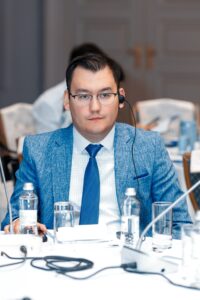
Rasul Kuspanov of the National Analytical Center at Nazarbayev University
“Our goal is to build a truly people-centered digital economy,” he said in his Oct. 28 address.
He also acknowledged that digitalization has not always delivered meaningful results, sometimes amounting to the automation of existing procedures or the purchase of expensive software without a clear understanding of its practical benefits.
“We must be realistic in assessing our capabilities and use the best that new technologies can offer for the well-being of our people,” Tokayev said.
For Kuspanov, one of the central questions is whether Kazakhstan can provide the energy and computing infrastructure required for this transition. The country continues to face electricity shortages, while the expansion of data centers and wider adoption of AI will increase demand for reliable power.
Tokayev set a strategic target of achieving a sustainable electricity surplus by 2029 and said it may be possible to begin construction of the Balkhash nuclear power plant as early as next year. He also called for accelerating the development of additional generating capacity.
The proposed data center valley in Ekibastuz is another part of Kazakhstan’s digital ambitions. But Kuspanov said the success of such initiatives would depend on implementation rather than the announcement of new plans. He also highlighted the importance of applying AI in public administration. He said Kazakhstan has already introduced digital tools for government employees and public feedback, but further integration of technology into the civil service will require institutional changes alongside technical solutions.
Alatau and the challenge of implementation
Another major initiative is Alatau, which Tokayev has presented as a center of accelerated development and an environment conducive to investment and entrepreneurship. The president announced plans for an investment court based on English common law to hear commercial cases. A separate civil court would handle other matters under the city’s special legal regime. The initiative builds on Kazakhstan’s experience with the Astana International Financial Centre, which operates under its own legal framework.
For Kuspanov, Alatau represents an opportunity to develop a new technological and investment hub, but its long-term success will depend on the institutions established to support it. That brings the discussion back to public administration.
“The civil service as the backbone of the state and even well-designed policies depend on the quality of the people responsible for carrying them out,” Kuspanov said.
He welcomed Tokayev’s emphasis on reforming the state apparatus, saying that Kazakhstan needs capable officials who can turn ambitious plans into practical outcomes.
The same principle applies to infrastructure investment. Tokayev said Kazakhstan would allocate 6.5 trillion tenge (US$14.3 billion) from the National Fund by the end of 2029 to modernize infrastructure nationwide.
Kuspanov said using National Fund resources could bring visible benefits if the money goes to necessary projects and is spent efficiently.
“If transfers from the fund are spent efficiently and on worthwhile projects, such as modernizing the Petropavlovsk-Kokshetau highway, I think citizens of Kazakhstan will be pleased to see the results of this work for themselves,” he said.
He also stressed the need for close oversight of public spending to ensure that allocated funds are used for their intended purpose.
Better cities, stronger regions
Urban development has also been a recurring priority for Tokayev. In his latest address, he called for government-approved medium- and long-term development plans for major cities, with safety, comfort and attractiveness treated as state priorities.
“Strong cities are the foundation of strong regions, and strong regions are the foundation of a strong state,” Tokayev said.
The president also linked quality of life to access to adequate social infrastructure. He called for large-scale construction across the country, emphasizing that the initiative should extend beyond individual projects to cover all regions.
According to Kuspanov, the challenge is to ensure that development reaches beyond the largest urban centers. Roads, utilities, public facilities and other infrastructure shape not only the appearance of cities but also the economic opportunities available to their residents.
Kuspanov said Kazakhstan’s regions differ considerably in their level of economic activity and infrastructure. He pointed to the East Kazakhstan Region as an example of active economic and industrial development, praising the work of the local administration.
His assessment of the North Kazakhstan Region, where he grew up and regularly visits family, was more critical. In some districts, he said, infrastructure remains underdeveloped.
“People in smaller towns and rural areas should also have access to the basic conditions necessary for a decent quality of life. Regional policy should therefore be systematic rather than concentrated on a handful of pilot territories or the country’s largest cities,” he said.
Kuspanov said the goal should be to create conditions in which every region can develop in a modern and sustainable way.
From announcements to measurable outcomes
Tokayev’s address also included measures with a more immediate social impact. Kuspanov said many Kazakh citizens would pay attention to the announced minimum wage increase, describing it as an important measure for public-sector workers.
“While the increase may not transform their financial circumstances, it remains significant for those affected,” he said.
Tokayev’s broader economic agenda includes efforts to curb inflation, improve public spending and channel more financing into the real economy, with commercial banks urged to expand investment lending. However, Kuspanov said the address contained few fundamentally new ideas. After years of reform, he noted, the priority is now to deliver on existing commitments and extend their benefits nationwide.
