
ASTANA – Tigress Umit, released into Kazakhstan’s Ile-Balkhash State Nature Reserve on July 31 as part of the country’s tiger reintroduction program, is showing positive signs of adapting to the wild, Anuarbek Bermagambetov, head of the Department of Hunting Management and Wildlife, said on the Jibek Joly TV channel on Aug. 24.
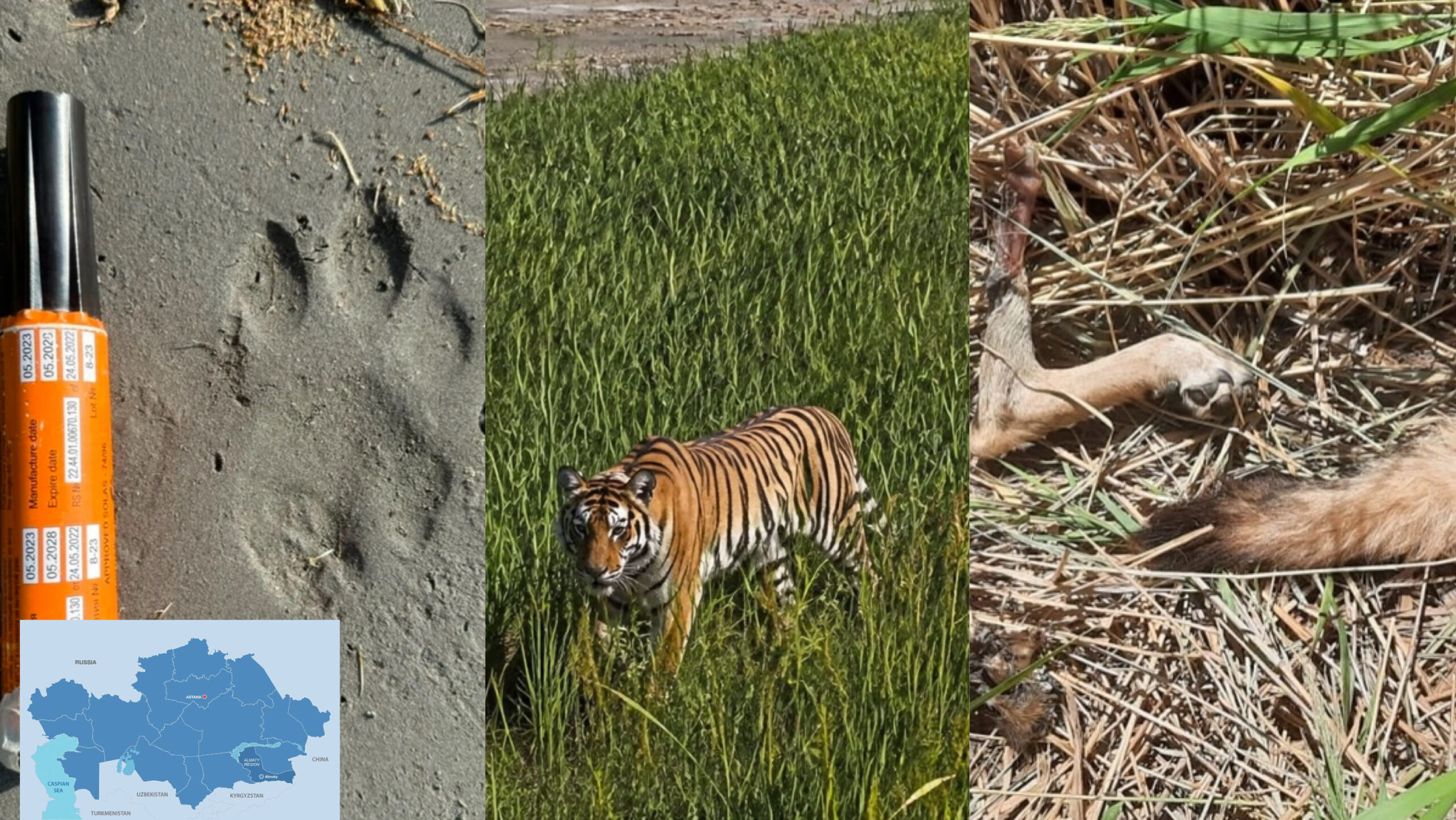
Photo credit: gov.kz Click to see the map in full size. The map is designed by The Astana Times.
More than 70 years after tigers disappeared from Kazakhstan, the predator has returned as part of a long-term reintroduction effort.
Umit’s first recorded prey was a wolf, followed several days later by a wild boar. According to Bermagambetov, her hunting behavior in the first 10 days suggests she is adapting well to her new environment.
Her movements are monitored around the clock with a GPS tracker that transmits her location and direction of travel every 12 hours. Specialists still need to conduct field visits to identify the prey species she catches, as GPS data alone cannot determine this.
Strict monitoring and safety measures
The tigress is currently staying within the reserve’s designated green zone, which covers her main habitat and hunting grounds and poses no immediate threat to nearby settlements.
The reserve covers more than 450,000 hectares, and unauthorized access is prohibited.
The area around Umit has been divided into green, yellow and red zones. If she moves towards the yellow zone, a specially formed conflict-management team will begin monitoring the situation. The team is equipped with three vehicles, a snowmobile, an ATV, night-vision devices, a satellite phone and Starlink.
If Umit enters the red zone, authorities will issue an alert and notify residents of nearby settlements through mobile warnings.
Specialists will initially attempt to drive the tiger back into the green zone using sound and, if necessary, pyrotechnic devices. Temporary sedation is also available as a last resort.
Reintroduction program underway since 2010
Kazakhstan’s tiger reintroduction program has been underway since 2010. The project has included establishing the Ile-Balkhash reserve, restoring its wildlife population and developing the infrastructure needed to support the species’ return.
Two tigers, Bogdan and Puma, were previously brought from the Netherlands in 2024, while Russia transferred four more tigers to Kazakhstan this year. Umit is one of the four animals Russia sent under a bilateral agreement.
Before her release, specialists assessed the reserve’s food base. The area is home to potential tiger prey, including kulan, wild boar, roe deer and Bukhara deer.
Authorities say Umit’s ability to hunt and feed independently is an encouraging early sign that the tigress is adapting to life in the wild.
Officials have also urged the public not to rely on unverified social media footage. Videos of Bogdan and Puma have previously been falsely circulated as footage of Umit, highlighting the growing problem of AI-generated and misleading wildlife content online.
