
ASTANA — Kazakhstan’s citizens will elect the members of the Kurultai, a new unicameral Parliament, on Aug. 23, putting a redesigned parliamentary and electoral system into practice for the first time.
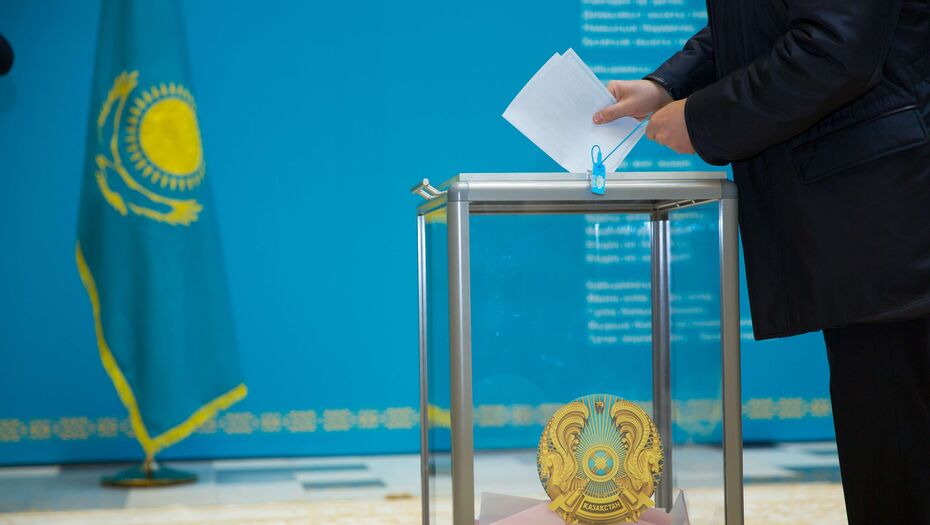
Photo credit: BaigeNews.kz.
Beyond determining who receives the 145 seats, the vote will offer an early indication of how the new rules affect party competition, political representation and the composition of the legislature.
Kazakhstan’s new constitutional framework took effect on July 1, replacing the former bicameral Parliament, consisting of the Mazhilis (lower house) and Senate (upper house), with a 145-member Kurultai elected for five years through proportional representation in a single nationwide constituency. Parties must receive at least 5% of the vote to enter the legislature.
Seven political parties are contesting the election, with 545 candidates registered for the race. According to the Central Election Commission (CEC), women, young people and persons with disabilities account for a combined 43.9% of registered candidates, exceeding the 30% cumulative quota required for these groups on party lists.
First test of a new parliamentary model
One of the changes is the disappearance of single-member constituencies from national parliamentary elections.
Under the previous system, legislation passed through the Mazhilis before moving to the Senate. Under the new model, the Kurultai concentrates legislative consideration, and adopted laws are then sent to the President.
Standing committees will take on a larger role in the process. The Kurultai can establish up to eight permanent committees to conduct preliminary reviews of legislation and other parliamentary work. The new framework also formally defines the parliamentary majority and opposition, with opposition representatives guaranteed certain roles in committee leadership, parliamentary hearings and government question sessions.
The election will also mark a transition for the executive branch. After the new Kurultai is elected, the government must formally submit its resignation. The President then has 10 days to decide whether to accept it.

Rassul Kospanov. Photo credit: National Analytical Center
Speaking to The Astana Times, Rassul Kospanov, a senior researcher at the Center for Regional Analysis at the National Analytical Center, said concentrating legislative authority in one chamber could also increase the prominence of its chairperson.
“I think the role of the speaker will become stronger. Previously, the highest legislative authority was divided between two chambers, and that influence was also divided between two speakers; now, in effect, there will be one much more powerful speaker. Much will depend on who takes the position and whether that person can become a trusted and prominent figure for the public,” he said.
Parties face a different electoral test
The electoral system has changed just as significantly. In the previous Mazhilis, 69 of 98 deputies were elected through party lists and 29 through single-member constituencies. All 145 Kurultai members will now be elected through closed party lists in one nationwide constituency, meaning voters choose a party rather than individual candidates within its list.
The 2023 Mazhilis election provides the most recent benchmark. Six parties crossed the 5% threshold, with Amanat, then ruling party that later merged with Adilet, receiving 53.9% of the party-list vote and securing 40 proportional seats. It also won 22 of the 29 single-member constituencies, giving it 62 of the chamber’s 98 seats overall.
That comparison is limited, however, because the system and the party field have both changed. Single-member constituencies have been abolished at the national level, while Amanat has since merged with the Adilet Party.
Kospanov highlighted one direct consequence of removing constituency races: citizens who are not affiliated with political parties no longer have an independent route to the national legislature.
“With the transition to a single nationwide constituency, it is no longer possible to become a member of Parliament if you are not affiliated with a party. There are ordinary citizens and politically active people who do not see a political party they are prepared to join, but under the previous system they still had the right to run. That channel is now completely closed to them,” he said.
He noted, however, that the distinction was less clear in practice, as many deputies elected from single-member constituencies also had political party affiliations.
Kamila Amurtayeva. Photo credit: personal archives
Kamila Amurtayeva, an expert consultant at the Center for Institutional Analysis and Reforms at the Kazakhstan Institute of Public Development (KIPD), told The Astana Times that the fully proportional system both strengthens political parties and raises the demands placed on them.
“There is a paradox here that both strengthens parties and makes their task more difficult,” she said.
“Formally, their role increases sharply because the entire Kurultai is now formed through them, but at the same time they can no longer compensate for a weak party brand with the popularity of individual single-member candidates. Parties will now have to explain to voters not only who represents them, but why voters need that particular party,” she explained.
According to Amurtayeva, the election can therefore serve as a “stress test” for the party system, showing whether parties have stable electoral constituencies and sufficiently distinct political identities.
Seven parties compete for Kurultai seats
Those distinctions have become more visible over nearly four weeks of campaigning. The Astana Times has followed the race through weekly reviews, from the parties’ initial policy pitches and regional campaigning to the first televised debate, an education-focused debate, and the final campaign week’s focus on the rule of law.
Adilet has campaigned on jobs, housing, infrastructure, healthcare and governance. Aq Jol and Respublica have emphasized entrepreneurship, domestic production and economic reform, with the two competing more directly for business-oriented and economically liberal voters. Auyl has remained focused on agriculture and rural communities, while Baytaq has centered its campaign on environmental protection and sustainable development. The Nationwide Social Democratic Party (NSDP) and the People’s Party of Kazakhstan have placed greater emphasis on social policy, labor rights, healthcare and social protection.
Under the new electoral model, those distinctions matter more because every parliamentary seat depends on a party’s nationwide result. The election will therefore provide a clearer measure of which parties have built support around their platforms rather than individual constituency candidates.
Who enters the first Kurultai
The result will also be measured by who ultimately takes the 145 seats.
The 43.9% share of women, young people and persons with disabilities among registered candidates is higher than the statutory 30% cumulative quota. The quota also applies when parties distribute the mandates they win, making the final composition of the Kurultai an important measure of how representation changes under the new system.
Amurtayeva emphasized that the composition of the party factions will therefore matter alongside vote shares and seat totals.
“I would also look at whom the parties actually bring into the Kurultai. Under a fully proportional system, a party has much greater influence over the formation of the deputy corps and therefore bears greater responsibility for its quality. The important indicator will not simply be the percentage of votes or number of seats, but whether the lists renew representation, bring in new professional and social groups, and provide broad regional representation,” she explained.
Kospanov expects some personnel renewal but emphasized that new names should not automatically be interpreted as evidence of an immediate transformation of the political system.
“The renewal will probably be more personal than political, because we are primarily talking about new personnel and new faces. At the same time, many of those described as new faces have simply not served in the Mazhilis or Senate before. A significant number have experience in local maslikhats [local legislative bodies]. For that reason, I would not expect major systemic changes immediately after the election,” he said.
What to watch on Aug. 23
The immediate result will answer several questions about how the new system is taking shape: how many of the seven parties cross the 5% threshold, how the 145 seats are distributed among them and how concentrated or fragmented the first Kurultai becomes.
Turnout will provide another measure of electoral participation, though Amurtayeva highlighted that it should not be treated on its own as an indicator of the quality of political representation.
“High turnout is important for the legitimacy of an election, but by itself it does not tell us about the quality of political representation. The intrigue, in my view, is no longer only whether the voter comes to the polling station, but what the voter does with that vote. These elections are becoming a kind of stress test for the party system itself,” she said.
International observers will provide a separate assessment of how the new electoral framework operates in practice. In an Aug. 13 statement, the OSCE Parliamentary Assembly announced that nearly 80 parliamentarians and staff from around 30 countries would deploy for the election, working with the OSCE Office for Democratic Institutions and Human Rights (ODIHR) and a delegation from the Parliamentary Assembly of the Council of Europe. Their preliminary findings are expected to be presented in Astana on Aug. 24.
Gábor Hajdu, the OSCE special coordinator leading the short-term observers, said the mission would examine how the constitutional and electoral changes are implemented. Lucija Tacer Perlin, head of the OSCE Parliamentary Assembly delegation, emphasized that the observers would assess the process without drawing conclusions in advance.
“Our task is not to prejudge how Kazakhstan’s new system will perform, but to examine the process carefully and impartially,” she said.
For Amurtayeva, however, the distinction between the election result and the reform’s broader effect is central to what can realistically be expected from Aug. 23.
“We will know the result of the election quite quickly – the numbers and the names of the deputies – but the result of the reform itself will become clear much later. Roughly a year after the election, it should be possible to see what each party has actually brought into the work of the Kurultai: what issues it advances, whose interests it represents and what changes it has been able to achieve,” she said.
