
ASTANA – Kazakhstan plans to turn two of the world’s largest undeveloped tungsten deposits into the country’s first full-cycle tungsten operation, requiring ore to be processed domestically rather than exported as raw material as Astana seeks to capture more value from its critical mineral reserves.
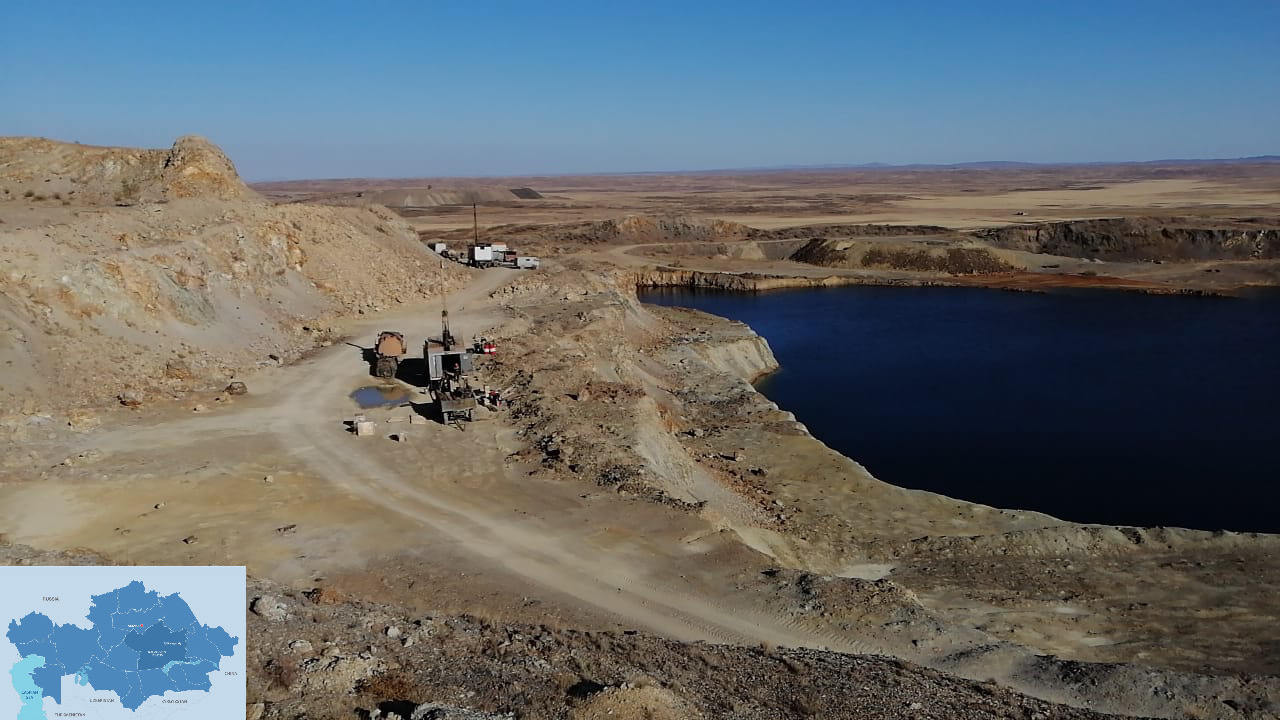
Upper Kairakty. Photo credit tks.kz. Click to see the map in full size. The map is designed by The Astana Times.
The Northern Katpar and Upper Kairakty deposits are being developed by a venture between U.S.-based Cove Capital, which holds a 70% stake, and Kazakhstan’s state mining company Tau-Ken Samruk, with 30%. Cove Capital is expected to provide at least $1.1 billion in financing as well as processing technology and access to international markets.
The agreement was signed in November 2025 during President Kassym-Jomart Tokayev’s visit to Washington D.C. The partners formalized the investment in February, signing a package of transaction documents, including a sale and purchase agreement and a shareholders’ agreement, for the critical minerals project.
The mines are located in the Shet district of the Karagandy Region, close to transport and transport and energy communications. Karagandy, the region’s administrative center, is around 130 kilometers from the deposits.
“The Northern Katpar project involves establishing a full production cycle in Kazakhstan, from ore mining and beneficiation to metallurgical processing, based on the Northern Katpar and Upper Kairakty deposits. This is the first project of its kind to be implemented in Kazakhstan,” Tau-Ken Samruk told The Astana Times.
Its planned output includes ammonium paratungstate, or APT, a key processed product in the tungsten supply chain. The agreement envisages processing all extracted ore domestically and producing higher-value tungsten products in Kazakhstan.
The timeline
The project is currently in the Definitive Feasibility Study (DFS) phase, meaning its final production capacity, economics and launch date have yet to be determined.
“This work will confirm and optimize the existing feasibility studies, and refine the project’s economic and technical indicators, as well as its mineral resources and reserves. As part of the project’s implementation, preparatory and technical work is scheduled to begin on-site, including topographic surveying, the construction of temporary access roads and fencing, the preparation of drilling sites, the opening of a field office, and other related activities,” said Tau-Ken.
The definitive feasibility study, which began in July, is expected to be completed before the end of 2027, Cove Kaz Capital told The Astana Times.
“The principal objective of this stage is to finalize the overall mine plan, define the parameters of the processing facilities and prepare the project for a Final Investment Decision, as well as for detailed due diligence by prospective financing partners,” the company’s CEO Dominic Heaton told The Astana Times.

Dominic Heaton, Cove Kaz Capital CEO. Photo credit: Cove Kaz Capital
The company said physical activity has commenced at the site in July, including surveying, access road and drill pad preparation, and establishment of field facilities.
Untapped potential
The two deposits are considered among the world’s biggest undeveloped tungsten deposits. Together, the deposits contain an estimated 410,000 metric tons of tungsten trioxide reserves under JORC standards, while total resources are estimated at 1.4 million tons, according to previous studies cited by Tau-Ken.
Cove Capital said a key distinction is between mineral resources and mineral reserves.
“The current figure represents JORC-compliant [JORC refers to an internationally recognized reporting standard used to classify and publicly report mineral exploration results, mineral resources and ore reserves] mineral resources, while the ongoing DFS [Definitive Feasibility Study] will further update the geological and technical data and optimize the development plan for the deposits,” said Heaton.
“Based on existing studies, Northern Katpar has the potential to support production of approximately 5,000 metric tons per annum, while Upper Kairakty has the potential to contribute approximately 7,000 metric tons per annum. Combined production of approximately 12,000 tons per year would be equivalent to roughly 15% of current global tungsten mine production,” Heaton explained. The company is also developing the Akbulak rare earth project in the Kostanai Region with Qazgeology national geological exploration company.
The financing
Under the agreement, the U.S. partner is expected to provide at least $1.1 billion in financing, introduce modern processing and beneficiation technologies, build a complex of production facilities and develop international sales channels for the output.
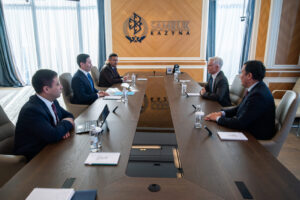
The partners formalized the investment in February, signing a package of transaction documents. Photo credit sk.kz
“The approximately $1.1 billion figure represents the current estimate of the total investment required to develop Northern Katpar and Upper Kairakty, including the associated mining and processing infrastructure. It does not mean that the full amount has already been financed, committed or deployed,” said Heaton.
At this stage, Cove Kaz Capital Group has financed the acquisition of its 70% controlling stake in Northern Katpar, along with site preparation, drilling and work related to the definitive feasibility study.
“An important component of the prospective financing structure is the interest expressed by U.S. government-backed financial institutions. The Export-Import Bank of the United States has issued a Letter of Interest for financing of up to $900 million, while the U.S. International Development Finance Corporation has issued a Letter of Interest for up to $700 million, including project financing and development support,” Heaton explained.
Potential financing could reach $1.6 billion, but the figure remains indicative rather than committed, Heaton added. The amounts represent expressions of interest from prospective lenders, with the final financing package still contingent on completion of the definitive feasibility study, lender due diligence and a final investment decision.
Why it matters
What this project illustrates is that Kazakhstan is betting on higher-value domestic processing rather than remaining primarily a supplier of raw tungsten ore or concentrate. Cove Capital said it seeks to create an integrated domestic value chain in Kazakhstan, spanning mining, beneficiation and downstream chemical processing.
“The principal benchmark product currently planned for the Kazakhstan refinery is ammonium paratungstate, or APT, a high-purity intermediate product that is the internationally recognized benchmark product of the tungsten industry. The project may also have the potential to produce other tungsten compounds depending on the final technical configuration,” Heaton explained.
Deeper processing would allow Kazakhstan to retain more of the value generated from its tungsten resources rather than exporting mainly ore or concentrate.
“APT is subsequently used to produce tungsten oxides and powders, tungsten carbide, hard metals and other specialized materials used across advanced manufacturing, high-technology and defense-related industries,” said Heaton.
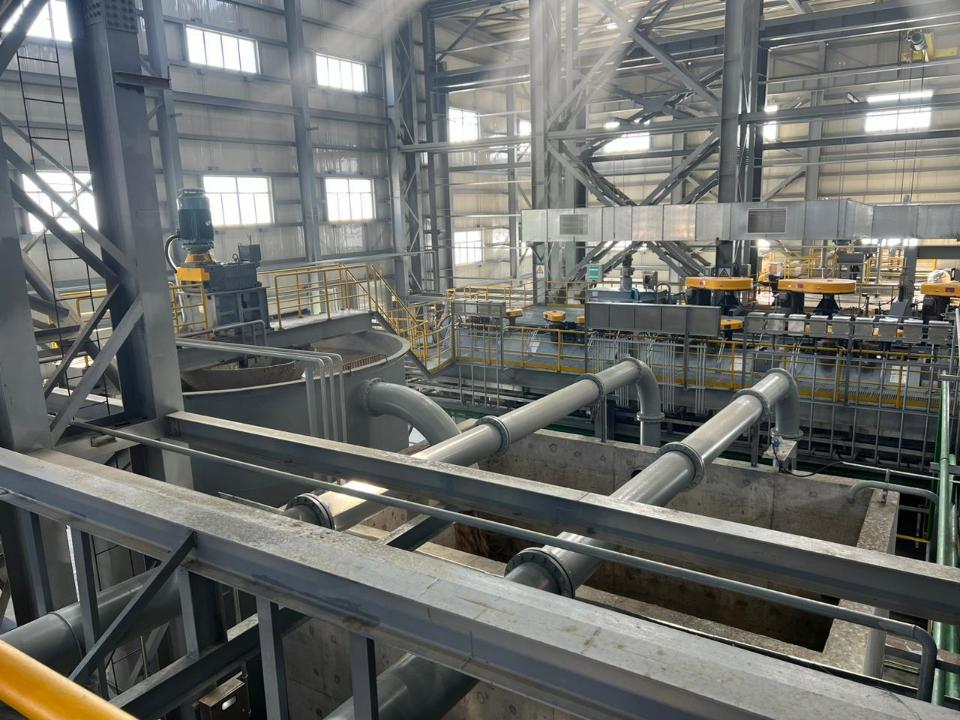
Kazakhstan launched the Boguty facility, its first tungsten project, in 2024 in the Almaty Region. Photo credit: Ministry of Industry and Construction.
Global tungsten dynamics
According to the U.S. Geological Survey, tungsten is a strategically important metal used primarily in tungsten carbide for mining, construction and metalworking, as well as in electronics, aerospace, high-performance alloys and defense applications. Its combination of hardness, heat resistance and high density makes it difficult to substitute in many industrial uses.
Tungsten is relatively scarce in the Earth’s crust, ranking 57th among chemical elements by abundance. Its wide industrial use stems from a combination of distinctive properties. No other known metal matches tungsten in heat resistance, and its boiling point is close to the temperature at the Sun’s surface.
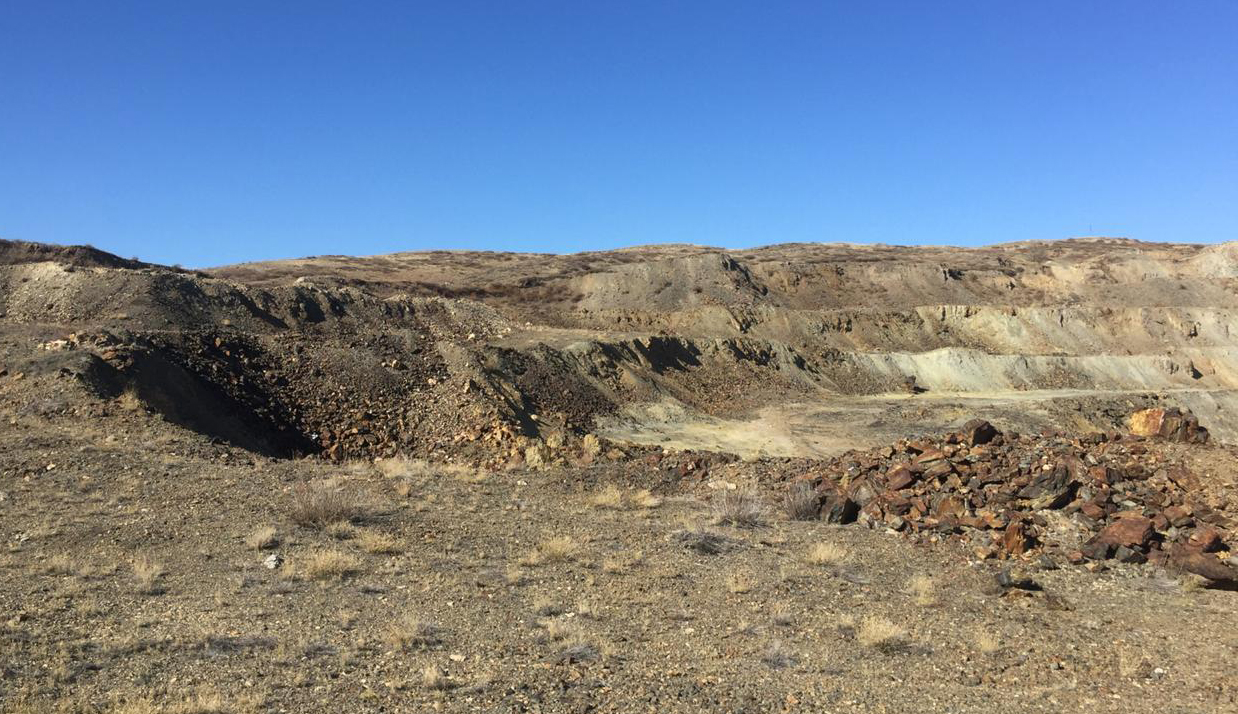
Northern Katpar. Photo credit: tks.kz
China has remained the world’s leading producer, importer and consumer of tungsten concentrates.
The project is advancing at a time when tungsten is taking an increasingly greater geopolitical importance as the U.S. and other economies seek to diversify critical mineral supply chains away from China. Beijing tightened controls on exports of selected tungsten products and related technologies in February 2025, adding pressure to already concentrated global supply chains.
The restrictions, alongside growing demand and trade tensions, helped push tungsten prices sharply higher in 2025. According to the U.S. Geological Survey, throughout 2025, prices went up from $266 to $551 per metric ton unit for 65% concentrate and from $331 to $675 per metric ton unit for APT.
“At the same time, the strategic importance of secure and diversified critical mineral supply chains is growing rapidly. The United States, the G7 and other advanced economies are actively seeking to reduce reliance on highly concentrated sources of supply and support the development of alternative supply chains. Tungsten is one of the critical minerals receiving particular attention in this context,” said Heaton.
Kazakhstan is emerging as a potential alternative supplier. Production began at the Boguty tungsten deposit in the Almaty Region in 2024, operated by Aral Kegen, a subsidiary of China’s Jiaxin International Resources Investment.
The project with Cove Capital is also emerging as part of a broader build-out of Kazakhstan’s tungsten industry, with additional deposits moving toward development. The country’s total tungsten trioxide reserves are estimated at more than two million metric tons. Esil-Mining, owned by Britain’s Resources Enterprise Limited, plans to begin developing the Aksoran deposit in northern Kazakhstan in 2027, with production targeted for 2028.
The planned development of Northern Katpar and Upper Kairakty would take the country further downstream by combining extraction with domestic processing rather than exporting raw material.
“More broadly, our strategy is to build a portfolio of critical mineral assets in Kazakhstan and Central Asia supported by domestic processing and refining capacity,” said Heaton.
He emphasized this ambition is supported by the country’s substantial mineral resource base, a mature mining sector, extensive geological data and established industrial infrastructure.
“Just as importantly, Kazakhstan is increasingly focused on moving beyond the extraction and export of raw materials toward higher-value processing and manufacturing,” he added.
The project illustrates Kazakhstan’s broader effort to extract more economic value from its mineral wealth by pairing foreign capital with domestic processing. But major questions, including production capacity, final economics and the start of commercial output, remain unresolved while the venture completes its definitive feasibility study.
