
HONG KONG – Hong Kong is seeking to strengthen its position in advanced manufacturing and emerging technologies as growing demand for artificial intelligence and electronic components drives exports, officials said on Oct. 13 at the opening of two major technology fairs bringing together more than 3,200 exhibitors from 15 countries and regions.
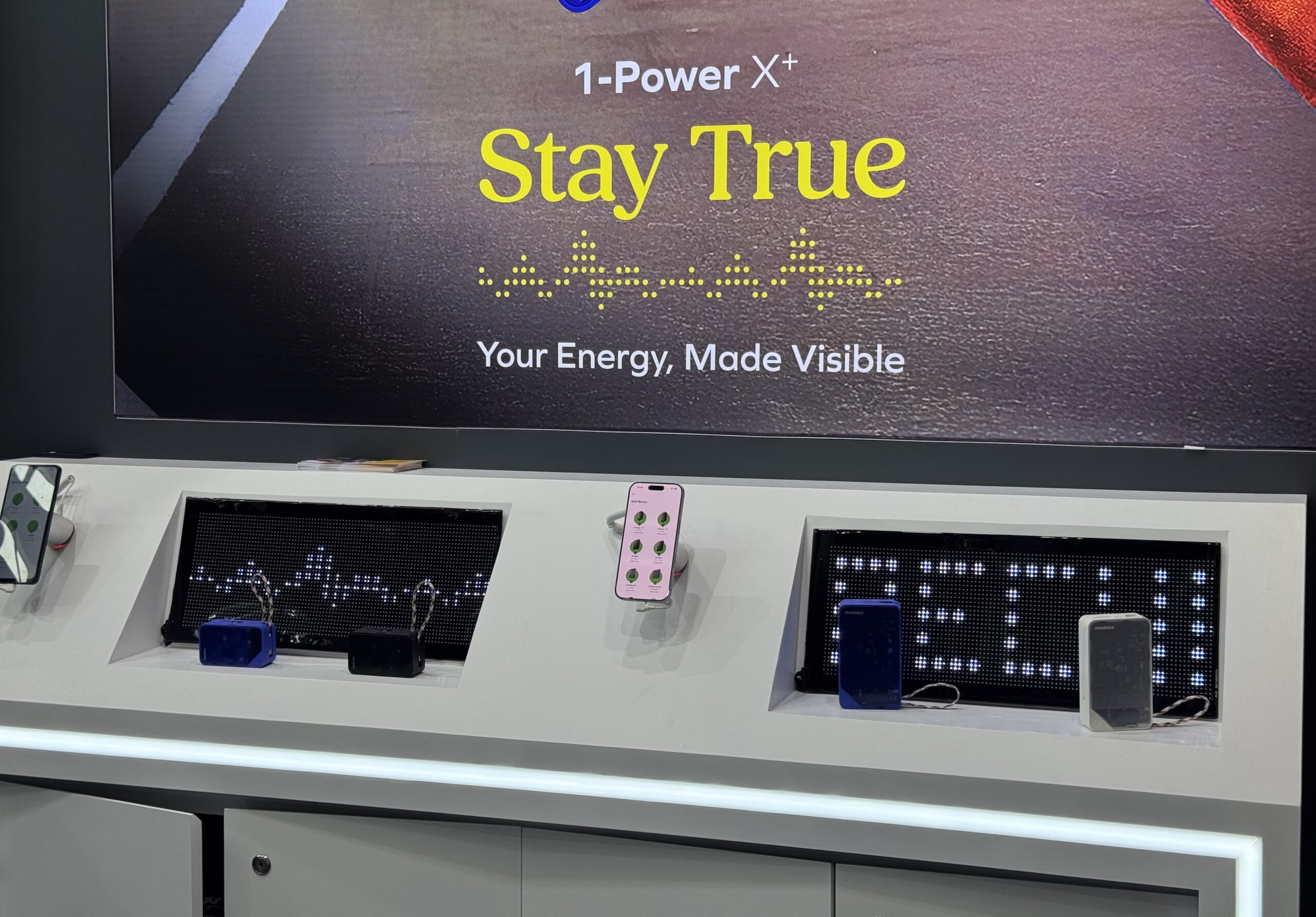
Hong Kong-based accessories brand Momax. Photo credit: Assel Satubaldina/ The Astana Times
The Hong Kong Electronics Fair (Autumn Edition) and electronicAsia, running through Oct. 16 at the Hong Kong Convention and Exhibition Center and hosted by the Hong Kong Trade Development Council (HKTDC), are showcasing developments in robotics, artificial intelligence, semiconductors, smart manufacturing and consumer electronics.
Electronic products accounted for nearly 80% of Hong Kong’s total exports in the first eight months of 2026, highlighting the industry’s importance to the city’s economy, said Kevin Choi, permanent secretary for innovation, technology and industry of the government of the Hong Kong Special Administrative Region.
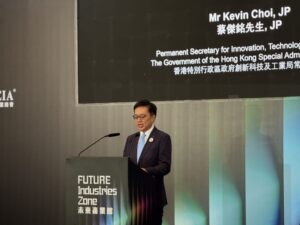
Kevin Choi. Photo credit: Assel Satubaldina/ The Astana Times
“The significance of the industry does go beyond trade figures. Electronics is the foundation of artificial intelligence, advanced computing, smart manufacturing and healthcare technologies and many other industries that will shape our future,” he said.
According to the HKTDC, electronics exports increased 52.8% year-on-year during the period, supported by demand for semiconductors, computer components and other advanced technologies.
However, officials said the city’s ambitions go beyond its established role as an international trading hub. It is increasingly focusing on turning scientific research into commercially viable products and strengthening connections between technology developers, manufacturers and investors.
“The challenge is no longer confined to making a scientific discovery. We must also turn the discovery into a product, validate it in a real setting, establish a viable production process and bring it to the market,” said Choi.
“This is the essence of new industrialization and a practical way to develop new quality productive forces. It connects technology innovation with industry innovation so that research can create real economic value,” he added.
The first day also saw the launch of the Future Industries Zone, a new exhibition platform bringing together more than 100 exhibitors across five areas: advanced computing, manufacturing, microelectronics, marine and quantum technologies, and wellness. The zone is organized by the HKTDC and the Hong Kong Electronic Industries Association, and supported by the Innovation, Technology and Industry Bureau (ITIB) of the Hong Kong SAR Government.
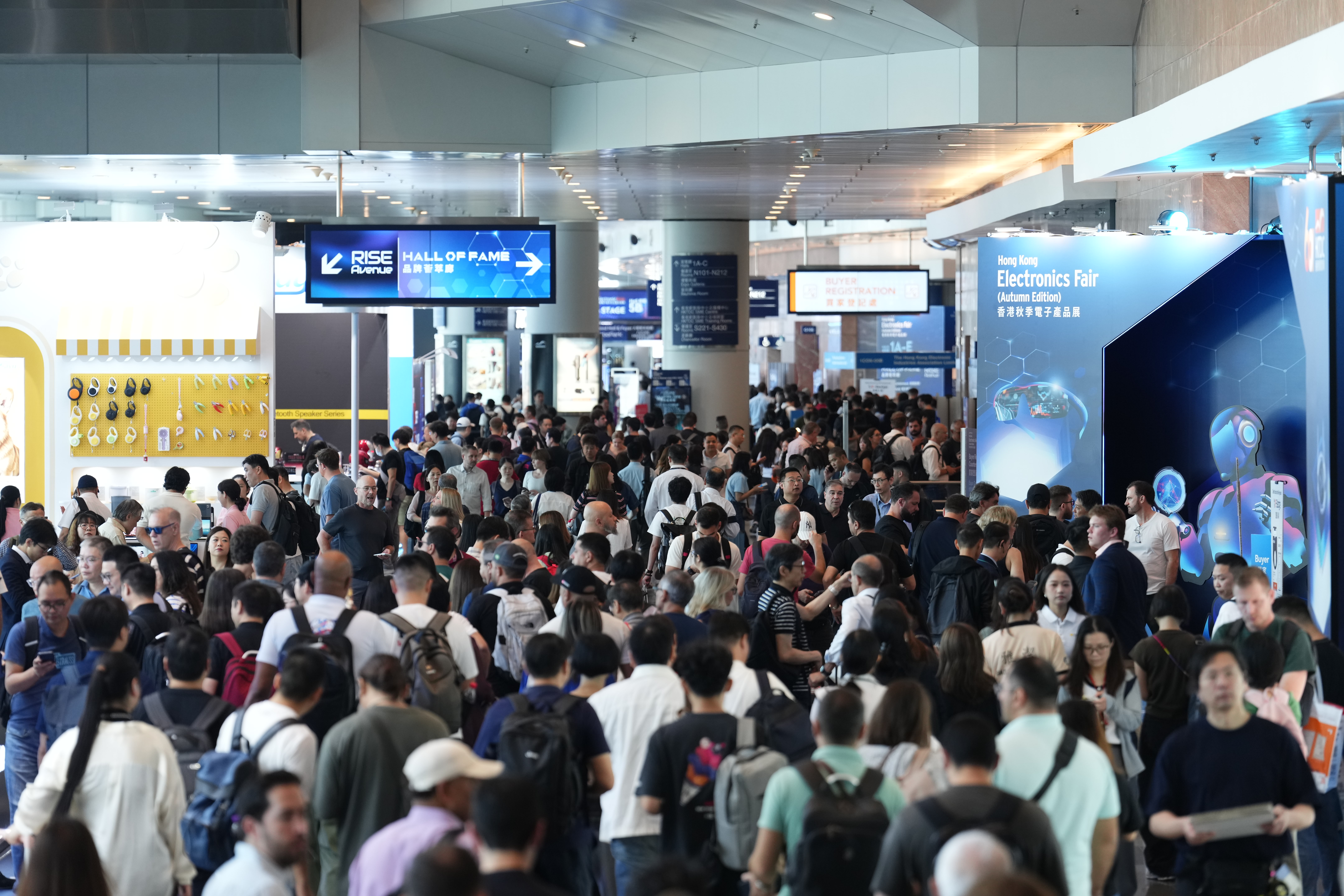
The fairs will run through Oct. 16. Photo credit: HKTDC
The zone is designed to connect research institutions, universities, startups, manufacturers and potential investors, creating opportunities for technology commercialization and industrial partnerships.
Choi said Hong Kong was developing an industrial ecosystem built around three major innovation and technology parks and five research and development institutions, drawing on the manufacturing capabilities and supply chains of the Guangdong-Hong Kong-Macao Greater Bay Area.
One initiative involves the Hong Kong Microelectronics Research and Development Institute.
“They will now support research, proof-of-concept fabrication, pilot production and low-volume production too. The Institute will also take the lead in piloting and operating the first national manufacturing production center to be established in Hong Kong, bringing together resources from Hong Kong, the Chinese mainland and overseas, including local enterprises and startups participating in the zone today, to strengthen our microelectronics ecosystem and accelerate commercialization,” Choi explained.
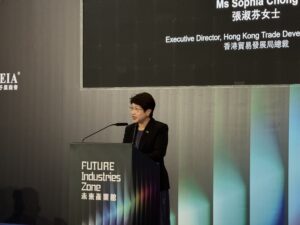
Sophia Chong. Photo credit: Assel Satubaldina/ The Astana Times
Sophia Chong, executive director of the HKTDC, said the electronics industry had undergone a significant transformation, moving from traditional consumer products toward AI-enabled devices and smart technologies.
“Indeed, the Future Industries Zone is only one of the many highlights of this year’s Hong Kong Electronics Fair Autumn Edition and electronicAsia, which brings together over 3,200 exhibitors coming from 15 countries and regions,” she said.
“Another key highlight is the RoboPark. (…) Across the fair, we feature more than 120 robots, including some of the market’s best-selling models,” she said.
Among the exhibitors demonstrating practical applications of artificial intelligence is Xeroptix, which develops vision-based AI systems designed to monitor industrial processes.
Ken Hon, representing the company, told The Astana Times that its technology is primarily used on factory production lines, where cameras and AI systems monitor tasks that still require manual labor.
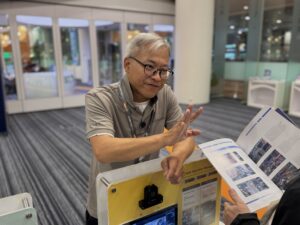
Ken Hon. Photo credit: Assel Satubaldina/ The Astana Times
When a worker skips a step or fails to include a component, the system can issue an immediate alert, allowing the problem to be corrected before the product reaches the end of the production line. Hon said the technology operates independently of an internet connection, processing visual data locally rather than sending entire images to cloud servers.
Such devices have less computing power than cloud-based systems, he said, but local processing can offer advantages in reliability and data privacy.
Consumer electronics companies are also introducing connected features intended to improve product safety and convenience. Hong Kong-based accessories brand Momax demonstrated a power bank that allows users to monitor battery performance through a smartphone application connected via Bluetooth.
The application displays battery capacity, temperature, charging cycles and charging speeds, allowing users to check the device’s condition without physically accessing it. A company representative described the feature as “visible safety,” saying it was designed to give consumers greater awareness of their devices’ performance and potential overheating risks.
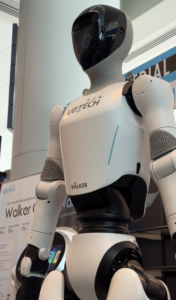
Next-generation full-sized humanoid robot Walker. Photo credit: Assel Satubaldina/ The Astana Times
Alongside the technology displays, the fairs are also placing greater emphasis on international market access. A GoGlobal Connect Zone brings together professional service providers offering advice and support to companies seeking to expand overseas.
Hong Kong’s efforts to help companies expand into international markets also follow a push to strengthen economic ties with Central Asia. In June, Hong Kong Chief Executive John Lee led a business delegation to Kazakhstan, where he identified the country as a potential gateway to the broader Central Asian market and highlighted opportunities for cooperation in trade, finance, logistics and innovation. The delegation, organized by the HKTDC, brought together around 70 business leaders.
The visit also highlighted growing interest in the region’s digital economy and technology sectors, areas that also feature prominently at this week’s electronics exhibitions.
The Hong Kong Electronics Fair, now in its 46th edition, focuses on consumer electronics and emerging technologies, while electronicAsia brings together suppliers of electronic components, parts and related manufacturing solutions. Together, the exhibitions offer a platform for companies to explore how advances in artificial intelligence and industrial technologies can translate into new products, manufacturing capabilities and international business opportunities.
