
ASTANA – The Astana Times has curated a selection of articles from global media outlets covering Kazakhstan. This week’s foreign media digest highlights the Middle Corridor’s growing role, Kazakhstan’s expanding ties with Spain, the region’s critical minerals potential, and more.
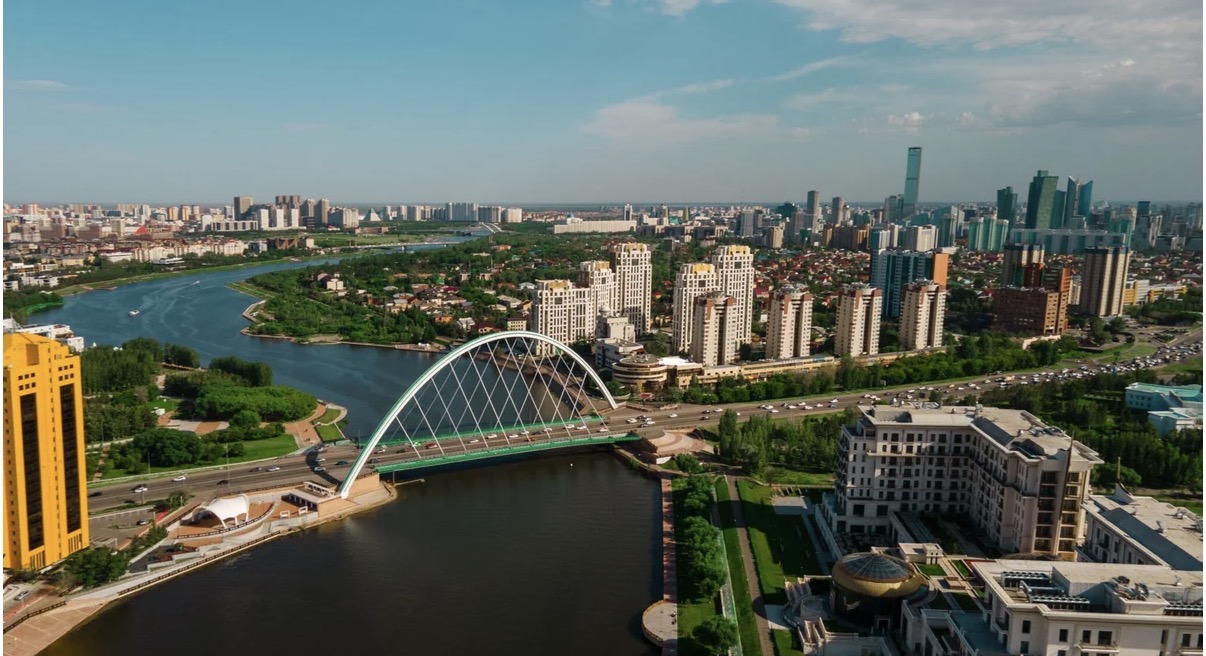
Astana. Photo credit: The Astana Times
Kazakhstan’s skies welcome Central Asia’s first Paragliding World Cup
Around 150 pilots from 33 countries have gathered in Kazakhstan’s Zhetysu Region for Central Asia’s first-ever Paragliding World Cup, reported Euronews on June 17.
Kazakhstan’s Zhetysu Region is hosting the first Paragliding World Cup ever held in Central Asia, attracting around 150 pilots from 33 countries.
Kazakhstan, Spain look to expand trade as bilateral turnover hits $1.93 Billion
The bilateral trade turnover between Kazakhstan and Spain reached $1.93 billion over the past year, highlighting steady economic engagement between the two countries, reported Trend on June 17.
This was announced during the first session of the Kazakhstan-Spain Forum held in Astana, which brought together senior officials, entrepreneurs, and experts to discuss expanding strategic partnerships.
Kazakhstan aims big with Middle Corridor
Kazakhstan is ramping up efforts to develop the Middle Corridor, also known as the Trans-Caspian International Transport Route, as a vital logistics artery connecting China and Europe, with plans to invest $10 billion to expand its railway and infrastructure capacity to meet surging cross-border freight demand, China Daily reported on June 16.
Talgat Aldybergenov, chairman of Kazakhstan’s national railway company Kazakhstan Temir Zholy (KTZ), said the volume of Chinese goods transported to Europe via Kazakhstan has seen a notable increase following recent global shipping disruptions.
Middle Corridor reshaping Eurasia: How Azerbaijan and Kazakhstan are building a new connectivity hub
The rapid development of the Middle Corridor is increasingly drawing the attention of policymakers, investors and geopolitical analysts across Eurasia. What was once viewed primarily as an alternative transportation route connecting China and Europe has evolved into a broader strategic project encompassing logistics, trade, infrastructure, energy cooperation and regional political coordination, reported News.Az on June 16.
Against the backdrop of geopolitical turbulence, sanctions, disruptions in global supply chains and growing competition over transit routes, the Trans-Caspian International Transport Route, widely known as the Middle Corridor, is acquiring significance that extends far beyond transportation. The corridor is gradually reshaping the economic geography of Eurasia while strengthening the strategic roles of countries located along the route.
Kazakhstan and Azerbaijan have emerged as two of the principal beneficiaries of this process. Their growing cooperation in transport, shipping, port development and regional connectivity projects is helping transform the Caspian region into a major link between Asia and Europe.
Opinion: data sovereignty will decide Central Asia’s critical minerals moment
The Times of Central Asia published an article on June 17 examining the role of geological data, transparency, and institutional capacity in turning Central Asia’s mineral wealth into long-term national benefit.
“This is sovereignty in a practical form. The point is not to close the door to foreign capital or technical expertise. Central Asia will need both. The point is to ensure that the public side of the table has a master copy of the evidence. When the state owns the underlying data, investors can still compete on capital, technology, processing capability, logistics, and market access. What they should not control is the government’s basic understanding of its own resource base,” reads the article.
