
ASTANA — Archaeologists in Kazakhstan’s Mangystau Region discovered coins and seals, among other artifacts at the ancient settlement of Karakabak, indicating trade links with Rome, Persia, India and China, regional officials said during a May 12 site visit. According to researchers, the findings point to Mangystau’s role as a major trade hub along the Silk Road nearly 2,000 years ago.
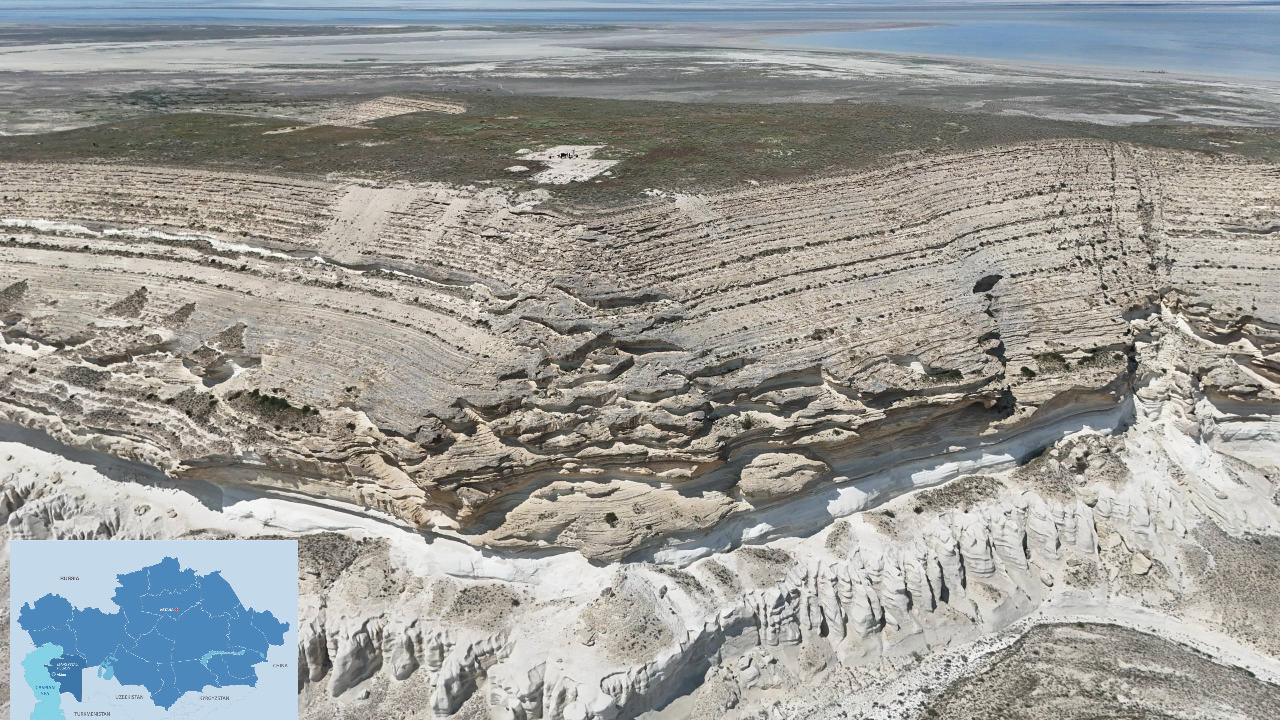
Aerial view of the Karakabak archaeological site in Mangistau Region. Photo credit: The Mangistau Region Akimat press service. Click to see the map in full size. The map is designed by The Astana Times.
“Karakabak is a convincing proof that Mangystau in ancient times was one of the important centers of civilization, international trade and cultural exchange. There was a developed urban center here with craft production, maritime trade and a broad network of economic ties. These discoveries change the familiar understanding of our ancestors’ past,” said regional akim (governor) Nurdaulet Kilybai.
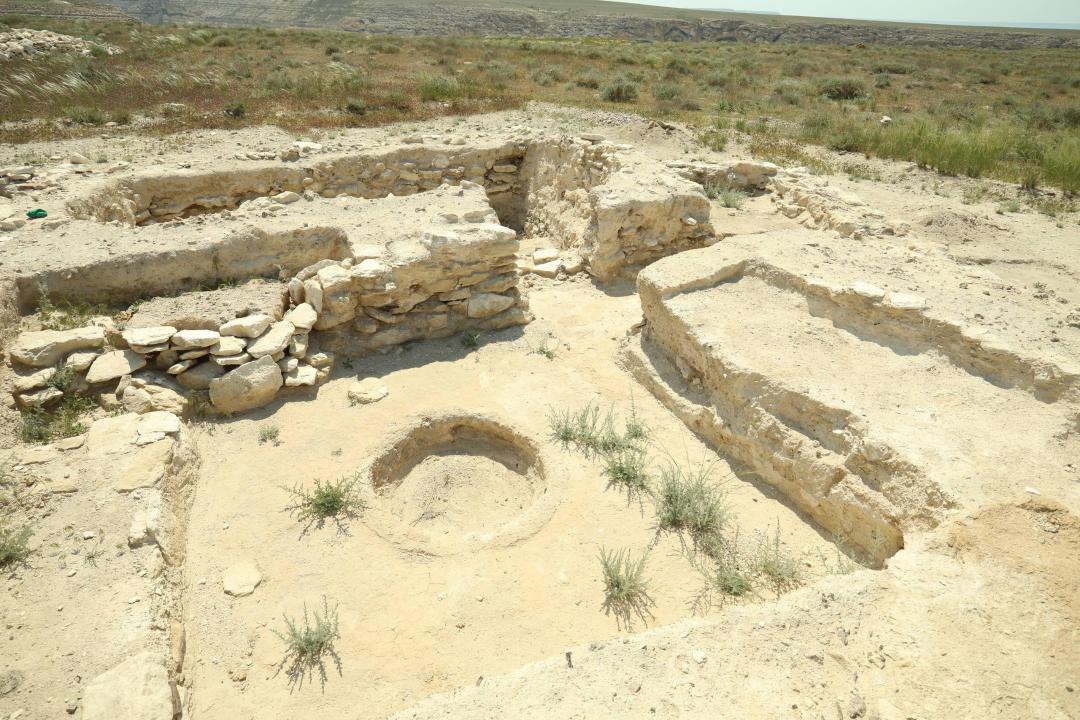
Excavation site at the ancient Karakabak settlement in Mangistau Region. Photo credit: The Mangistau Region Akimat press service.
“They show that the population of the Great Steppe was engaged not only in nomadic cattle breeding, but also created developed cities, participated in international trade and was part of the global processes of its time,” he added.
Ancient trade hub on the Caspian
Archaeologists studying Karakabak since 2017 have uncovered approximately 150 coins, Byzantine trade seals, ceramics, jewelry and traces of an ancient port, presenting evidence that major international trade routes once crossed present-day Mangystau.
Karakabak was an important trade and craft center between the first and sixth centuries A.D. Scientists say the settlement served as a strategic hub along the northern branch of the Great Silk Road, linking China and India to the Roman Empire via trade routes that crossed the Caspian region.
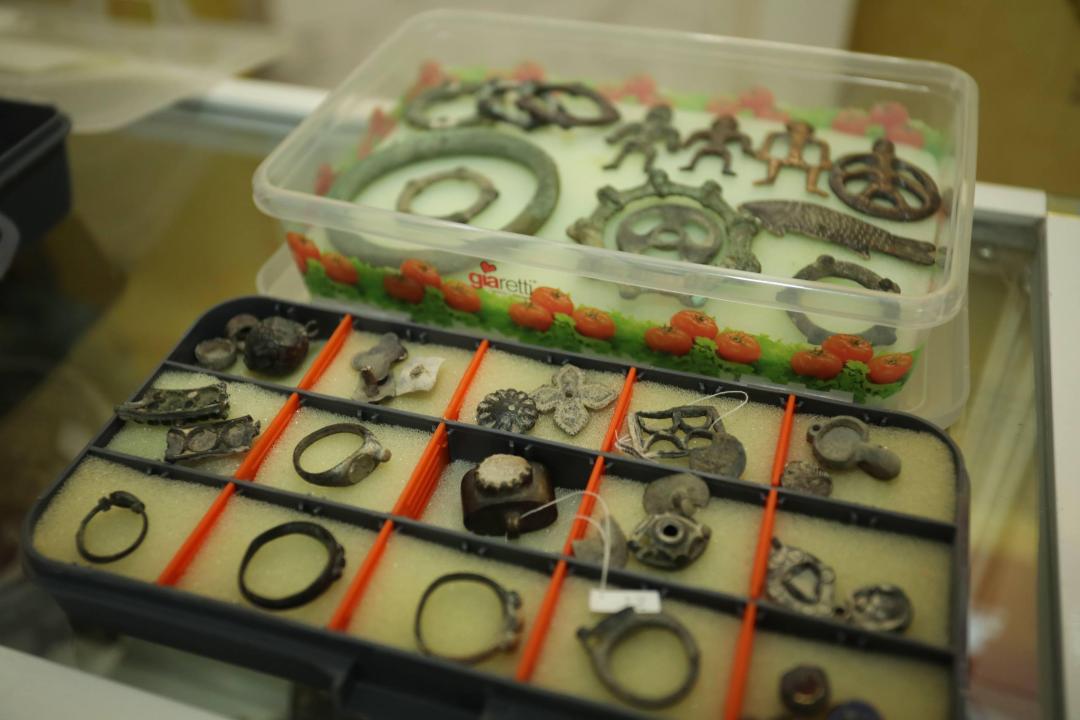
Artifacts from the ancient Karakabak settlement in Mangistau Region. Photo credit: The Mangistau Region akimat press service.
According to archaeologist Andrei Astafyev, among the most notable discoveries is a Byzantine lead trade seal dating to the reign of Emperor Justinian I.
“We found a Byzantine lead trade seal from the era of Justinian. These are extremely important findings. For our region, they are exceptionally rare discoveries, and they show how deeply Mangystau was integrated into the ancient system of trade relations,” he told Khabar news agency.
Researchers also uncovered evidence of craft workshops and active maritime trade, which points to a highly developed urban and economic culture in the region during the ancient period.
Artifacts recovered from the site are currently stored in the laboratory of the Mangystau Regional Museum of History and Local Lore named after Abish Kekilbayuly, a prominent Kazakh writer and statesman. The collection includes ancient cups, ceramic fragments, gold jewelry and signet rings estimated to be around 1,500 years old.
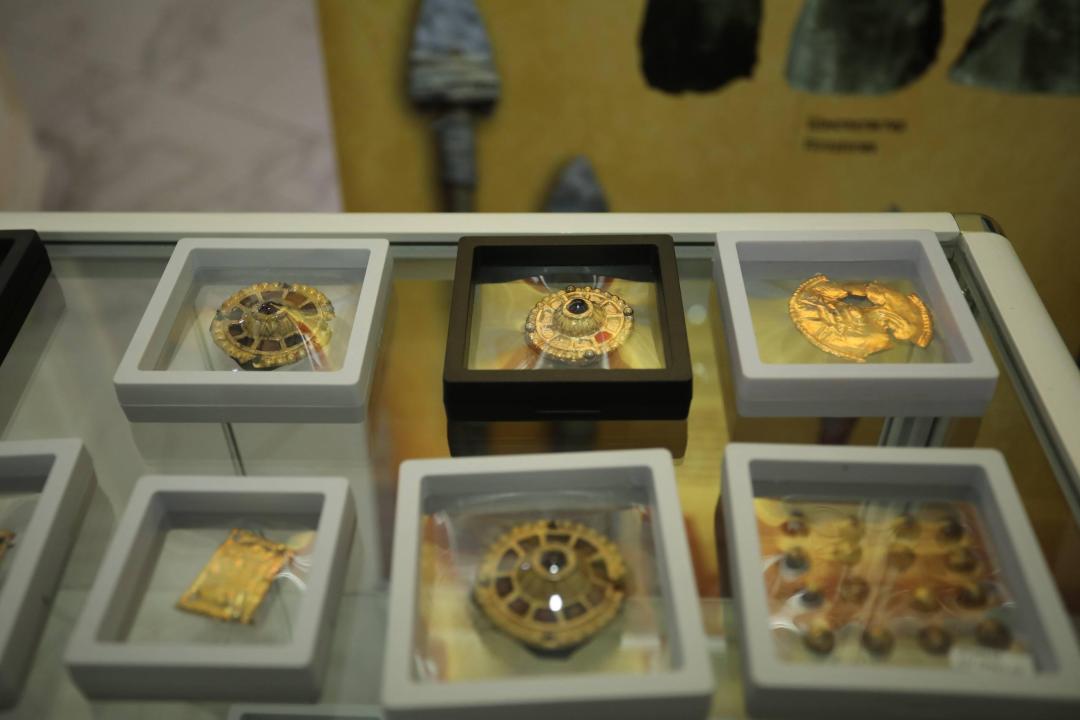
Artifacts discovered at the Karakabak settlement in Mangistau Region. Photo credit: The Mangistau Region Akimat press service.
According to the Khabar news agency, archaeologists say one gold earring likely belonged to a woman of high social status. Another notable find is a signet ring engraved with a human face and arrows, which specialists say was typically associated with elite figures.
Nurtas Sali, head of the Mangystau Region’s culture, language development and archives department, said researchers also see a possible connection between Karakabak and historical maps of the Caspian region.
“On an ancient map of the Caspian Sea compiled by the scholar Claudius Ptolemy, there is a city called Aspabota. Scientists assume this may refer specifically to Karakabak. The total area of the site covers approximately 12 square kilometers,” said Sali.
“Recently, representatives of the regional akimat and Kazakhstan’s Institute of Archaeology visited the site to review the research results and discuss plans for further joint work,” he added.
Tourism and preservation plans
Regional authorities and archaeologists also proposed developing archaeological tourism around the site by creating an open-air museum, a scientific research base, tourism infrastructure and specialized guided routes.
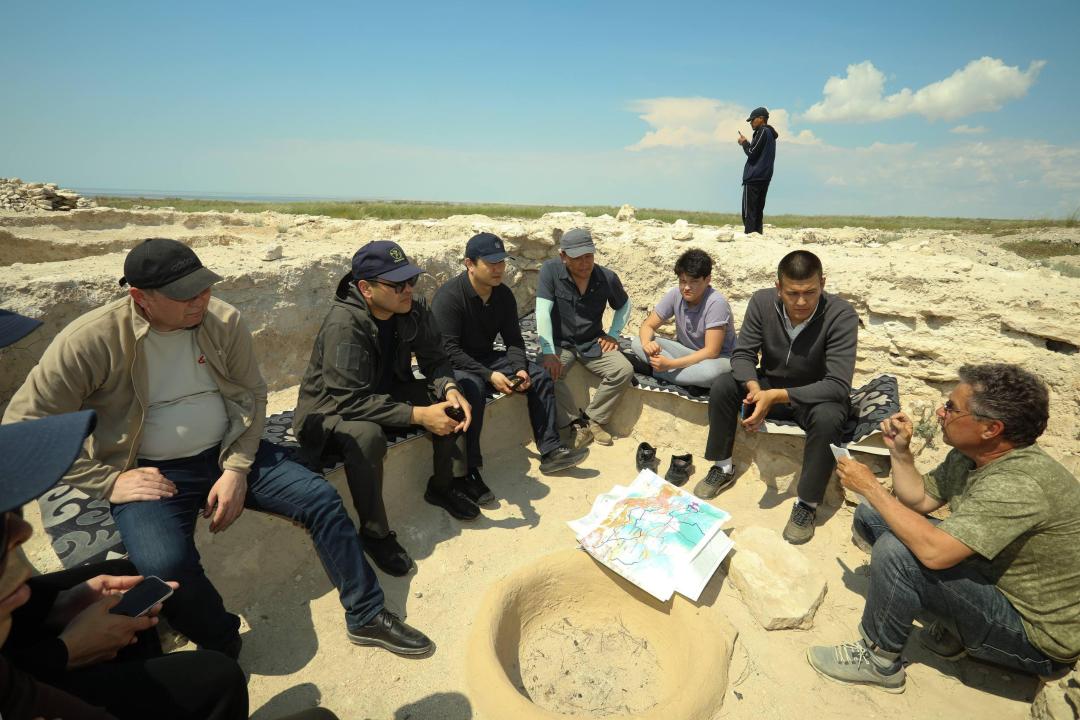
Officials visit the ancient Karakabak settlement in Mangistau Region on May 12. Photo credit: The Mangistau Region Akimat press service.
Excavations at Karakabak are expected to continue at the end of May as researchers continue studying the settlement and its role in ancient trade networks across Eurasia.
According to the regional akimat, local authorities and experts will continue working together on further research at the site and efforts to preserve and promote Mangystau’s historical heritage.
