
ASTANA – Kazakhstan is accelerating restoration of the North Aral Sea while advancing large-scale water management reforms, including new reservoirs, irrigation modernization, water-saving technologies and industrial water reuse.
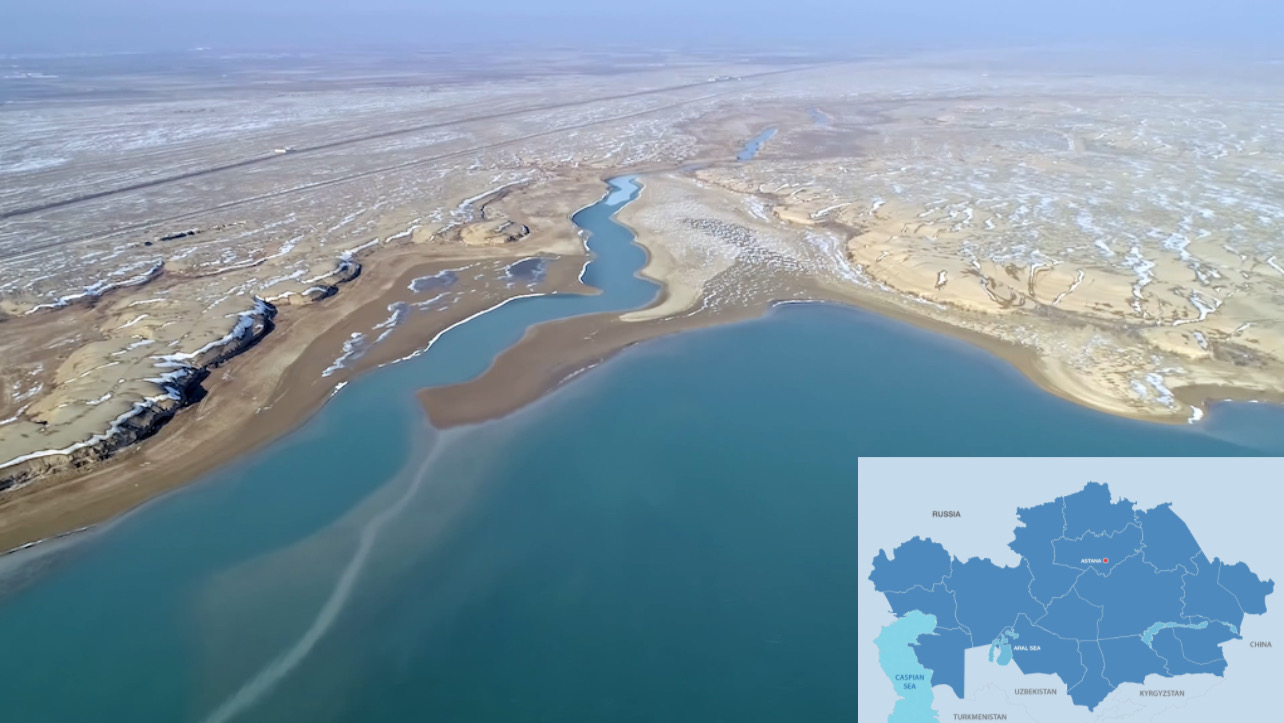
Photo credit: adb.org. Click to see the map in full size. The map is designed by The Astana Times.
North Aral restoration
During a working visit to the Kyzylorda Region, Minister of Water Resources and Irrigation Nurzhan Nurzhigitov met with fishermen in the Aral district to discuss measures to preserve the North Aral Sea. He said the government, together with the World Bank, has prepared the second phase of the North Aral restoration project, which includes reconstructing the Kokaral Dam to raise the sea level and increase water storage, reported the ministry’s press service on July 17.
Since Oct. 1, 2025, Kazakhstan has directed 1.4 billion cubic meters of water into the North Aral Sea through the Syr Darya River. During the current irrigation season, water is being released into the sea at a rate of 40 cubic meters per second.
The sea’s volume has reached 23.5 billion cubic meters, while salinity has declined by 10% compared to last year to 7.9 per mille. Fishermen harvested 4,200 tons of fish during the first half of the year.
Local fishermen called for stricter enforcement of agricultural water-use limits and proposed constructing the Amanotkel hydraulic structure to increase water releases into the Syr Darya River. Nurzhigitov instructed the Water Management Committee to prepare project documentation.
Balkhash preservation
Nurzhigitov said Kazakhstan is continuing efforts to preserve Lake Balkhash. Over the past two years, around 30 billion cubic meters of water have been directed to the lake, helping stabilize its water level. A master plan for preserving the Balkhash ecosystem through 2040 is being developed with support from the French Development Agency (AFD).
Water sector modernization
The government’s water management strategy through 2030 includes construction of 42 new reservoirs, reconstruction of 37 existing reservoirs, modernization of 14,500 kilometers of irrigation canals, wider adoption of water-saving technologies, digitalization of water management, and improved flood and drought forecasting, reported Kazinform on July 20.
Agriculture accounts for around 60% of Kazakhstan’s total water withdrawals, making irrigation efficiency a key priority. By the end of 2025, water-saving technologies covered 543,500 hectares, conserving approximately 874 million cubic meters of irrigation water. The government aims to expand their use to 1.3 million hectares by 2030, saving around 2.2 billion cubic meters of water annually.
Industry, which accounts for 30% of national water consumption, is also undergoing reform. Under the new Water Code, enterprises will gradually transition to recycled and reused water systems over the next seven years, with the goal of increasing the share of reused water to 28% by 2030.
Developing human capital
The ministry has expanded water conservation education programs, reaching more than 3.3 million students this year. It has also launched nationwide campaigns to restore springs and water bodies and is carrying out digital registration of 2,772 natural springs.
Kazakhstan has expanded training for water specialists by increasing the number of universities and colleges offering water-related programs, while government-funded scholarships have risen to 1,000. Salaries at the state-owned Kazvodkhoz enterprise have more than doubled since 2024, reaching an average of 326,000 tenge.
