
ASTANA – Kazakhstan marks the 130th anniversary of Seraly Kozhamkulov, one of the founders of the Kazakh national theater and a towering figure in the country’s cultural history, on May 5.
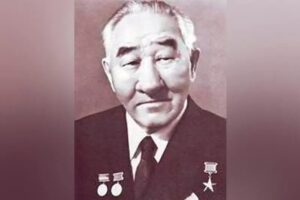
Seraly Kozhamkulov, a pioneering actor of the national stage and a People’s Artist of the Kazakh SSR. Photo credit: Wikipedia
Kozhamkulov was born in 1896 in a village in the Kostanai Region. From 1913 to 1916, he studied at the Uazifa school in Troitsk, and from 1920 to 1922 at the Tatar Institute of Education in Orenburg. In 1919, he joined a Red partisan unit led by Alibi Zhangeldin, a leader of the 1916 Central Asian uprising and a Civil War figure, and later worked as an investigator in judicial bodies.
His artistic calling was nurtured by relatives and the writer Beimbet Mailin. While studying and working, Kozhamkulov performed in amateur theater before joining the Kyzyl Keruen troupe in Orenburg in the 1920s, where prominent Kazakh writer Saken Seifullin recognized his talent.
During his time in Orenburg, Kozhamkulov formed close ties with leading figures of Kazakh literature, including Sabit Mukanov, Gabit Musrepov and stage actor Kapan Badyrov. In 1922, together with Mukanov, he appeared in a production of Mukhtar Auezov’s tragedy “Enlik-Kebek.” In 1925, he was invited to serve as a director at the newly established first professional Kazakh theater in Kyzylorda.
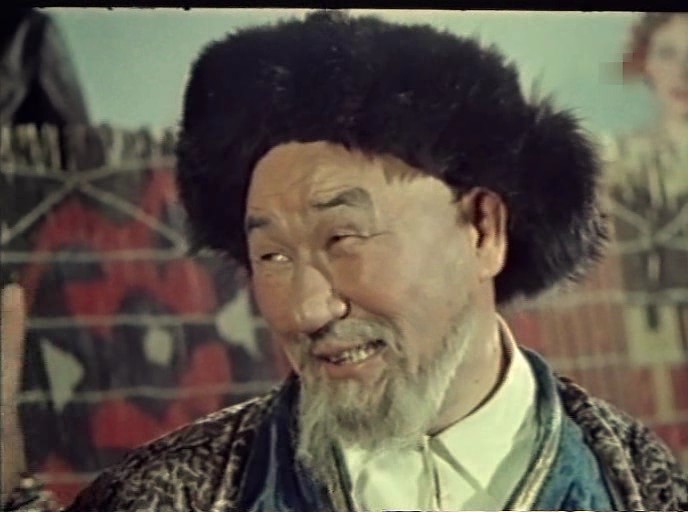
An excerpt from the 1955 film “The Girl-Jigit,” featuring Kozhamkulov.
Known for his distinctive delivery, Kozhamkulov brought depth to his roles, often captivating audiences regardless of language. His improvisations were so compelling that Auezov incorporated them into his scripts, despite Kozhamkulov having no formal acting education.
On Jan. 13, 1926, his production of “Altyn Sakina” (the Golden Ring) premiered. Under his direction, the theater staged works including Auezov’s “Baibishe-Tokal,” Mailin’s “Khalyk Mektebi” and “Kalpe,” Omirbek Ospanov’s “Zarlyk,” and Nikolai Gogol’s “Marriage.”
He created a wide range of memorable stage characters, performing works from Kazakh, Russian and world drama with ease and precision. In the 1930s and 1940s, he also contributed to the development of national cinema, appearing in films such as “Songs of the Steppe,” “Amangeldy,” “Songs of Abai,” “Lights of Baku,” “Poem of Love,” “The Girl-Jigit,” “Our Dear Doctor,” and “The Beardless Trickster.”
For his contributions to theater and film, Kozhamkulov received numerous Soviet and Kazakh SSR state awards, and was named People’s Artist of the Kazakh SSR.
Colleagues and contemporaries remembered him as a warm and modest person who remained grounded despite his recognition. On stage, he portrayed both dramatic and comedic characters, while in cinema he often played ordinary people with notable charisma.
Family and legacy
Kozhamkulov met his wife, Hadisha, in his native village. The couple had 11 children, seven of whom survived. His daughter Balym recalled that he first heard a violin in the village and later encouraged his children to pursue music, ensuring they attended music school, while allowing them to choose their own professions.
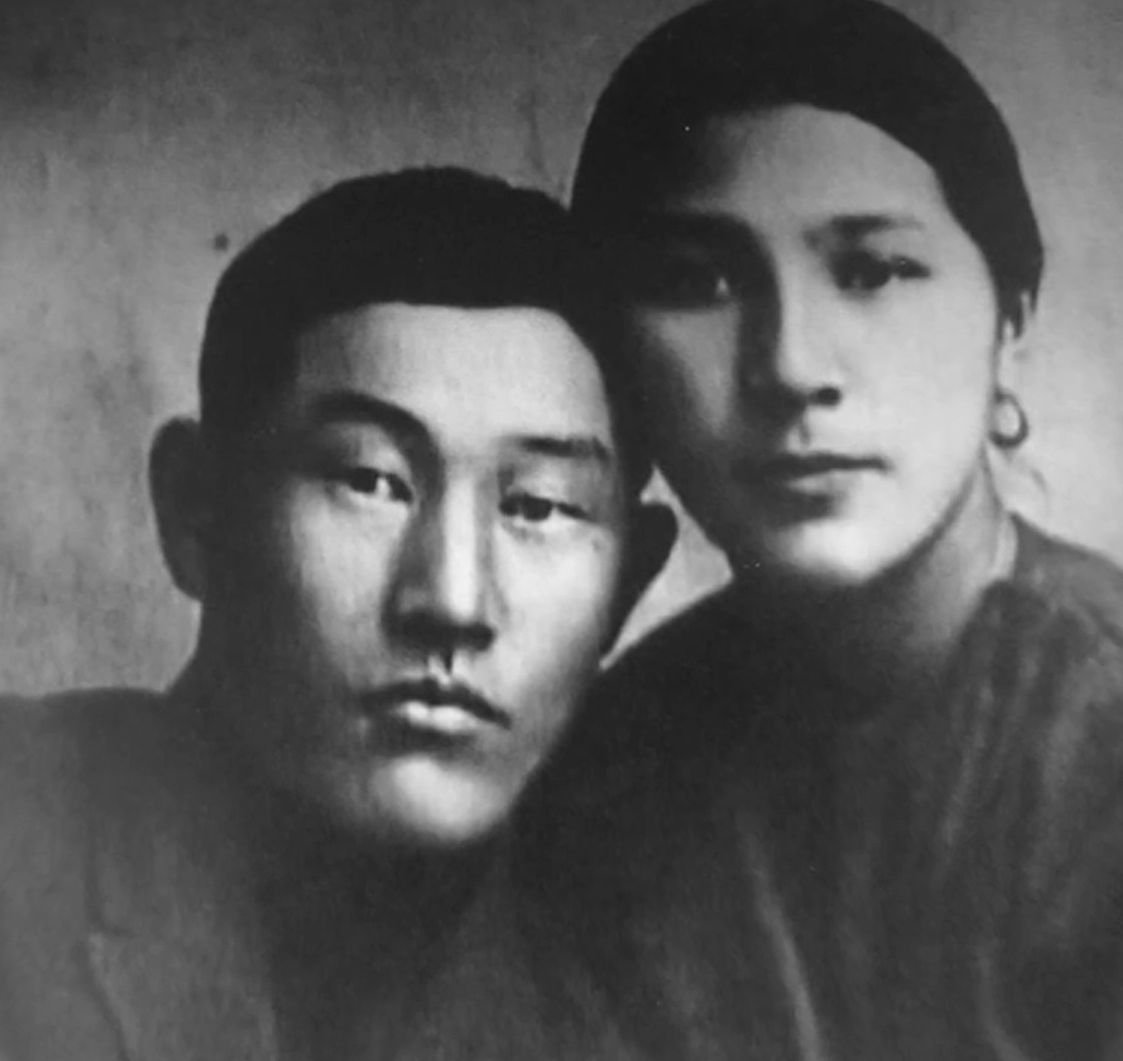
Kozhamkulov met his wife, Hadisha, in his native village. Photo credit: e-history.kz
His eldest daughter, Baldyrgan, became Kazakhstan’s first paleozoologist. Fossils she brought from Novosibirsk were used to reconstruct a mammoth now displayed at the Museum of the Academy of Sciences. His youngest daughter, Salikha, initially pursued art before becoming a teacher of Russian language and literature.
She recalled his approach to parenting in an interview: “He didn’t take us by the hand to universities or tell us what to study. He was attentive, we attended premieres, studied music, and he knew what was in our diaries. But at 18, he told each of us: ‘I have done my duty. Now choose your own path and live independently, as long as you don’t bring dishonor to my name.’ We understood that clearly.”
Seraly Kozhamkulov died on Dec. 31, 1979, in Almaty. His life and career were documented in the film “All His Life.” In 2019, director Alexei Kamensky released the documentary “Serke Kozhamkulov: Acting for Real” as part of the “Kazakh Renaissance” series, highlighting his role as a founder of Kazakhstan’s professional theater and a leading figure of the national intelligentsia.
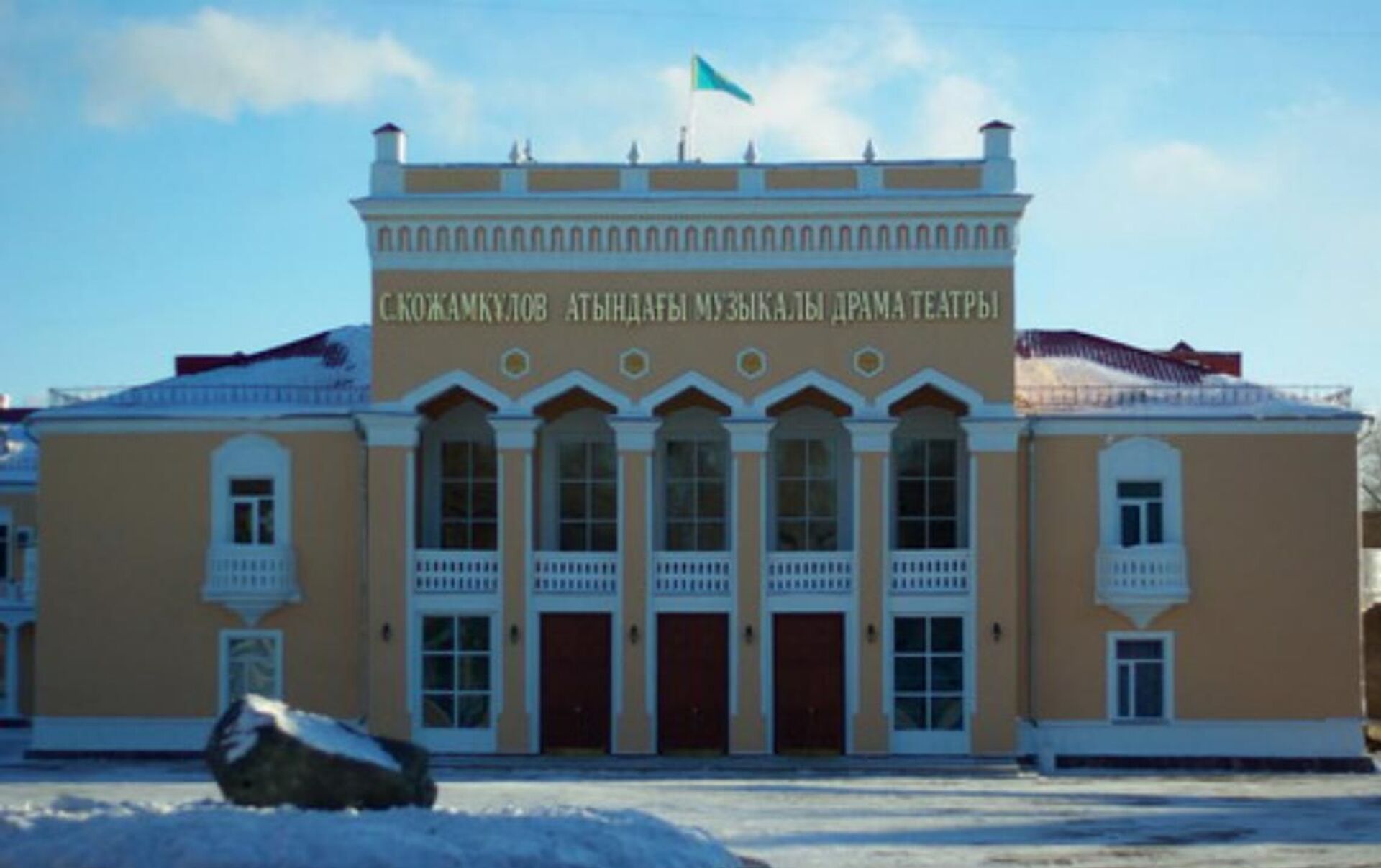
Photo credit: The Zhezkazgan Kazakh Musical Drama Theater
The Zhezkazgan Kazakh Musical Drama Theater bears his name, reflecting his enduring influence on the country’s cultural heritage.
