
ASTANA – A rare selection of Central Asian artworks will be on display as part of the Arts of the Islamic World and India sale from April 24 in London, reported Sotheby’s press office. The sale includes manuscripts, metalwork, textiles and ceramics from the 7th century and up to the 19th century.
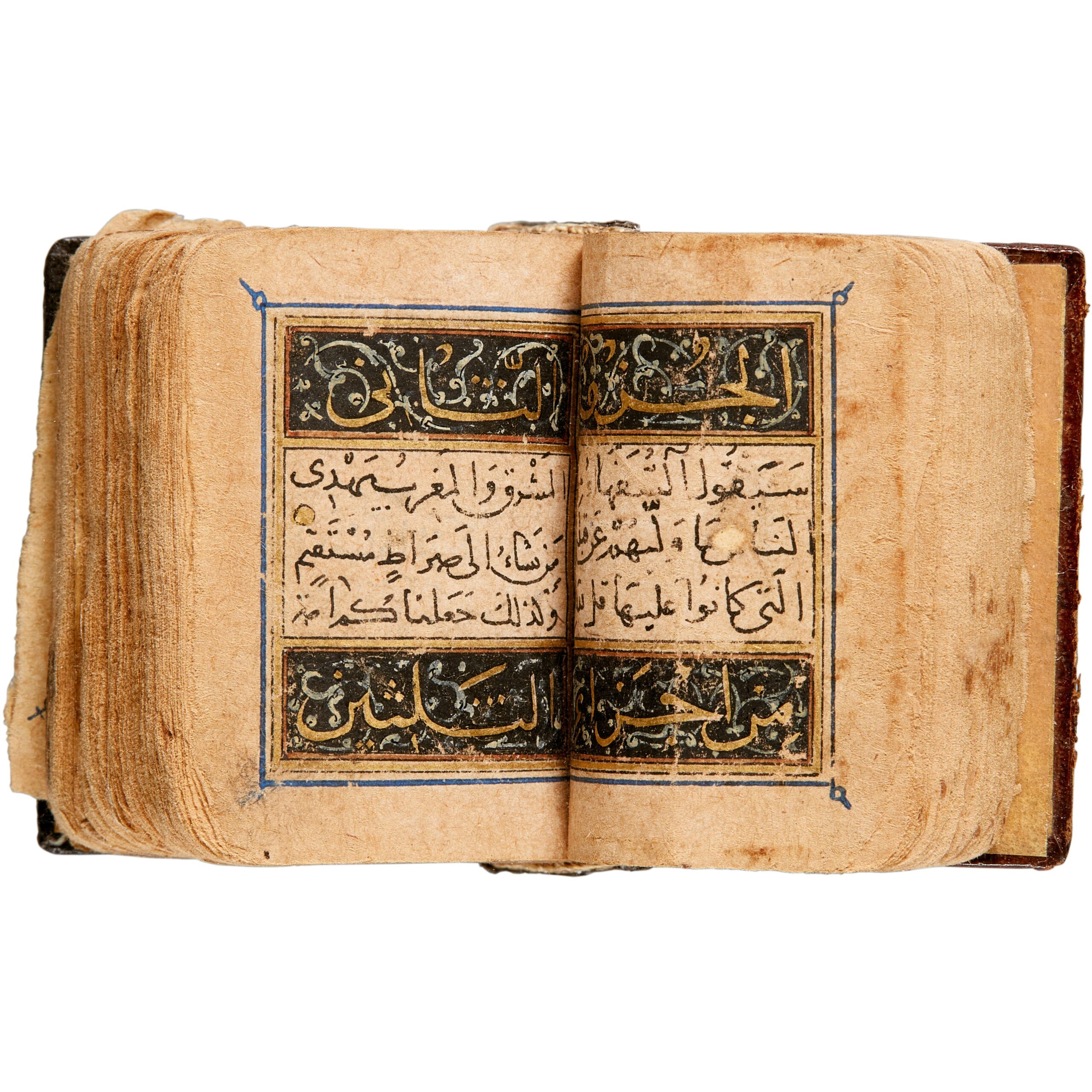
An illuminated miniature Qur’an section (juz’ I to juz’ V), Persia, possibly Herat, late Timurid, late 15th century. Sotheby’s.
“The Central Asian lots form around 10% of the April sale,” Sotheby’s Specialist in Islamic and Indian Art Frankie Keyworth told exclusively to The Astana Times. “Our category is very broad covering various geographies and dynasties from the 7th to the 19th century so Central Asian works have been well-represented in our sales for many years, but the recent market for these works is particularly buoyant. In our previous sale last October, we saw works such as a line from the ‘Baysunghur’ Qur’an or a parcel-gilt silver cup more than double their pre-sale estimates.”
Keyworth noted the increased interest in Central Asian artworks among collectors. This reflects an interest particularly in the interactions and cross-influences between cultures, and artistic production from Central Asia as well as historic trade through the region is incredibly important in this regard.
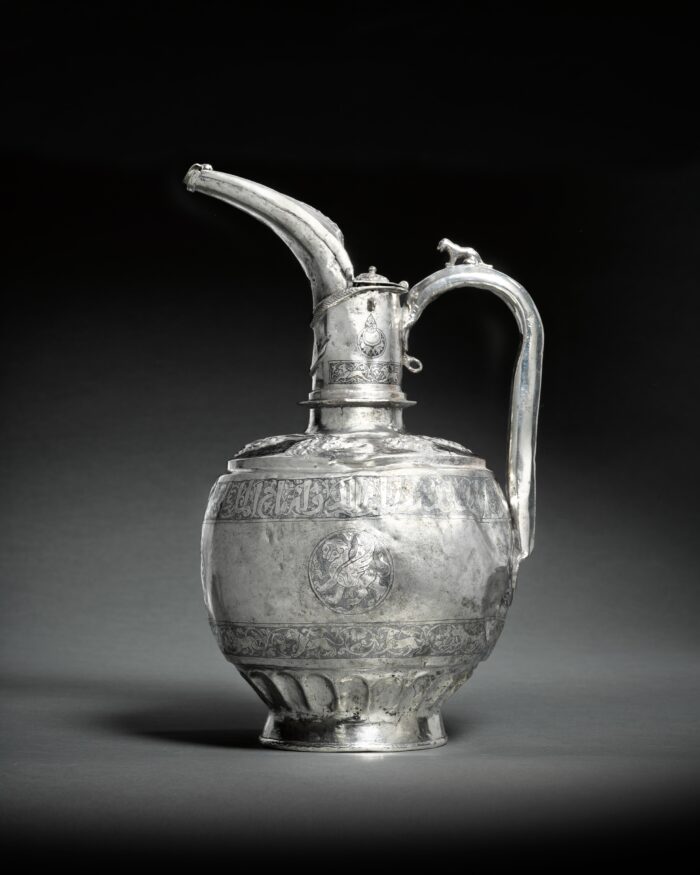
A large nielloed silver ewer, Persia or Central Asia, 12th/13th century. Photo credit: Sotheby’s.
“Museum exhibitions exhibiting classical Central Asian arts have increased attention to these areas over the years such as “When Silk was Gold,” or “The Legacy of Genghis Khan: Courtly Art and Culture in Western Asia, 1256-1353” at the Metropolitan Museum of Art, or more recently the “Silk Roads” exhibition at the British Museum, and exciting events such as the Bukhara Biennial in Uzbekistan also promote this within the contemporary field,” she said.
According to Sotheby’s, a nielloed silver ewer is one of the main objects due to its rarity. The jug with calligraphic and animated animal decoration is attributed to Northeast Iran and sometimes modern Afghanistan. Its ornament is closely related to vessels from the celebrated 10th–11th century Harari Hoard, named after collector and researcher of Islamic metal vessels Ralph Harari.
The authentic textile collection includes a Mongol ‘Cloth of Gold’ panel (mid-13th century). The lampas panel is woven of silk and gold-wrapped threads made from fine gold leaf applied to a paper or animal-based core.
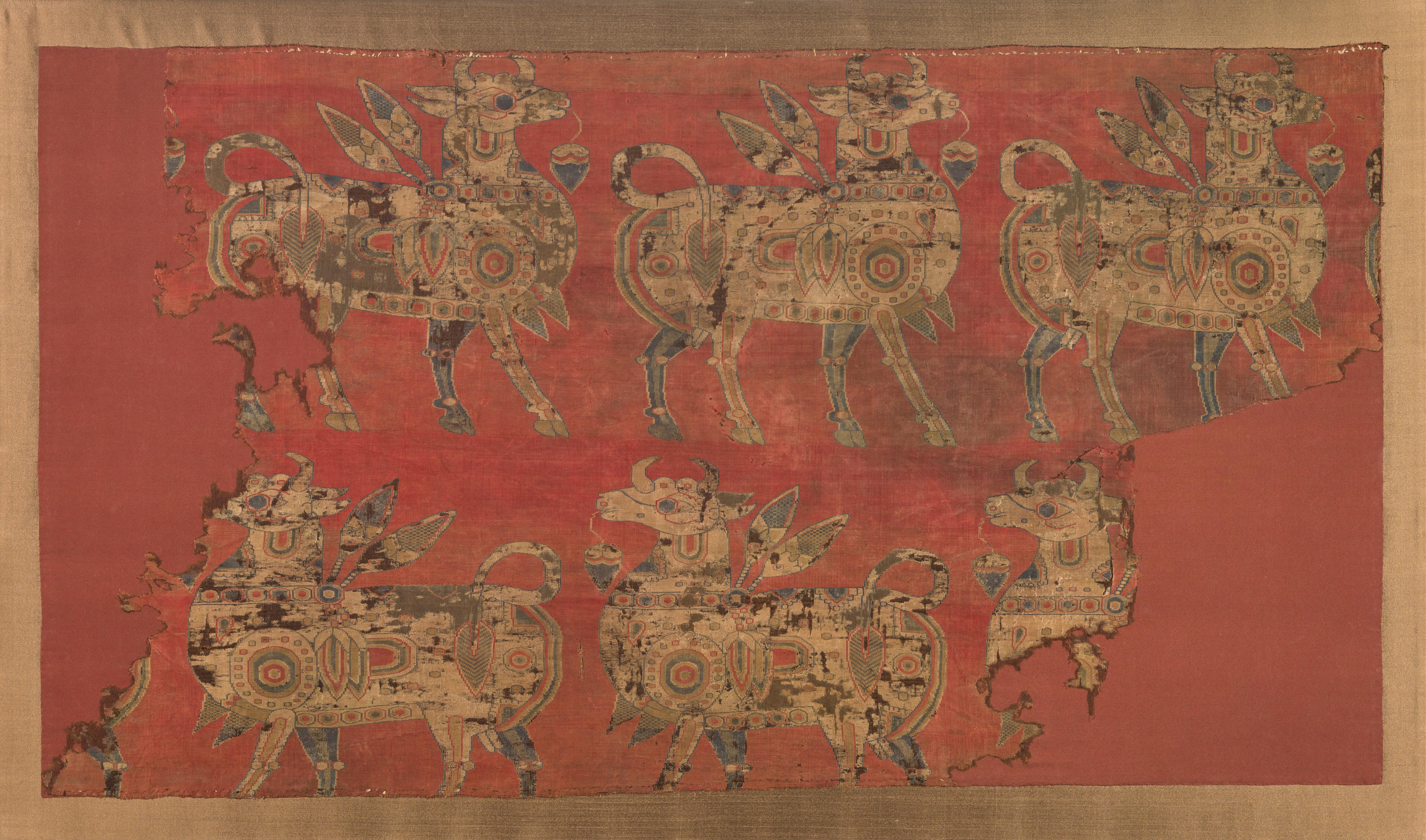
A silk samite fragment with winged bulls, Central Asia, Sogdiana, 7th/8th century. Photo credit: Sotheby’s.
Among others, the sale also presents a silk samite fragment with winged bulls (7th/8th century), a 14th-century embroidered robe from Persia or Central Asia, an early 19th-century Shakhrisabz suzani found in Uzbekistan and a rare early brazier with openwork decoration.
