
Walk through any part of our city, and you will see life everywhere. You will also notice risks that affect everyone: from poorly lit streets to crowded intersections. Keeping our city safe is not just the job of the police; it depends on planning, solid infrastructure, and strong communities. If we ignore these rules, our city could become a place people fear rather than enjoy.
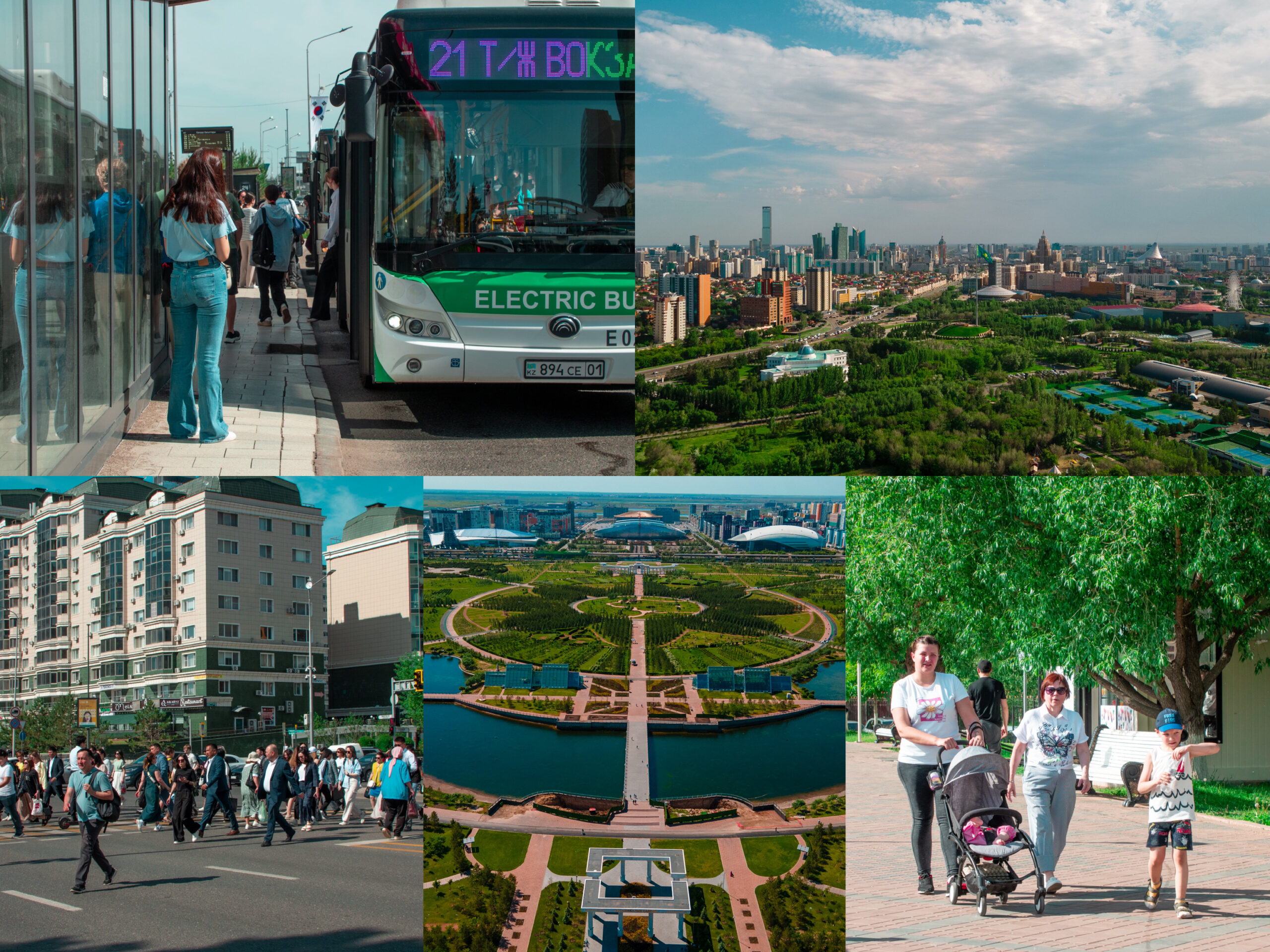
Photo credit: The Astana Times
When people talk about city safety, they often rely on statistics: crime rates, rankings, official reports, and numbers. However, for many residents, especially parents, safety starts with the yard outside the building, the playground, or the street a child crosses on the way to school.
In recent years, Astana has been changing in visible ways. Recently, the city ranked among the world’s top 100 safest cities in the Numbeo international ranking. In just one year, the city improved its position by 24 places, moving from 105th to 81st. I believe this result reflects systematic work across several areas at once.
Safety depends on many factors. It includes urban planning, transport management, public order, social responsibility, and, nowadays, digital solutions.
Smart City as a practical tool

Dana Omirgazy.
The Kazakh capital is implementing the Smart City project as one of the key directions of the country’s digital transformation. The project combines the automation of city services, the development of transport infrastructure, increased energy efficiency, enhanced public safety and environmental monitoring. The Smart City aims to manage the city more efficiently and respond to problems faster.
Within this project, Astana is developing a large digital infrastructure. A Situational Center and a modern Data Processing Center are being built. More than 20,000 intelligent video cameras are being installed across the city. These systems are designed to help city services and emergency responders work together in real time. The transition from fragmented systems to a single platform enables city authorities to see the full picture and act more quickly when something happens.
Video surveillance powered by artificial intelligence is often discussed in public with caution. People worry about privacy and data protection, while city authorities assure that all digital solutions will operate strictly within the law and with respect for personal data.
The Smart City project is also an economic initiative: it attracts investment, facilitates IT development, and creates new jobs. At the same time, it highlights the need for qualified specialists and cooperation between the public and private sectors.
Astana’s experience is planned to be scaled to other cities across Kazakhstan. Elements of smart transport, environmental monitoring, and public safety systems are planned to be introduced in the regions.
Schools as a priority
For parents, school safety is one of the most sensitive topics. A safe city must start with safe schools. A survey conducted by the Astana Public Council found that 85% of respondents named protecting children and schools as their top priority.
Today, one of Astana’s schools is introducing AI-based video monitoring systems designed not only to record events, but to analyze behavior patterns and identify aggressive actions in real time.
If an incident occurs, school administrators receive immediate information. This allows them to react quickly, involve parents, and work with psychologists if needed. The project focuses on prevention, not punishment. Some systems also analyze emotional states to provide additional support to the child if repeated signs of aggression are detected.
Urban environment
Amid modern buildings, families find safe and welcoming parks to enjoy together.
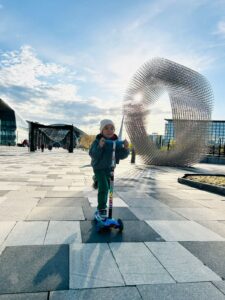
Safety is not created by cameras and laws alone. It grows from the urban environment itself. In recent years, Astana has become greener and more welcoming, with new parks, pedestrian areas, and public spaces. Children’s playgrounds are being renewed, and in many neighborhoods, old, worn-out areas have already been replaced with safe, modern places for kids to play.
These changes may seem simple, but they have a real effect. Well-lit, clean, and active spaces reduce risks and encourage positive behavior. When people use public areas and when families spend time outdoors, they expect to feel safe and protected.
Another visible change in the urban environment is the growing number of outdoor sports facilities. Street workout zones and exercise equipment can now be found not only in large parks, but also in residential areas.
These spaces give people of all ages a healthy way to spend their time, reduce idle behavior, strengthen the nation’s well-being, and help create a real sense of community.
Transport and order
Traffic safety is a key part of how safe people feel in a city every day. Astana is implementing intelligent transport management systems that monitor traffic flows, predict congestion, and optimize routes. Electronic ticketing systems are already widely used, with millions of transport cards and hundreds of thousands of daily trips.
These systems make public transport more reliable and predictable. When people trust public transport, they use it more often. This reduces traffic pressure, making streets calmer and safer.
Warm bus stops also play a role here. In a city with long, cold winters, waiting for a bus can be physically difficult and even dangerous. Heated bus stops protect people from extreme weather, especially children, elderly residents, and parents with small kids. This is how people feel the city takes care of them.
Another factor that I notice is the increased presence of patrol vehicles in residential areas, near schools, parks, and public spaces. Even when nothing happens, patrols create a sense of order. They show that the city is monitored and that help is nearby if needed. This visible presence strengthens trust and reduces anxiety.
Clear rules and real consequences

In winter, festive lights shine across Astana, creating a warm and joyful atmosphere.
Rules are crucial for safety, but they only work when they are enforced. In Kazakhstan, administrative fines are key to maintaining public order. There are penalties for offensive language in public places, littering, drinking in public, vandalism, traffic violations, and other disruptive behaviors. When people realize that public spaces have rules and that breaking them has consequences, their behavior changes over time.
For example, vandalism harms not just property but also trust. Tough penalties for vandalism make it clear that public spaces belong to everyone and must be respected.
Special attention goes to cases involving minors. Parents and guardians are held accountable, which encourages families to talk about behavior and responsibility at home.
Clean streets, parks, and courtyards are often overlooked as tools for safety. In reality, cleanliness influences how people treat their environment.
When areas are clean and well-maintained, people are less likely to damage them. Clean spaces attract families, children, and elderly residents. This fosters natural social control and lowers antisocial behavior. Fines for littering and pollution support this system by promoting shared responsibility.
One positive trend is the increasing involvement of residents. More people report violations, engage in neighborhood initiatives, and care about their surroundings.
Safety does not come from one decision or project. It is built from many small actions coming together. The clearest sign of safety is simple – you feel that the city supports you, protects your children, and cares about the comfort of its people. Astana is becoming a better city every day, and that progress is felt not in reports but in daily life.
