
ALMATY – Oil production at Kazakhstan’s Tengiz oilfield could remain suspended for 7-10 days, following an emergency shutdown over the weekend, potentially further tightening crude exports through the Caspian Pipeline Consortium (CPC), industry sources told Reuters on Jan. 20.
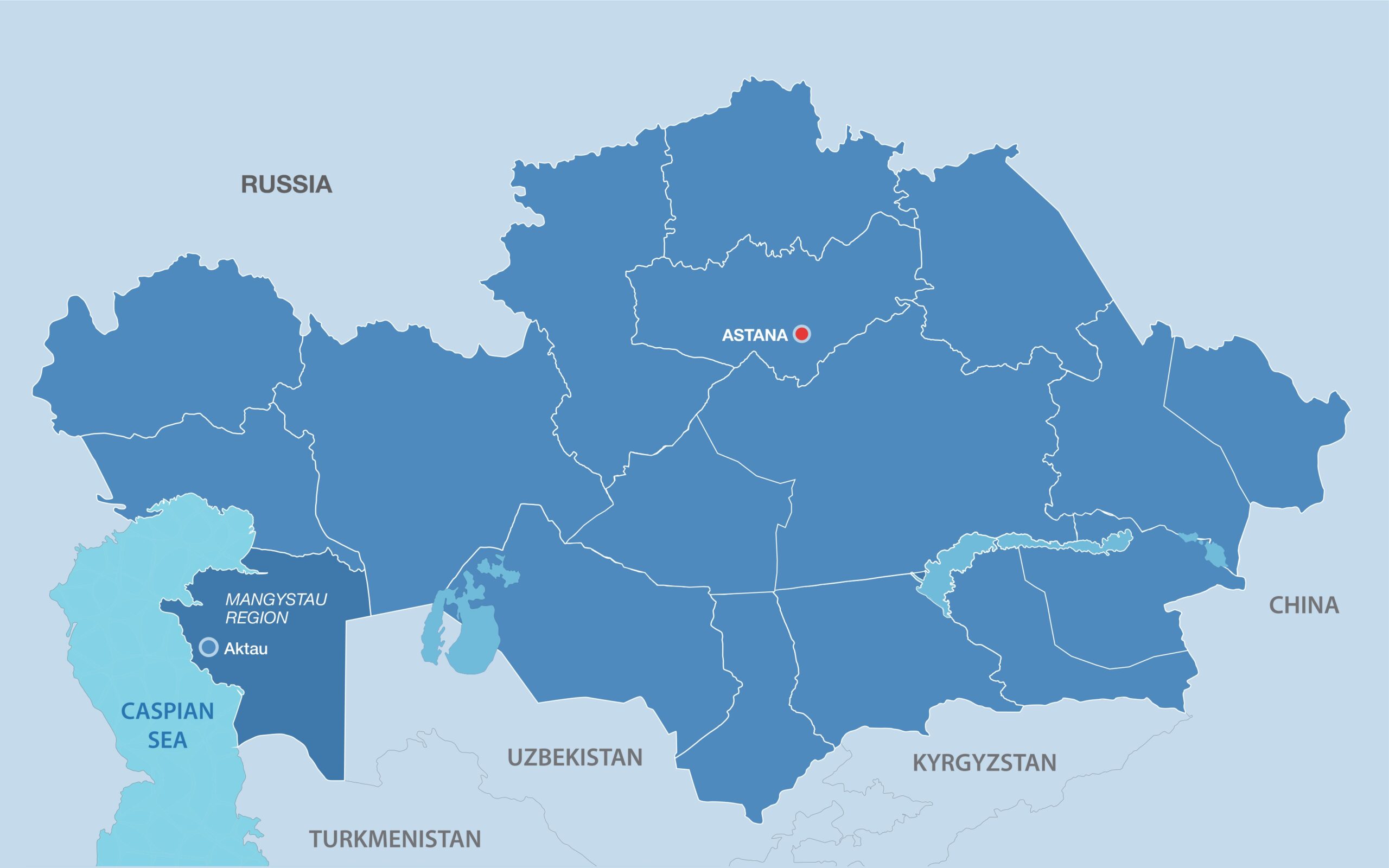
Photo credit:tengizchevroil.com Click to see the map in full size. The map is designed by The Astana Times.
Operations at the Tengiz and Korolevskoye fields, operated by Tengizchevroil (TCO), were halted on Jan. 19 after a fire broke out at two turbine transformers at the GTES-4 power station, according to KazMunayGas. The incident disrupted the power supply, prompting a precautionary shutdown of production.
According to Reuters, TCO confirmed on Jan. 18 that output at both fields had been temporarily suspended but did not specify when operations would resume or disclose details regarding the cause of the fire.
One industry source told Reuters that production was unlikely to restart before the end of the week, while another suggested the outage could extend into early February.
CPC shipments canceled
The prolonged shutdown has affected crude exports. Three industry sources said TCO has canceled five export cargoes of CPC Blend crude scheduled for shipment in January and February, amounting to an estimated 600,000 to 700,000 metric tons.
Most of Kazakhstan’s oil exports are shipped via the CPC, which delivers crude to the Black Sea terminal at Yuzhnaya Ozereyevka near Novorossiisk. Any sustained reduction in Tengiz output directly affects CPC throughput, given the field’s central role in the pipeline’s supply mix.
Chevron, the largest shareholder in Tengizchevroil, confirmed to Reuters that production at the Tengiz and Korolevskoye fields had been shut in “as a precautionary measure,” but declined to comment on operational timelines or financial implications.
Other fields partially offset losses
Despite the disruption at Tengiz, Kazakhstan’s overall oil output has so far been partially stabilized by increased production at other major Caspian projects, sources familiar with operational data said.
Crude production in the first 12 days of January fell by around 35% compared with average daily output in December, largely due to restrictions on CPC exports. However, output rebounded in subsequent days as production rose at the Kashagan and Karachaganak fields.
According to Reuters calculations based on industry data, Kashagan’s average daily production on Jan. 1-19 reached around 197,000 barrels per day, up 28% from the first half of the month. Karachaganak averaged approximately 156,000 barrels per day over the same period, an increase of 21%.
Average output at Tengiz in the same period stood at about 360,000 barrels per day, though this figure reflects production before the shutdown took full effect.
Industry sources cautioned that if the Tengiz shutdown persists, CPC will likely begin reducing pipeline throughput in the coming days, even with higher output from other fields.
Kazakhstan has been forced to redirect some crude exports away from CPC due to earlier damage at the Black Sea terminal, sending volumes via the Baku-Tbilisi-Ceyhan pipeline and to Germany through the Druzhba pipeline.
