
ALMATY — Kazakhstan’s passport has strengthened its standing in global mobility rankings in 2025, offering visa-free access to 79 countries and leading Central Asia in international travel freedom, according to the Committee of Migration Service under the Ministry of Internal Affairs.
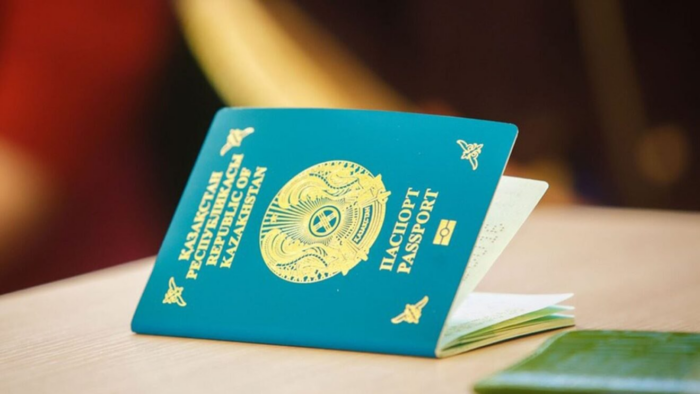
Kazakhstan’s passport has improved its global ranking, according to 2025 migration service data. Photo credit: gov.kz
Summarizing the 2025 results, the committee reported issuing 1.9 million national ID cards, 1.1 million passports to adult citizens, and 303,000 passports to children. Chairman of the Committee of Migration Service Aslan Atalykov said the figures reflect both rising demand and improvements in document security.
Kazakhstan introduced new passport designs on July 3, significantly enhancing anti-forgery measures.
“We increased the levels of protection, and in the latest version a snow leopard and several other security elements were added, which allow us to detect so-called counterfeits,” Atalykov said.
According to international rankings, Kazakhstan now ranks first in Central Asia, ahead of the Kyrgyz Republic, Uzbekistan, Tajikistan, and Turkmenistan.
The passport’s high security standards were further confirmed by a comprehensive aviation security audit conducted between Aug. 30 and Sept. 15, 2025. The audit showed Kazakhstan’s passport compliance with International Civil Aviation Organization (ICAO) standards at 95.7%, significantly above the global average of 72% and the European average of 87.9%.
Atalykov also highlighted social and digital innovations, such as a mobile documentation service, through which officials visit citizens at home to issue documents, primarily for elderly people.
“The oldest documented citizens were born in 1915 — one from Kostanai Region and another from Aktobe Region. They are both 110 years old,” he said.
In 2025, Kazakhstan also piloted online passport issuance using biometric identification.
“Artificial intelligence determines face liveness, photo quality, compliance with standards, and whether any photo editing was used,” Atalykov said, adding that if testing proves successful, the system will be launched nationwide next year.
